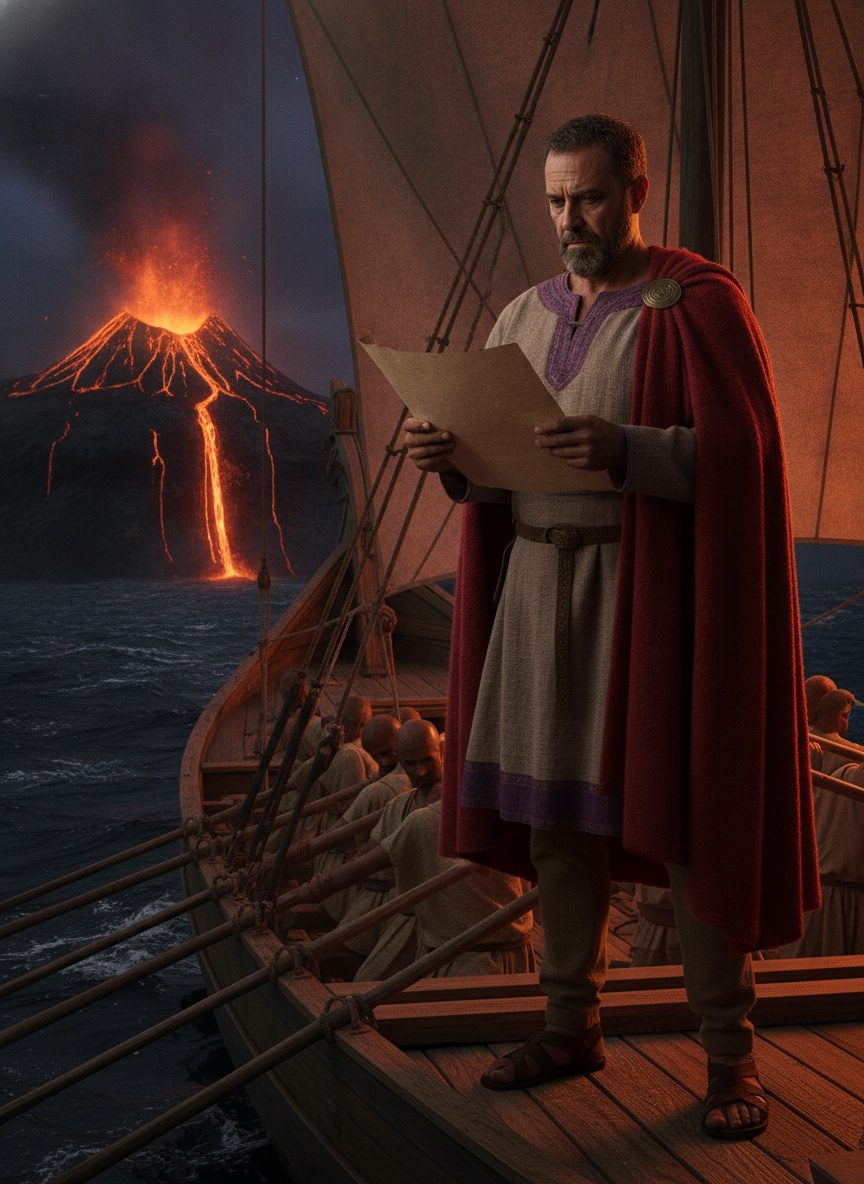
500 BCE. Flames kissed the distant horizon where the land met the sea.
The Ambitious Voyage Beyond the Known World
In an era dominated by mystery and looming horizons, few dared to sail beyond the Pillars of Hercules—what we know today as the Straits of Gibraltar. For Carthage, the wealthy maritime culture nestled at the heart of the Mediterranean, exploration was not only a form of wealth acquisition but also a relentless expansion of their influence. Among those brave few was Hanno the Navigator, a figure who stepped off the edge of the map and ventured into the uncharted waters of the world beyond.
Charged with an unprecedented mission, Hanno commanded sixty ships and led thirty thousand colonists southward along the coastline of Africa. This was not a mere expedition of discovery but a quest for new lands suitable for settlement and exploitation. Equipped with provisions, tools, and an indomitable will, Hanno embarked on a journey that would extend the grasp of Carthaginian power and enrich the tapestry of human knowledge.
The Fiery Landscapes: Rivers of Fire and Smoking Peaks
As Hanno's fleet pushed past familiar horizons, what awaited them were landscapes that defied their wildest imaginations. Coastal Africa revealed itself to be a realm of stark contrasts, where serene golden beaches gave way to dense green jungles and, most astoundingly, where rivers of molten land poured fiery tongues into the ocean. These breathtaking “fire mountains,” as they came to be known, were active volcanoes—awe-inspiring natural phenomena that etched themselves onto Hanno's memory and into his records.
In meticulously penned observations, preserved in the Periplus of Hanno, the intensity of these fiery beacons captivated not only Hanno’s crew but would ignite the curiosity of civilizations for millennia to come. To witness the vast flows of lava advancing steadily toward the sea, vanquishing all in their path, spoke of a world that was at once terrifying and mesmerizing. For the sailors from Carthage, accustomed to the more placid Mediterranean, this volcanic spectacle was a stark proclamation of the mighty forces shaping the Earth.
Unfamiliar Shores and Enigmatic Encounters
As the expedition continued, the Carthaginians encountered a kaleidoscope of new cultures and regions. The landscape shifted from arid dunes to verdant forests teeming with life, each new shoreline a continent unto itself in diversity. Regarded by Hanno as both hosts and curiosities, the indigenous populations engaged with the explorers in trade and wary exchanges of culture. The voyages were punctuated by such interactions, balancing delicate diplomacy with the pressing needs of his colonial mission.
Among the most tantalizing entries in Hanno’s log was the description of what his interpreters called "Gorillae"—a word that has perplexed historians but likely referred to a primate species unknown to the Mediterranean world at the time. Hanno described their peculiar appearance and habits in terms that tantalized subsequent ages, setting in motion debates over their identity and whether he might have been among the first to document encounters with what we now know as gorillas or a similar species.
An Echo Through Millennia: The Periplus of Hanno
The legacy of Hanno’s journey is enshrined in the Periplus of Hanno, the oldest surviving first-hand account of sub-Saharan Africa. This document not only chronicled the Carthaginian voyage but captured the heart of an ancient world incessantly reaching for the unknown. It was a feat of exploration that encompassed geographical, cultural, and scientific boundaries, translating an oral tradition of wonder into the tangible scrolls of history.
The narratives captured within the Periplus offer a rare glimpse into the ancient Carthaginian mind, rich with observations that bridged the known world with the untamed wilderness of their discoveries. Hanno’s records, treasured by scholars of antiquity and beyond, continued to inspire countless others who read his vivid descriptions and sought the landscapes that revealed the Earth’s dramatic and volatile forces.
The Significance of Hanno's Vision
In the annals of history, Hanno the Navigator’s exploits remind us of the enduring human spirit that seeks to illuminate the dark recesses of the map. His journey was one of firsts—not only a physical voyage over uncharted waters but a transformational bridge into realms of thought and understanding previously untapped by his culture. He transformed the fringes of Carthaginian geography into a foundation for contemplating the vastness of Earth’s secrets.
As we reflect upon Hanno’s legacy, the “fire mountains” serve as an enduring symbol of discovery and the awe-inspiring, sometimes fearsome beauty of our planet. His chronicles underscore the boldness of human curiosity and the unyielding desire to unravel the mysteries beyond our doorstep. In Hanno’s wake, we find a narrative that resonates still—a reminder that in exploring the unknown, humanity defines itself and redefines the borders of the conceivable world.