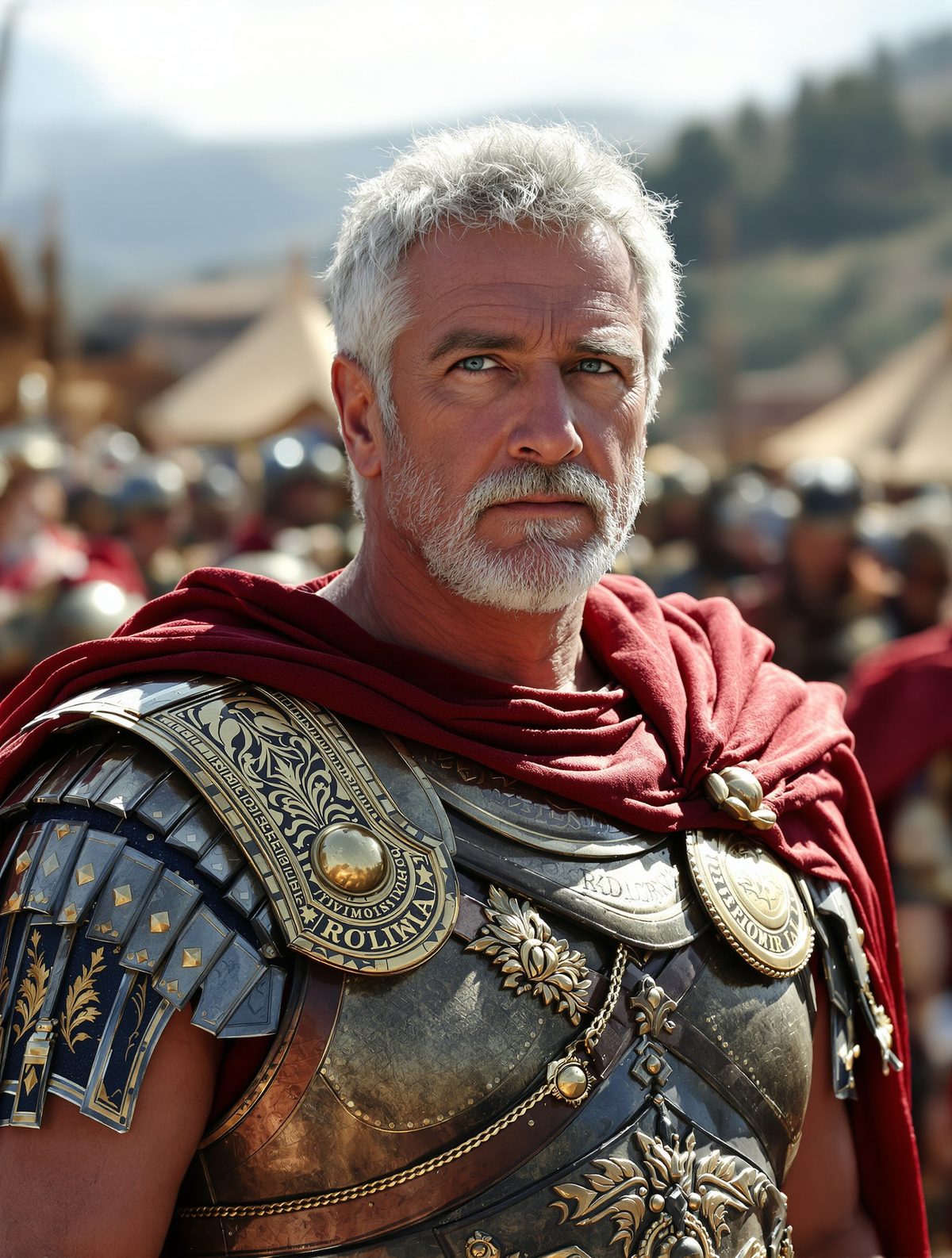
Picture this: the most feared general in human history, the man who brought Rome to its knees, stumbling half-blind through putrid Italian swamplands as his flesh literally rots from his bones. This isn't some Hollywood fantasy—this is the true story of how Hannibal Barca, in a moment of breathtaking leadership, chose to sacrifice his own eye rather than abandon his dying army in the pestilent marshes of central Italy.
Most people know Hannibal as the guy with the elephants who crossed the Alps. What they don't know is that his most heroic moment—and his most devastating personal loss—came not in the glory of battle, but in the diseased hell of the Arno marshlands, where a decision that saved thousands of his men cost him half his sight forever.
The Trap That Rome Never Set
It was the spring of 217 BC, and Hannibal had already achieved the impossible. He'd crossed the Alps in winter with 90,000 men and 37 elephants, losing nearly half his force but emerging in northern Italy like a nightmare made flesh. Rome was panicking. But now, as he pushed south toward the heart of Roman territory, Hannibal faced an enemy no general could outmaneuver: geography itself.
The Roman consul Gaius Flaminius—a man history would remember as spectacularly incompetent—had positioned his army to block Hannibal's advance toward Rome. But rather than risk a direct confrontation, Hannibal chose a route that seemed impossible: straight through the Arno marshlands in what is now Tuscany. These weren't pleasant wetlands—they were disease-ridden swamps that stretched for miles, filled with stagnant water, rotting vegetation, and clouds of malarial mosquitoes that the Romans themselves avoided like the plague.
Hannibal's decision was tactically brilliant and humanly catastrophic. By crossing the marshes, he could outflank Flaminius entirely and emerge in the Roman heartland while his enemy was still guarding empty roads. But the price would be paid in blood, disease, and unimaginable suffering.
Four Days in Hell
What happened next reads like something from Dante's Inferno. For four days and three nights, Hannibal's army—Carthaginians, Spanish mercenaries, Celtic warriors, and the last of his war elephants—slogged through waist-deep swamp water. There was no dry ground to rest on. Men slept standing up, leaning against their spears, or collapsed onto the floating corpses of pack animals and fallen comrades.
The Roman historian Livy, writing years later, described scenes that still chill the blood: "They marched through water, with no place to rest, no sleep for four days and three nights. Many men and beasts perished, and all the pack animals were lost except one elephant." The survivors spoke of men who simply vanished beneath the black water, too exhausted to struggle, while others went mad from fever and wandered off into the marsh to die alone.
Malaria struck like an invisible army. Dysentery turned the water around them foul with human waste. Infections festered in wounds that couldn't stay dry. The proud army that had conquered the Alps was being consumed from within by microscopic enemies they couldn't even see.
And Hannibal? The great general marched at the front of this death procession, sharing every horror with his men. He could have taken the safer route with his officers. He could have found higher ground and waited for the worst to pass. Instead, he chose to endure exactly what he was asking of his soldiers.
The Eye of the Storm
Somewhere in that pestilent maze, disaster struck Hannibal personally. The exact cause remains debated by historians—some say it was malaria affecting his vision, others point to a severe bacterial infection from the polluted water, still others suggest it was ophthalmia, a painful eye infection common in unsanitary conditions. What's certain is that Hannibal's right eye became horribly inflamed, probably filled with pus, and began to cause him excruciating pain.
Here's where the story becomes truly extraordinary. Ancient medicine, primitive as it was, wasn't entirely helpless against such infections. Carthaginian physicians traveled with the army and had treatments—crude surgeries, herbal remedies, at minimum the ability to drain infected tissue. But all of this required rest, clean water, and time. It required Hannibal to stop the march and tend to his own needs while his army continued to die around him in the swamp.
Hannibal refused. Not because he was ignorant of the consequences, but precisely because he understood them. His men needed to see their commander sharing their suffering. They needed to know that their general wasn't asking them to endure anything he wouldn't endure himself. In an age when armies followed leaders through personal loyalty rather than abstract patriotism, Hannibal's visible presence was literally what held his polyglot force together.
So the infection raged unchecked. The pain must have been indescribable—imagine trying to concentrate on complex military decisions while it feels like someone is driving a red-hot poker through your skull. Ancient sources suggest that by the time they emerged from the marshes, Hannibal was delirious with fever and nearly blind in his right eye.
The Price of Leadership
By the time Hannibal's army staggered out of the Arno marshes, the damage was catastrophic and permanent. His right eye was destroyed—not just damaged, but completely ruined, leaving him with the distinctive one-eyed appearance that would mark him for the rest of his life. Ancient coins minted later show Hannibal's profile carefully angled to hide his ruined eye socket, but Roman propaganda gleefully depicted him as a one-eyed monster.
The army's casualties were staggering. Of the roughly 50,000 men who entered the marshes, thousands died during those four hellish days. Entire units of Celtic warriors simply melted away. The Spanish infantry emerged as walking skeletons, many too weak to carry their weapons. And the elephants—those magnificent symbols of Carthaginian power—all but one died in the putrid waters.
But here's the remarkable thing: the army held together. Despite losing perhaps 20% of their strength to disease and drowning, despite watching their invincible general become a fever-ridden, half-blind wreck, Hannibal's men emerged from that swamp more loyal to him than ever. They had seen their commander choose to share their agony rather than save himself, and that kind of leadership created bonds stronger than steel.
Modern military historians consider Hannibal's crossing of the Arno marshes one of the greatest leadership achievements in history, precisely because it was so costly. Any general can inspire men during a glorious victory. It takes something transcendent to hold an army together while leading them through a disease-ridden hell that destroys your own body in the process.
The Monster Rome Created
The cruel irony is that Hannibal's sacrifice worked almost too well. Just weeks after emerging from the marshes—half-blind, still recovering from the fever that nearly killed him—he engineered one of the most brilliant tactical victories in military history at Lake Trasimene. Using his intimate knowledge of Roman psychology and the terrain he'd bought with his eye, Hannibal lured Flaminius into a devastating ambush that annihilated an entire Roman army.
Flaminius himself died in the battle, along with 15,000 Roman soldiers. Rome was defenseless, its people fleeing the city in panic. And the one-eyed Carthaginian general they now called "the monster" was marching toward their gates with an army that followed him not despite his disfigurement, but because of what it represented.
For fifteen more years, Hannibal would terrorize Italy with that same damaged eye socket serving as a constant reminder of his devotion to his men. Roman mothers would frighten children with stories of the one-eyed demon from Carthage. But they never understood that Hannibal's missing eye wasn't a sign of his monstrousness—it was proof of his humanity.
Why This Changes Everything
In our modern age of leaders who dodge military service, corporate executives who take massive bonuses while laying off workers, and politicians who exempt themselves from the laws they pass, Hannibal's choice in the Arno marshes feels almost alien. Here was a man with absolute power who chose to sacrifice his own body rather than ask his followers to suffer alone.
But perhaps that's exactly why this story matters now. True leadership—the kind that inspires people to attempt the impossible—has never been about privilege or safety. It's about the willingness to pay the highest price for the people who trust you with their lives. Hannibal understood that authority without sacrifice is just tyranny with better marketing.
The next time you hear someone in power claim they "share your pain," remember the Carthaginian general who lost his eye in a disease-ridden swamp because he refused to seek treatment while his men were dying. That's what sharing pain actually looks like. And maybe, just maybe, it explains why Hannibal's ragged, half-starved army was willing to follow their one-eyed general to the gates of Rome itself.
Sometimes the most important battles are fought not against enemies, but against the temptation to save yourself at the expense of those who depend on you.