The icy North Atlantic spray lashed across the deck as the dying poet clutched his chest, each labored breath a battle between salvation and damnation. It was 1007 AD, and Hallfreð Vandræðaskáld—the "Troublesome Poet"—lay sprawled on the wooden planks of a merchant vessel, his mind torn between the Christian heaven he'd promised to embrace and the Valhalla of his ancestors. With death's shadow creeping closer, Iceland's greatest skald faced the ultimate choice: would his soul belong to the White Christ or mighty Thor?
This wasn't just any deathbed conversion. This was the spiritual crisis of a man whose silver tongue had earned him fame across the Norse world, whose verses could make kings weep or warriors charge into battle. And now, as the ship rocked through the treacherous waters between Iceland and Norway, Hallfreð was composing what would become some of the most haunting poetry ever written—verses that captured the agonizing collision between two worlds, two faiths, and two destinies.
The Poet Who Couldn't Keep Quiet
Hallfreð Óttarsson earned his nickname "Vandræðaskáld"—the Troublesome Poet—not through malice, but through an inability to keep his razor-sharp wit sheathed. Born around 965 AD in Iceland's rugged Vatnsdalur valley, he belonged to a generation caught between the old ways and a new faith sweeping across Scandinavia like wildfire.
In the courts of Viking kings, skalds weren't mere entertainers—they were living libraries, political advisors, and cultural guardians all rolled into one. Their complex verse forms, riddled with kennings (metaphorical compound phrases) and alliterative patterns, required years to master. A skilled skald could preserve a king's deeds for eternity or destroy a reputation with a few well-chosen stanzas. Hallfreð had mastered this art by his twenties, but his talent came with a fatal flaw: he couldn't resist speaking truth to power, even when that truth stung.
His verses sparkled with intelligence and cut like Damascus steel. When he praised, kings felt immortal. When he criticized, even the mightiest jarls winced. This double-edged gift would define his relationship with the most powerful ruler of his age: Olaf Tryggvason, the missionary king of Norway.
The King Who Converted by Sword
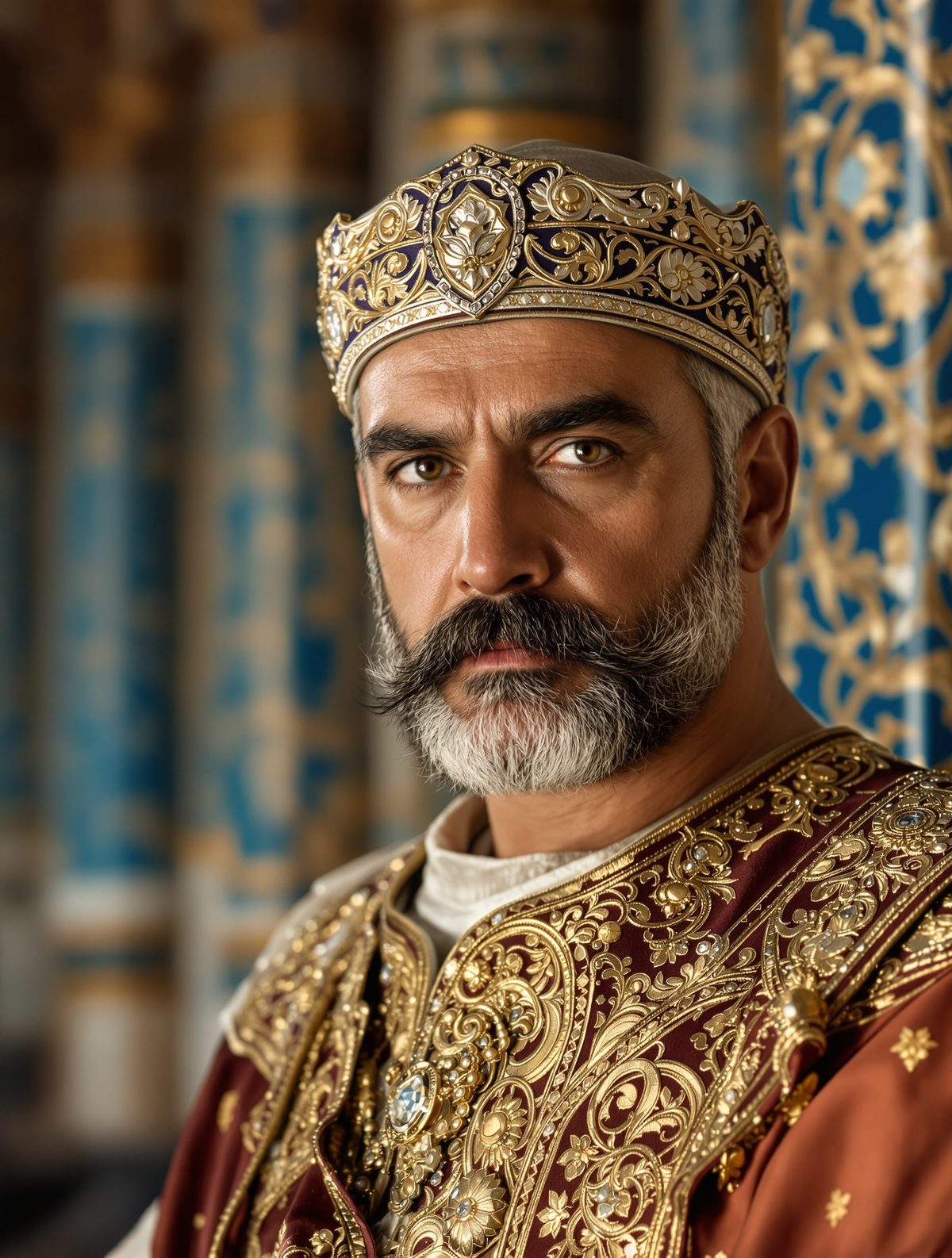
Olaf Tryggvason wasn't just any Norwegian king—he was Christianity's self-appointed hammer in the North. Crowned in 995 AD after a youth spent viking across Europe, Olaf returned to Norway with more than just treasure: he brought an unshakeable Christian faith and the ruthless determination to impose it on his subjects.
The king's conversion methods were brutally effective. He gave pagans a simple choice: baptism or death. Those who hesitated found themselves facing red-hot iron, having molten metal poured down their throats, or worse. Olaf destroyed temples, toppled Thor's statues, and forced entire regions to accept the White Christ. His missionaries didn't just preach—they conquered.
But Olaf understood that military might alone couldn't win hearts. He needed cultural ambassadors, and who better than the skalds whose verses shaped public opinion? When prominent poets converted, their new faith gained prestige and legitimacy. This is where Hallfreð entered the story—and where his troubles truly began.
Around 999 AD, Hallfreð arrived at Olaf's court in Trondheim. The meeting of poet and king should have been harmonious—both men were intelligent, charismatic, and ambitious. Instead, it became a years-long spiritual wrestling match that would define both their legacies.
Baptism at Sword-Point
King Olaf didn't request Hallfreð's conversion—he demanded it. The scene, preserved in multiple sagas, reads like a spiritual shakedown. Accept baptism, Olaf insisted, or find yourself another royal patron. For a court poet, this was tantamount to career suicide. No other Norwegian lord would dare protect someone who'd defied the king's religious agenda.
But Hallfreð wasn't easily bullied, even by kings. In a move that perfectly captured his troublesome nature, he agreed to convert—with conditions. He would accept Christian baptism only if King Olaf personally stood as his godfather. Moreover, he demanded compensation for abandoning his ancestral gods. The poet literally negotiated a severance package from his old faith.
The audacity was breathtaking. Here was a visiting Icelander treating Norway's mighty king like a business partner, haggling over the terms of his own salvation. Yet somehow, Olaf agreed. Perhaps he admired Hallfreð's boldness, or maybe he recognized that a forced conversion would be worthless without some personal investment from the convert.
The baptism took place around 999 AD, with great ceremony and royal pageantry. Holy water washed away Hallfreð's heathen past, and he emerged as one of Christian Norway's most prominent converts. But washing away a lifetime of belief proved harder than washing away water.
The God Who Wouldn't Stay Dead
Christianity might have claimed Hallfreð's allegiance, but Thor still held his heart. The poet's verses after his conversion reveal a man spiritually adrift, torn between competing loyalties that refused to reconcile. His Christian poems felt dutiful but cold, while his references to the old gods blazed with passion and longing.
This wasn't uncommon in the conversion period. Archaeological evidence shows that many Scandinavians wore both Thor's hammers and Christian crosses, hedging their bets between competing afterlives. But for a court poet, such divided loyalties posed unique dangers. Every verse was scrutinized for heretical content. Every metaphor could be interpreted as backsliding.
Hallfreð walked this theological tightrope for nearly a decade, producing Christian praise-poems that satisfied King Olaf while privately composing verses that yearned for Asgard's halls. His poetry from this period captures the psychological toll of forced conversion like no other historical source. These weren't just religious differences—they represented completely different ways of understanding courage, honor, fate, and the meaning of a life well-lived.
Then came 1000 AD and the Battle of Svolder, where King Olaf's enemies finally cornered their missionary nemesis. The battle was a catastrophe for Christian Norway. Olaf's flagship, the mighty Long Serpent, was overwhelmed by superior numbers. Rather than face capture, the king leaped overboard in full armor, disappearing beneath the Baltic waves. His body was never recovered.
For Hallfreð, Olaf's death severed the primary tie binding him to Christianity. His godfather and royal patron was gone. His conversion had been personal as much as political, and now both foundations had crumbled.
Death Between Two Gods
By 1007 AD, Hallfreð was a man haunted by irreconcilable choices. Now in his forties—ancient by Viking standards—he'd lived through the greatest religious transformation in Scandinavian history. Iceland itself had officially converted to Christianity in 1000 AD, making paganism not just unfashionable but potentially dangerous.
The poet's final voyage began innocuously enough. He'd boarded a merchant ship for what should have been a routine journey across the Denmark Strait. But somewhere in those treacherous waters between Iceland and the Norwegian coast, illness struck. Whether it was disease, injury, or simply the accumulated toll of a hard-lived life, Hallfreð found himself facing death far from land, with only the ship's crew as witnesses to his final hours.
What happened next was recorded by those who survived the voyage, preserved in the Hallfreðar saga and later sources. As death approached, the poet's spiritual crisis erupted in verse. He composed poem after poem, each stanza wrestling with questions that had tormented him for years. Should he call upon Christ for salvation, honoring his baptismal vows? Or should he embrace the warrior's death that would earn him a seat in Valhalla?
His deathbed verses are remarkable for their raw honesty. In one breath, he praised the Christian God's mercy. In the next, he called upon Thor's protection. He spoke of angels and valkyries as if both might appear to claim his soul. These weren't the polished court poems that had made his reputation—they were the desperate prayers of a dying man caught between two worlds.
Legacy of a Divided Soul
Hallfreð Vandræðaskáld died as he had lived—creating beautiful trouble. His deathbed poetry survived because it captured something universal: the human struggle to reconcile competing loyalties, to honor both tradition and transformation, to find meaning in a world where old certainties have crumbled.
His verses became some of the most quoted in medieval Scandinavia, not despite their spiritual confusion but because of it. They spoke to countless others who'd lived through forced conversions, who'd watched ancient traditions die, who'd struggled to find authentic faith in politically motivated religion.
Today, in our own age of rapid cultural change and competing worldviews, Hallfreð's crisis feels remarkably contemporary. How do we honor the past while embracing the future? How do we navigate between tradition and transformation? How do we find authentic belief in a world full of pressure to conform?
The Troublesome Poet never found easy answers to these questions. But in refusing to pretend his spiritual struggles didn't exist, in giving voice to the complex reality of religious conversion, he created art that transcends its medieval context. His death between two gods reminds us that the most honest faith acknowledges doubt, that the most authentic conversion recognizes what is lost as well as what is gained, and that sometimes the most profound spiritual truth lies not in choosing sides, but in admitting that the choice itself can break your heart.