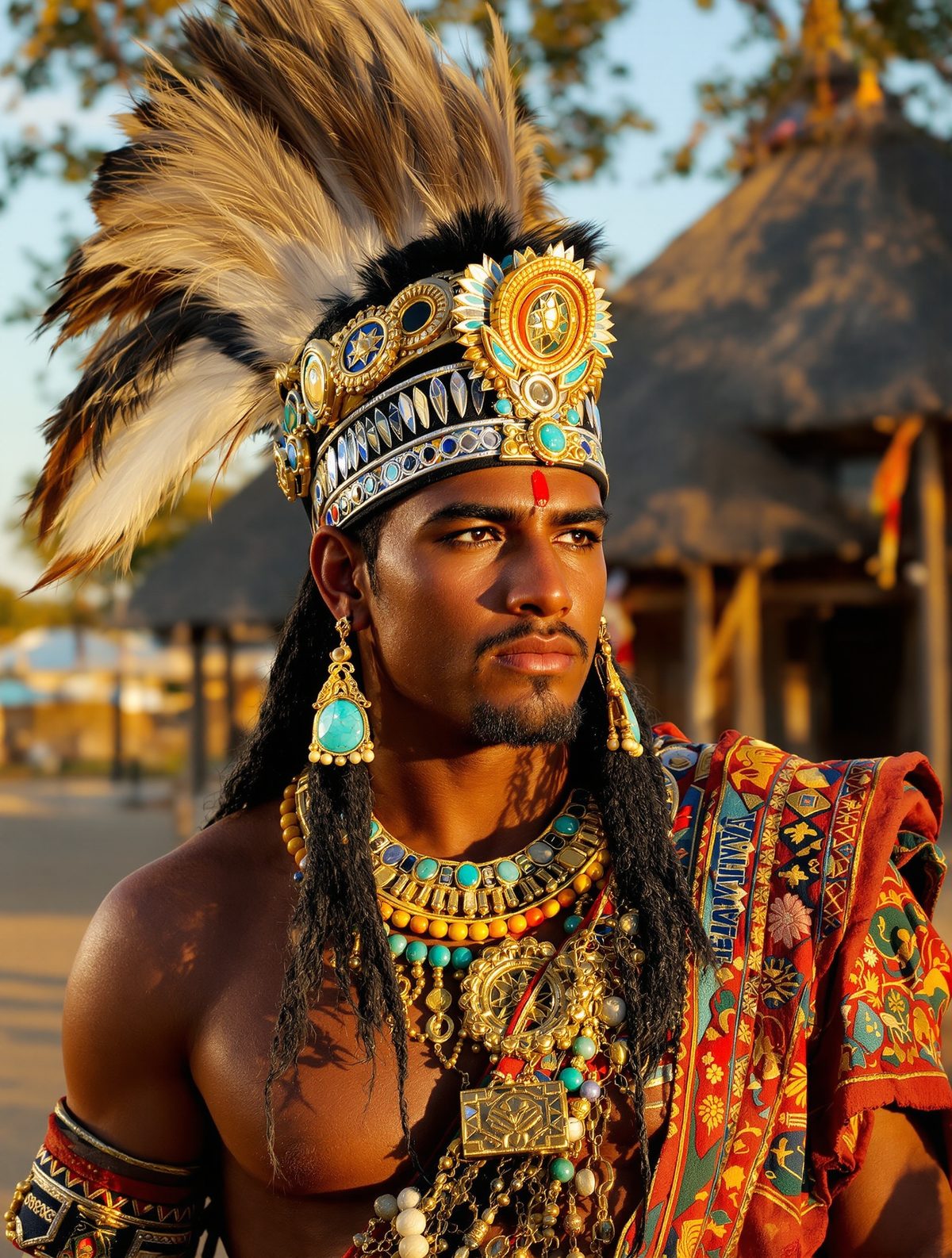
In the flickering light of oil lamps, somewhere around 2250 BC, a woman pressed a reed stylus into wet clay and did something no human had ever done before. She didn't just record laws, trade agreements, or royal decrees like the countless scribes before her. Instead, she poured her heart onto the tablet, crafting verses that sang of divine love, political turmoil, and personal anguish. Then she did something even more revolutionary: she signed her name. "I am Enheduanna," the cuneiform proclaimed, "and these words are mine."
Four thousand three hundred years later, those clay tablets still bear her mark—making Enheduanna not just the world's first named author, but the inventor of personal literary expression itself. While most of her contemporaries remain faceless shadows in history's dim corridors, this Sumerian priestess carved her identity so deeply into human culture that we still read her passionate verses today.
The Princess Who Chose the Pen Over the Palace
Enheduanna wasn't just any writer—she was royalty with a revolutionary spirit. Born around 2285 BC, she was the daughter of Sargon of Akkad, the legendary ruler who forged the world's first multi-ethnic empire. Sargon conquered the Sumerian city-states and united Mesopotamia under Akkadian rule, but his daughter would achieve something far more enduring than military conquest.
Rather than living a life of palace luxury, Enheduanna was appointed as high priestess of the moon god Nanna in the ancient city of Ur. This wasn't merely a ceremonial position—it was a crucial political appointment. As priestess, she served as a bridge between the conquered Sumerian religious traditions and her father's Akkadian rule. Picture this remarkable woman: draped in the finest linens, her head crowned with the sacred headband of office, moving between the towering ziggurats of Ur while composing verses that would outlast empires.
But here's what makes her story truly extraordinary: she used this powerful position not just to perform religious duties, but to create an entirely new form of human expression. In a world where writing was reserved for accounting and administration, Enheduanna dared to use it for something unprecedented—personal artistic expression.
The Birth of Poetry as We Know It
Before Enheduanna, literature was anonymous and formulaic. Religious hymns followed strict patterns, myths were passed down without attribution, and the idea of an individual voice in writing simply didn't exist. Then this Sumerian priestess shattered every convention.
Her masterwork, "The Exaltation of Inanna," wasn't just the world's first signed poem—it was the first piece of literature to blend personal experience with religious devotion. In 153 lines of passionate cuneiform, Enheduanna tells the story of her own political exile, her desperate prayers to the goddess Inanna for restoration, and her eventual triumph over her enemies. The poem pulses with genuine emotion: "I am yours! This will always be so! May your heart be soothed toward me!"
What's mind-blowing is how modern her writing feels. She doesn't just praise Inanna abstractly—she argues with her, pleads with her, even scolds her when the goddess seems unresponsive. This was the birth of confessional poetry, personal narrative, and psychological realism in literature, all rolled into one extraordinary work written over four millennia ago.
Scholars have identified at least 42 poems definitively attributed to Enheduanna, making her not just a pioneering author but a prolific one. Her "Sumerian Temple Hymns" collection surveys religious sites across Mesopotamia with the eye of both a theologian and a travel writer, describing the unique character and rituals of each sacred space.
A Political Exile That Sparked Literary Gold
The most dramatic chapter of Enheduanna's story reads like a ancient thriller. Around 2250 BC, a rebel named Lugal-Ane led a revolt against Akkadian rule. As a symbol of the hated foreign dynasty, Enheduanna was stripped of her priesthood and exiled from Ur. For a woman whose identity was so intertwined with her religious role, this wasn't just political persecution—it was spiritual annihilation.
But here's where her genius shines brightest: instead of retreating into silence, she transformed her trauma into art. Her exile poems burn with righteous fury and desperate hope. She calls upon Inanna—goddess of love, beauty, and war—to restore her position and destroy her enemies. "He has turned that temple, whose attractions were inexhaustible, into a house which is haunted," she writes of her successor, painting him as a desecrator of sacred spaces.
The gamble worked spectacularly. Her passionate appeals to Inanna (and the political pressure they generated) helped secure her restoration to the priesthood. More importantly for history, they established a template for using literature as both personal expression and political resistance that writers still follow today.
The Goddess Who Inspired a Literary Revolution
You can't understand Enheduanna without understanding her obsession with Inanna, the fierce Mesopotamian goddess who became her muse, patron, and literary subject. Inanna was no gentle deity—she was a goddess of contradictions, embodying both tender love and brutal warfare, creative fertility and destructive rage.
In Enheduanna's hands, Inanna became the world's first complex literary character. She's portrayed as powerful yet moody, protective yet demanding, divine yet startlingly human in her emotions. "Lady of all divine powers, radiant light, righteous woman clothed in splendor," Enheduanna writes, before later begging: "How long will your troubled heart not be soothed?"
This relationship between poet and goddess created something entirely new: the concept of inspiration itself. Enheduanna didn't just write about Inanna—she wrote through her, claiming divine authority for her personal voice. This fusion of human creativity and divine inspiration would echo through millennia, influencing everyone from the Hebrew psalms to Islamic mystical poetry to modern spiritual literature.
The Legacy That Outlasted Empires
Here's perhaps the most astonishing fact about Enheduanna: her works remained continuously popular for over 500 years after her death. In a world where most literature disappeared within generations, her poems were copied, studied, and performed across Mesopotamia. Archaeologists have found her works on tablets from Babylon to Syria, proving she achieved something approaching celebrity status in the ancient world.
The Akkadian Empire crumbled. The Sumerian cities fell to conquerors. The ziggurats of Ur were buried under desert sand. But Enheduanna's voice survived, preserved in clay tablets that waited over four millennia for modern archaeologists to rediscover them. When scholars finally deciphered her cuneiform in the 20th century, they realized they'd found something unprecedented: the world's first individual literary consciousness, speaking to us across an almost incomprehensible gulf of time.
Even more remarkably, her influence can be traced through history. The Sumerian literary traditions she established influenced Babylonian poetry, which shaped Hebrew literature, which affected Greek writing, which formed the foundation of all Western literature. Every time a poet writes in the first person, claims divine inspiration, or transforms personal suffering into universal art, they're following the path Enheduanna blazed with her reed stylus 43 centuries ago.
Why a 4,300-Year-Old Poet Still Matters Today
In our age of social media and personal branding, Enheduanna feels surprisingly contemporary. She was history's first influencer, using her platform to blend personal narrative, political commentary, and spiritual insight. She understood something that modern content creators are still learning: authentic personal voice cuts through cultural noise like nothing else.
But her legacy runs deeper than literary technique. Enheduanna proved that individual human consciousness—with all its contradictions, struggles, and passionate longings—was worthy of permanent record. In a world that valued conformity and tradition above all, she dared to say: "This is my experience, my voice, my truth, and it matters."
Every time we write a personal blog post, compose a heartfelt social media caption, or put our name on creative work, we're participating in the revolution Enheduanna started in ancient Ur. She didn't just invent poetry—she invented the radical idea that individual human experience deserves to be remembered, celebrated, and shared across the centuries.
Her clay tablets crumbled, her empire fell, and her ziggurat lies in ruins. But her voice—passionate, defiant, achingly human—still echoes through every piece of literature that dares to say "I am here, I feel this, and these words are mine." In the end, that may be the most powerful magic of all: turning clay and reeds into immortality, one signed poem at a time.