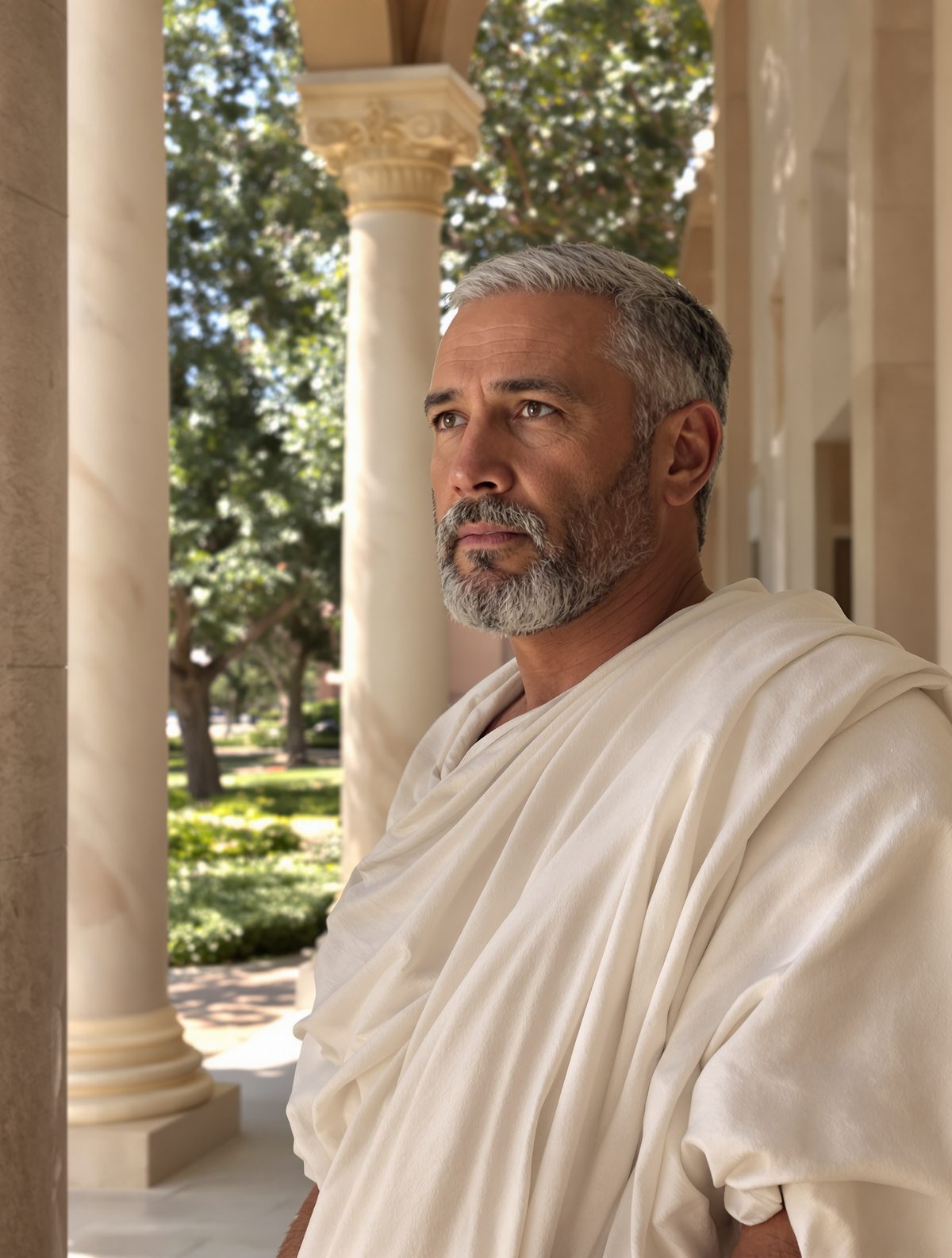
Picture this: It's September 1052, and King Edward the Confessor of England stands on the banks of the Thames, watching a fleet of warships sail toward him. But these aren't Viking raiders or foreign invaders—they're English ships, flying English banners, commanded by a man the king had banished just one year earlier. At the helm stands Earl Godwin of Wessex, the most powerful noble in England, returning not as a penitent exile but as a conqueror demanding his throne back. What happens next would prove that in medieval England, sometimes the servant could become the master.
The Earl Who Ruled Everything But the Crown
To understand Godwin's audacious rebellion, you need to grasp just how powerful this man had become by 1051. Earl Godwin wasn't just any nobleman—he was effectively the kingmaker of England. When Edward the Confessor took the throne in 1042, it was largely thanks to Godwin's political maneuvering and military might. The earl controlled Wessex, the richest and most populous earldom in England, stretching from Kent to Cornwall. But his influence didn't stop there.
In a masterstroke of medieval politics, Godwin had married his daughter Edith to King Edward himself in 1045, making the earl the king's father-in-law. His sons weren't just sitting around the family estate either—they held key positions across the kingdom. Harold Godwinson controlled East Anglia, Sweyn held an earldom in the Welsh borderlands, and the family's tentacles of power reached into every corner of English politics.
Contemporary chroniclers described Godwin as "the most powerful man in England after the king"—but many whispered he was actually more powerful than Edward himself. The earl commanded vast personal armies, controlled England's richest ports, and had built a network of allies that spanned the kingdom. By 1051, there was hardly a major decision made in England without Godwin's input or approval.
The Norman Problem and a Brother's Mysterious Death
The seeds of conflict lay in Edward's complicated relationship with Normandy. The childless king had spent 25 years in exile at the Norman court before claiming his throne, and he maintained strong ties with his Norman friends. This didn't sit well with the Anglo-Saxon nobility, especially Godwin, who saw Norman influence as a direct threat to English independence.
Tensions exploded in 1051 over a seemingly minor incident in Dover. Count Eustace of Boulogne, Edward's brother-in-law, was traveling back from a visit to the king when his armed retinue clashed with locals in Dover. The confrontation escalated into a full-blown riot that left nineteen people dead, including both townspeople and Eustace's men. When word reached King Edward, he was furious—but not at Eustace.
Here's where the story takes a dark turn. Edward demanded that Godwin, as Earl of Wessex, punish the people of Dover for attacking his royal guest. Godwin refused, arguing that Eustace's men had provoked the violence. But the king suspected something more sinister: that Godwin had orchestrated the attack as part of a broader conspiracy.
The accusation that would change everything came next. Edward claimed that Godwin was responsible for the death of his brother, Alfred the Aetheling, back in 1036. Alfred had returned from exile to claim the throne but was captured, brutally blinded, and died from his injuries. The official story blamed Harold Harefoot, but Edward now pointed the finger directly at Godwin, suggesting the earl had betrayed Alfred to eliminate a rival claimant.
Trial by Combat: The Confrontation at Gloucester
In September 1051, Edward summoned Godwin and his sons to a royal council at Gloucester. But this wasn't going to be a friendly family gathering. The king arrived with an army, including his Norman allies and the northern earls Leofric of Mercia and Siward of Northumbria—both longtime rivals of the Godwin family.
When Godwin arrived, he found himself dramatically outnumbered. Edward's trap was sprung: the king formally accused the earl of treason and murder, demanding he answer for Alfred's death and the Dover incident. The trial was a foregone conclusion, with Edward's allies dominating the proceedings.
Faced with certain conviction and probable execution, Godwin was offered a stark choice: face trial by combat (which meant almost certain death given the odds) or accept immediate exile. The most powerful man in England, the kingmaker himself, was given just five days to leave the country. Adding insult to injury, Edward forced Godwin to leave his daughter Edith, the queen, behind in a nunnery and demanded hostages from the family.
On September 28, 1051, Earl Godwin of Wessex sailed into exile from Bosham, leaving behind everything he had built over decades of careful political maneuvering. Edward the Confessor must have felt he had finally broken free from the shadow of his overmighty subject. He was about to learn how wrong he was.
The Return of the King(maker)
Godwin's exile lasted exactly 357 days—not because Edward pardoned him, but because the earl refused to stay gone. While in Flanders, Godwin wasn't sulking in his tent. He was planning the most audacious political comeback in medieval English history.
The key to Godwin's strategy was understanding that his power hadn't come from Edward's favor—it came from the people of England themselves. Throughout 1052, secret messages flowed between the exiled earl and his supporters back home. The Anglo-Saxon nobles who had been forced to accept Norman influence were growing restless. The common people, especially in Wessex, remained loyal to the Godwin name.
In June 1052, Godwin began his return. He landed first on the Isle of Wight with a small fleet, testing the waters. When locals flocked to his banner instead of reporting him to the king, Godwin knew the time was right. He sailed along the south coast, gathering ships and men at every port. Fishermen, merchants, former soldiers—anyone with a grievance against Norman influence or loyalty to the old earl joined his growing fleet.
By September, Godwin commanded more than fifty ships and thousands of men. When he sailed up the Thames toward London, King Edward faced a terrible choice: fight a civil war against one of his most popular subjects, or negotiate.
The Bloodless Victory
The climactic confrontation came at London Bridge in September 1052. Edward had assembled his own fleet and army, but as the two forces faced each other across the Thames, something unprecedented happened: nobody wanted to fight.
The English sailors and soldiers on both sides realized they were being asked to shed blood in what was essentially a family quarrel between their king and his father-in-law. According to the Anglo-Saxon Chronicle, "it was hateful to almost all of them that they should fight against men of their own race."
Faced with mass defection from his own forces, Edward was forced to negotiate. Archbishop Stigand mediated between the two sides, and the settlement was humiliating for the king. Godwin was restored to all his lands and titles. His sons got their earldoms back. Queen Edith was restored to her position. Most shocking of all, Edward was forced to exile his Norman advisers—the very men who had supported him against Godwin.
Earl Godwin had achieved something almost unthinkable in the medieval world: he had defied his anointed king, returned from exile by force, and not only survived but won a complete victory. The man who had been accused of treason was back in power, stronger than ever.
Legacy of a Rebel Earl
Godwin's triumph was short-lived in personal terms—he died just seven months later in April 1053, reportedly suffering a stroke during a feast with the king. But his political legacy shaped English history for generations. His restoration established the principle that even kings couldn't rule without the consent of their most powerful subjects—a lesson that would echo through English politics for centuries.
More immediately, Godwin's victory ensured his son Harold would inherit his position as the most powerful earl in England. When Edward the Confessor died childless in 1066, it was Harold Godwinson who claimed the throne, leading directly to William the Conqueror's invasion and the Norman Conquest.
In a strange twist of irony, Godwin's successful rebellion against Norman influence in 1052 helped set up the very circumstances that would bring the Normans to permanent power in England just fourteen years later. Sometimes winning the battle means losing the war—but Earl Godwin of Wessex proved that in medieval politics, the impossible was just another word for the improbable. His story reminds us that even in an age of absolute monarchy, power ultimately flows from the consent of the governed, and sometimes a subject can successfully call their sovereign's bluff.