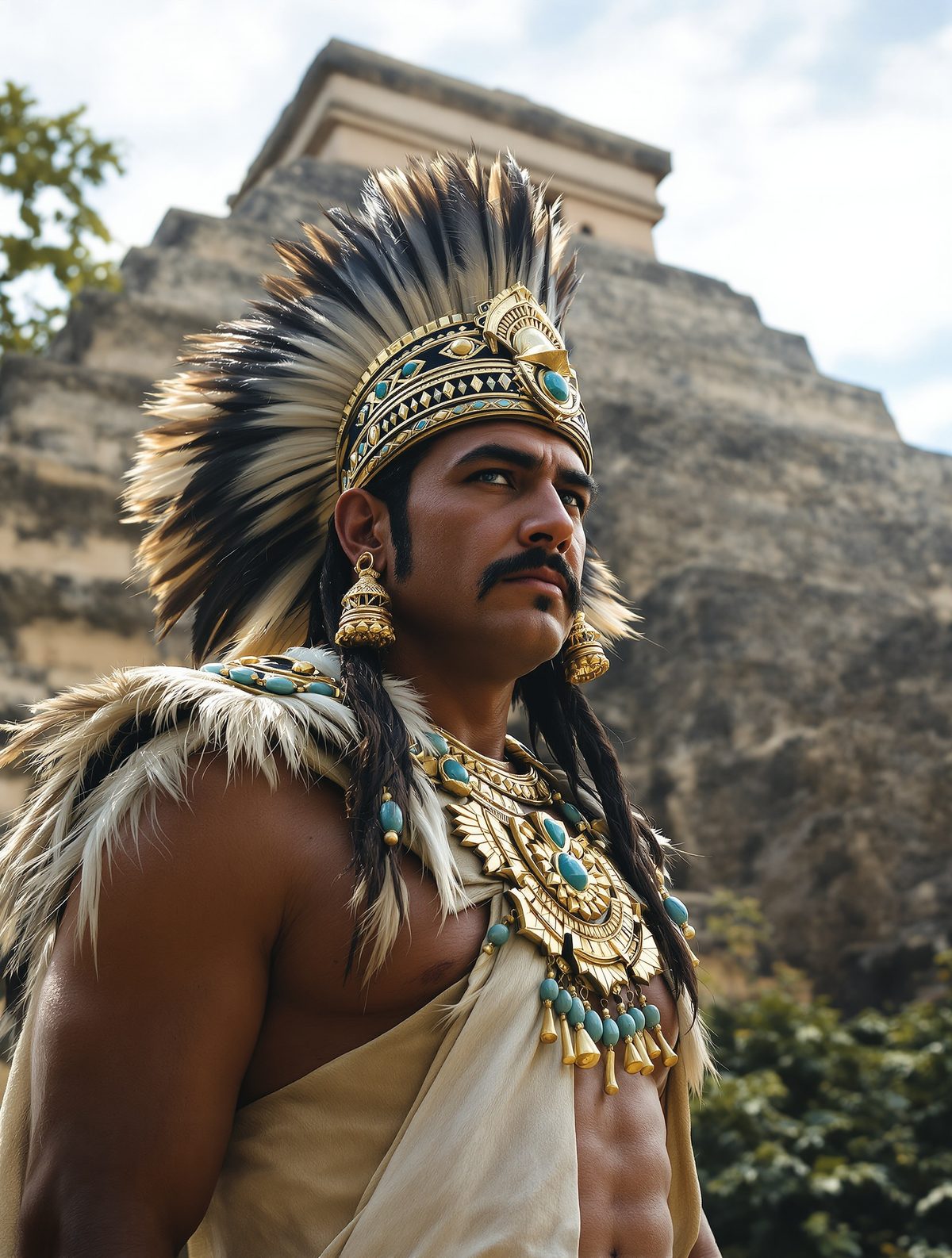
The bronze Buddha statue stood nearly eight feet tall, its serene face catching the morning light as it had for over two centuries. Monks had prayed before it, pilgrims had left offerings at its feet, and countless faithful had found solace in its peaceful presence. But on this autumn day in 955 AD, Emperor Shizong's soldiers saw something else entirely: enough bronze to forge dozens of swords for the imperial army. Within hours, the ancient statue would be nothing more than molten metal, flowing into weapon molds as part of the most audacious act of religious destruction in Chinese history.
What drove a ruler to systematically obliterate 30,000 Buddhist temples and melt down countless sacred statues? The answer lies in a perfect storm of military desperation, economic pragmatism, and imperial ambition that would reshape China's religious landscape forever.
A Dynasty Born from Chaos
To understand Emperor Shizong's radical decision, we must first grasp the turbulent world he inherited. The Later Zhou Dynasty, which Shizong ruled as its second emperor, emerged from the chaotic period known as the Five Dynasties and Ten Kingdoms era—a time when China fractured into competing states after the fall of the mighty Tang Dynasty.
Born Chai Rong, the future Emperor Shizong came to power in 954 AD when his adoptive father died unexpectedly. At just 33 years old, he inherited a realm surrounded by enemies: the powerful Song state to the south, the Khitan Liao Dynasty pressing from the north, and various independent kingdoms threatening from all directions. Unlike many rulers who might have pursued diplomatic solutions, Shizong harbored an audacious dream: to reunify all of China under his banner.
But dreams of conquest required one crucial element that Shizong desperately lacked—a massive, well-equipped army. And in 10th-century China, that meant bronze weapons on an unprecedented scale.
The Bronze Crisis That Changed Everything
Bronze wasn't just any metal in medieval China—it was the backbone of military power. Swords, spears, arrow tips, and armor all required high-quality bronze alloys. The problem was that China's bronze resources were already stretched thin after decades of constant warfare between rival kingdoms.
Shizong's military advisors painted a stark picture: to conquer his enemies, the emperor needed to equip an army of at least 200,000 soldiers with bronze weapons. Traditional sources—mines, tribute, and trade—could never provide enough raw material in time. His enemies wouldn't wait for China's bronze production to slowly ramp up.
As Shizong pondered this seemingly impossible challenge, his gaze likely fell upon the thousands of gleaming Buddhist temples that dotted his territory. These sacred complexes, built over centuries of imperial patronage and private donations, contained an estimated 400,000 bronze statues of Buddha and various bodhisattvas. Some statues stood as tall as buildings, requiring tons of bronze to create. Others were smaller but numbered in the hundreds per temple.
The math was irresistible: melting down these religious artifacts could provide enough bronze to arm his entire military force almost overnight. But taking such action would require challenging one of China's most powerful institutions—the Buddhist establishment that had grown incredibly wealthy and influential over 400 years.
The Emperor's Calculated Gamble
Emperor Shizong didn't act impulsively. Historical records suggest he spent months carefully planning his assault on Buddhist institutions, crafting both practical and ideological justifications for what he knew would be an unprecedented act.
His primary argument was brilliantly pragmatic: the bronze had originally been given by the people to create religious statues, but now the people needed protection from foreign invaders. Wouldn't Buddha himself approve of using these materials to defend innocent lives? Shizong's court scholars worked overtime to find Buddhist texts that could be interpreted as supporting this logic.
More controversially, the emperor also launched an economic attack on Buddhist monasteries. He pointed out that thousands of able-bodied monks were living tax-free lives while contributing nothing to China's defense. These men, he argued, should be farming, crafting goods, or serving in the military instead of pursuing what he called "selfish enlightenment" while their country faced existential threats.
In early 955 AD, Shizong issued his fateful edict: all Buddhist temples except for a handful of specially designated "imperial temples" would be destroyed. Their bronze contents would be confiscated for military use, their land redistributed to farmers, and their monks forced to return to productive secular occupations.
30,000 Temples Turned to Ash and Metal
The systematic destruction that followed was breathtaking in its scope and efficiency. Imperial commissioners, backed by military units, swept across Shizong's territory with detailed inventories of every Buddhist institution. They weren't vandals mindlessly smashing religious artifacts—they were conducting the world's largest industrial salvage operation.
Teams of workers used specialized tools to carefully dismantle bronze statues, separating different alloys for optimal weapon-making. Smaller bronze items like bells, incense burners, and ritual vessels were collected in vast warehouses before being transported to imperial foundries. Even bronze nails and decorative elements were meticulously harvested.
The human cost was equally staggering. Historical records suggest that over 260,000 Buddhist monks and nuns were forcibly returned to lay life. Many had spent decades in monastic communities and possessed no practical skills for surviving in the secular world. Some adapted by becoming farmers or craftsmen, but others faced destitution or starvation.
Not all temples went quietly. In several provinces, monks organized desperate resistance efforts, hiding valuable statues or even fighting imperial troops. One famous account describes monks at the Longxing Temple near modern-day Beijing who buried their most precious bronze Buddha so deep that imperial excavators never found it. That statue, according to local legend, remains hidden underground to this day.
Within eighteen months, Shizong's crews had demolished approximately 30,000 Buddhist temples and confiscated an estimated 3,000 tons of bronze—enough to forge weapons for his entire imperial army twice over.
Victory Forged in Sacred Bronze
The military results of Shizong's radical gamble exceeded even his ambitious expectations. Armed with weapons forged from melted Buddha statues, his armies launched a series of devastating campaigns that brought him closer to reunifying China than any ruler since the Tang Dynasty's collapse.
In 956 AD, Shizong's bronze-armed forces crushed the Southern Tang kingdom, capturing vast territories along the Yangtze River. His cavalry units, equipped with superior bronze spear tips and armor, proved nearly unstoppable against enemies still using inferior weapons. By 959 AD, he had conquered most of northern China and seemed poised to achieve his dream of total reunification.
But history had a cruel twist waiting. At the height of his military success, Emperor Shizong fell ill and died suddenly at age 38, just four years after beginning his temple destruction campaign. His infant son inherited the throne, but the Later Zhou Dynasty collapsed within months as generals fought over the regency.
Ironically, many of the weapons forged from Buddhist bronze ended up serving the Song Dynasty, which eventually did reunify much of China. The Buddhists had been sacrificed not just for Shizong's dreams, but ultimately for his rivals' success.
Echoes Across the Centuries
Emperor Shizong's destruction of 30,000 Buddhist temples represents far more than a footnote in Chinese military history. It stands as perhaps the most dramatic example of how desperate rulers can remake entire societies when faced with existential crises—and how religious institutions, no matter how ancient or revered, remain vulnerable to political upheaval.
The scars from Shizong's campaign lasted for generations. Chinese Buddhism never fully recovered its pre-955 AD influence, and subsequent dynasties maintained much stricter control over religious institutions. The emperor's actions established a precedent that political necessity could override religious tradition—a principle that would echo through Chinese history from the Ming Dynasty's temple regulations to modern government policies toward religious groups.
Perhaps most remarkably, Shizong's bronze gamble worked exactly as planned from a military perspective. His weapons proved superior, his armies achieved unprecedented victories, and his strategic vision of reunifying China through superior firepower was ultimately vindicated by successor dynasties. The tragedy lies not in his failure, but in his success—and in the 30,000 sacred spaces that paid the price for one man's imperial ambitions.
Today, as we witness ongoing tensions between religious institutions and state power around the world, Emperor Shizong's story offers a sobering reminder: when governments face existential threats, even the most sacred traditions can become casualties of political expediency. The bronze Buddhas of 955 AD may be long forgotten, but the forces that melted them down remain as powerful as ever.