Picture this: you're standing in the Forbidden City's Hall of Mental Cultivation, watching in horror as the most powerful man on Earth takes a vermillion ink stamp and presses it directly onto a 1,200-year-old Tang dynasty masterpiece. The wet red seal bleeds slightly into the ancient silk, forever marking—some would say marring—a priceless work of art that had survived wars, floods, and centuries of careful preservation. The man wielding the stamp? Emperor Qianlong, and he's about to do this exact same thing to over 10,000 irreplaceable artworks.
What you've just imagined actually happened, repeatedly, between 1736 and 1796. History's greatest art collector was also, by modern standards, its most prolific vandal.
The Dragon Who Collected Everything
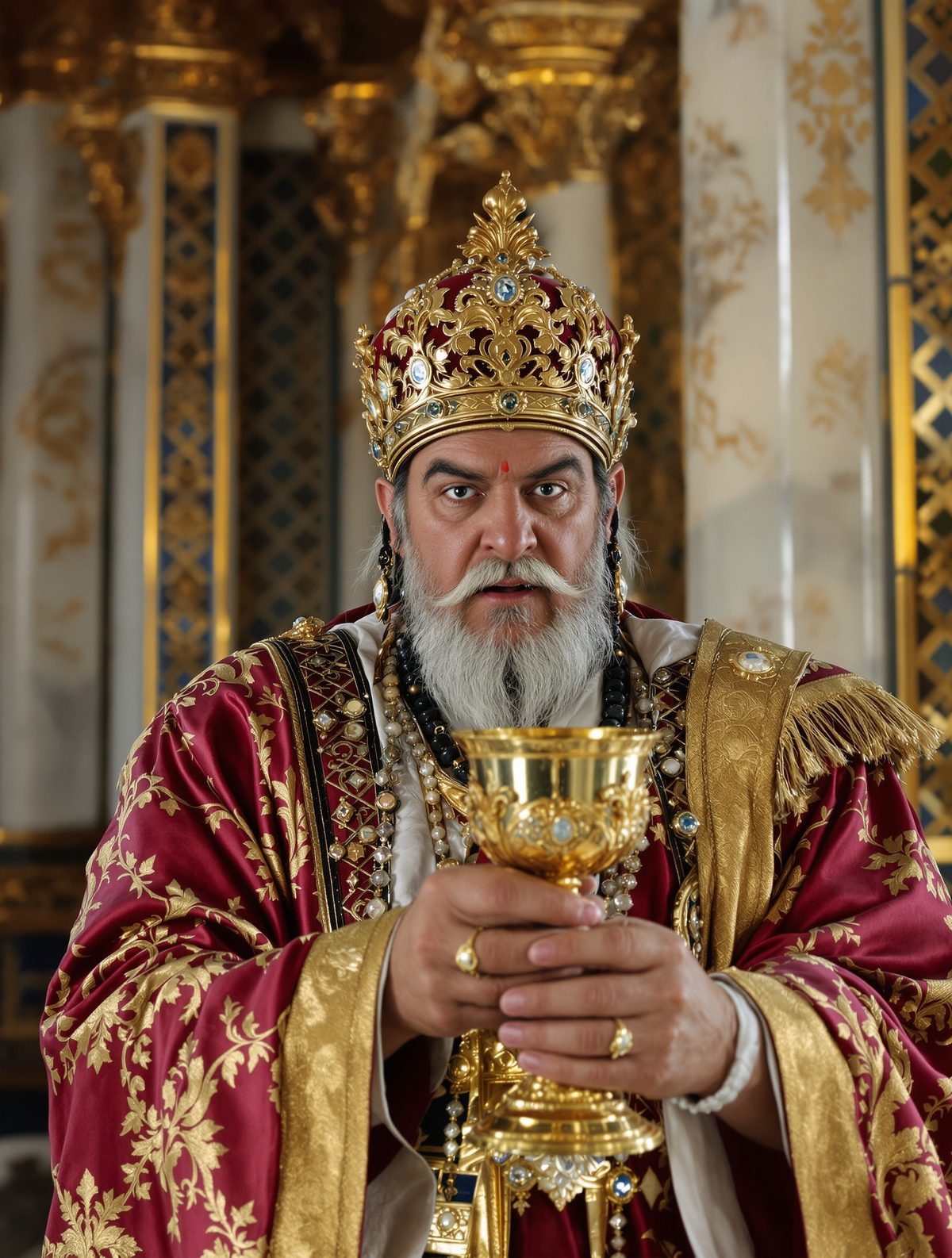
Emperor Qianlong ascended to the Dragon Throne in 1735 at age 25, inheriting not just the vast Qing Empire but an already impressive imperial art collection. But where his predecessors had been content to admire and preserve, Qianlong became obsessed with owning in the most literal sense possible.
Within his first decade of rule, Qianlong had dispatched agents across China with a simple mandate: acquire every significant piece of art, calligraphy, and ancient text they could find. No price was too high, no collection too sacred. By 1745, palace records show he had amassed over 3,000 paintings and calligraphy scrolls. By 1760, that number had swelled to 6,000. By the time of his abdication in 1796, the collection exceeded 10,000 pieces—making it larger than the Louvre, British Museum, and Metropolitan Museum of Art combined.
But Qianlong didn't just want to own these masterpieces. He wanted everyone who looked at them—forever—to know that he had owned them.
The Seal That Launched a Thousand Controversies
In 1740, five years into his reign, Qianlong commissioned what would become one of history's most consequential art tools: a personal seal reading "Qianlong Chen Han" (Qianlong's Imperial Seal). Carved from the finest jade and measuring just two inches square, this innocent-looking stamp would soon become the bane of art conservators for centuries to come.
The emperor's process was methodical and deeply personal. Each newly acquired artwork would be brought to his private study, where he would spend hours examining every brushstroke and character. Then came the moment that would make modern museum curators weep: Qianlong would take his vermillion ink pad, press his seal into it, and stamp the artwork directly—usually in a corner, but sometimes right across the center of the composition.
But he didn't stop at one seal per piece. Oh no. Qianlong had over 1,800 different seals created during his reign, and he used them liberally. A single scroll might bear his mark 20, 30, even 50 times. The famous "Dwelling in the Fuchun Mountains" by Yuan dynasty master Huang Gongwang—considered one of China's greatest landscape paintings—bears an astounding 73 of Qianlong's seals scattered across its surface.
When Passion Becomes Obsession
Qianlong's relationship with his collection went far beyond typical royal patronage. Palace records reveal that he spent at least four hours every day examining his artworks, often staying up until dawn poring over a newly acquired scroll. Court officials reported that the emperor would sometimes refuse to attend state meetings if a particularly exciting piece had arrived that morning.
His favorite target? Tang dynasty paintings from the 7th to 10th centuries—works that were already 800 to 1,000 years old when he got his hands on them. These ancient masterpieces, painted on silk so delicate it could tear at a touch, received the same enthusiastic stamping treatment as everything else. The irony is almost unbearable: in his desperate attempt to preserve his ownership of these works for posterity, Qianlong was actively hastening their deterioration.
Take the case of "Spring Excursion" by Tang master Zhan Ziqian, painted around 600 AD and considered one of China's oldest surviving landscape paintings. When Qianlong acquired it in 1751, it was in remarkably good condition. By the time he finished "appreciating" it, the painting bore 23 of his seals, including several placed directly over important compositional elements. Each stamp had required pressing the seal firmly into the ancient silk while the ink was wet, creating permanent indentations and chemical interactions that conservators today still struggle to understand.
The Poetry Emperor's Written Vandalism
If the seals weren't enough, Qianlong had another habit that would horrify any modern museum professional: he wrote on the artworks. A prolific poet who composed over 40,000 verses during his lifetime, the emperor saw nothing wrong with adding his own calligraphy directly onto ancient masterpieces, treating them like personal notebooks.
His inscriptions ranged from brief commentary ("exquisite brushwork") to full poems inspired by the artwork, to lengthy essays about his emotional response to the piece. The masterpiece "Along the River During the Qingming Festival"—a 12th-century panoramic painting that's essentially China's answer to the Mona Lisa—features not just multiple seals but also three separate poems written by Qianlong directly on the painting itself.
Perhaps most remarkably, Qianlong seemed genuinely bewildered when court officials occasionally questioned these practices. In his personal writings, he defended his actions by arguing that his seals and inscriptions were themselves works of art that enhanced the original pieces. "Future generations will treasure these works not only for their ancient beauty but also for their connection to our glorious reign," he wrote in 1762, apparently without any sense of irony.
The Great Catalog Catastrophe
In 1744, Qianlong decided his magnificent collection deserved equally magnificent documentation. He commissioned the creation of "Shiqu Baoji" (Precious Treasures of the Stone Canal), a comprehensive catalog of his artworks. This sounds like a reasonable scholarly endeavor until you realize how Qianlong approached the project.
Every single artwork had to be removed from storage, unrolled or unfolded completely, and examined by teams of scholars who would write detailed descriptions. During this process, Qianlong took the opportunity to add even more seals to pieces he felt were under-stamped. The cataloging project, which should have taken a few years, stretched on for over a decade as the emperor kept finding new spots to place his mark.
The final catalog, completed in 1757, documented 10,916 paintings and calligraphy scrolls. Conservative estimates suggest that across this entire collection, Qianlong placed over 60,000 individual seal impressions. That's an average of five to six seals per artwork, though many pieces bore far more.
Legacy of a Beautiful Disaster
Today, Qianlong's collection—or what survives of it—is scattered across museums worldwide. The Palace Museum in Beijing holds the largest portion, while significant pieces can be found in Taiwan's National Palace Museum, the Metropolitan Museum of Art, and private collections globally. Every single piece tells the same story: extraordinary ancient artistry literally stamped with imperial ego.
Modern conservation efforts focus heavily on what experts delicately call "Qianlong damage." The vermillion ink he used contained mercury and other compounds that continue to react chemically with the ancient materials, creating ongoing deterioration. Worse, the physical pressure required to make clear seal impressions created permanent indentations in delicate silk and paper that can never be reversed.
Yet here's the fascinating paradox: while Qianlong's collecting methods were destructive, his obsessive acquisitiveness probably saved thousands of artworks from destruction during China's turbulent periods. Without his imperial protection, many of these pieces might have been lost entirely to wars, natural disasters, or simple neglect.
In our age of digital ownership and NFTs, Qianlong's compulsive need to physically mark his possessions feels both ancient and strangely contemporary. His story raises uncomfortable questions about the nature of collecting, preservation, and cultural ownership that museums worldwide still grapple with today. When does passionate collecting become destructive possession? At what point does the desire to preserve become the act of destroying?
Emperor Qianlong ruled for 60 years and left behind the largest art collection in human history. Whether he saved it or ruined it might depend on your perspective—and your tolerance for red ink stamps scattered across priceless masterpieces.