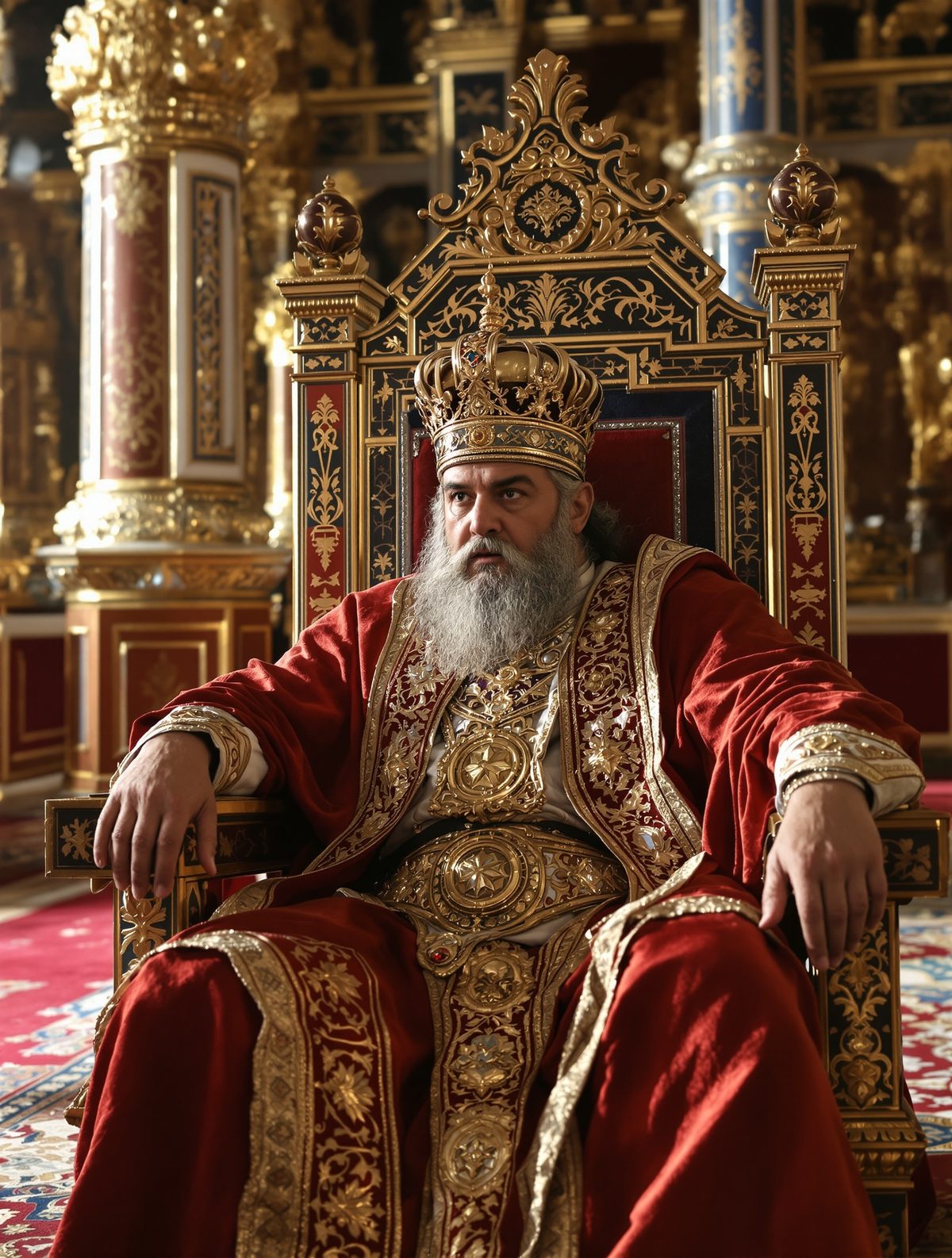
Picture this: It's March 21, 1152, and the most powerful woman in medieval Europe has just done the unthinkable. Eleanor of Aquitaine, Queen of France and ruler of lands stretching from the Loire Valley to the Pyrenees, has convinced the Pope to dissolve her fifteen-year marriage to Louis VII of France. Her official reason? They were too closely related as distant cousins. But here's what the chroniclers whispered in the shadows of medieval courts: Eleanor had already fallen for a younger, more ambitious man—Henry Plantagenet, the future King of England. What happened next would reshape the map of Europe forever.
Within eight weeks of her annulment, Eleanor would marry Henry in a secret ceremony that sent shockwaves across Christendom. She had just pulled off the most audacious power play in medieval history, trading one crown for another and setting the stage for centuries of warfare between England and France.
The Duchess Who Inherited Half of France
Eleanor wasn't just any medieval bride—she was arguably the most eligible woman in 12th-century Europe. When her father, William X of Aquitaine, died suddenly during a pilgrimage in 1137, fifteen-year-old Eleanor inherited the Duchy of Aquitaine. This wasn't merely a title; it was an empire. Her lands covered roughly one-third of modern-day France, stretching from Poitiers in the north to Bordeaux in the south, encompassing some of the richest wine-producing regions in Europe.
To put Eleanor's wealth in perspective, her duchy generated more revenue than the royal domain of France itself. She controlled vital trade routes, prosperous ports, and fertile vineyards that would make her suitors wealthy beyond imagination. But Eleanor brought more than just territory to any marriage—she was educated, cultured, and politically astute in a way that terrified and fascinated medieval men.
King Louis VI of France, known as "Louis the Fat," recognized the strategic importance of securing Eleanor's allegiance. On his deathbed in 1137, he arranged for his son, the future Louis VII, to marry Eleanor immediately. The wedding took place in Bordeaux Cathedral on July 25, 1137, just months after her father's death. Eleanor was now Queen of France, but this was only the beginning of her extraordinary story.
A Marriage Made in Political Heaven, Lived in Personal Hell
From the outside, the marriage between Louis VII and Eleanor appeared to be a medieval success story. Together, they ruled the largest unified territory in Western Europe since Charlemagne. But behind the golden facade of royal power, cracks were already beginning to show.
Louis VII was everything Eleanor was not. Where she was vivacious and bold, he was pious and cautious. Court chroniclers described Louis as more suited to monastic life than kingship—he allegedly wore hair shirts beneath his royal robes and spent hours in prayer when he should have been governing. Eleanor, meanwhile, had inherited the troubadour culture of Aquitaine, where courtly love, poetry, and sophisticated conversation flourished. She found herself married to a man who viewed such pursuits as frivolous at best, sinful at worst.
The couple's fundamental incompatibility became glaringly apparent during the Second Crusade (1147-1149). Eleanor not only accompanied Louis to the Holy Land but brought a contingent of noble ladies with her—some sources claim she even designed special armor for her female companions. This scandalous behavior horrified the conservative French court. Rumors spread that Eleanor had conducted affairs during the crusade, including a alleged liaison with her uncle, Raymond of Antioch. While historians debate the truth of these accusations, they reveal how Eleanor's independent spirit clashed with medieval expectations of queenly behavior.
Perhaps most damaging to the marriage was Eleanor's failure to produce a male heir. In fifteen years of marriage, she gave birth to only two daughters: Marie in 1145 and Alix in 1150. In a world where royal legitimacy depended on male succession, this was seen as Eleanor's greatest failure—though modern historians note that the statistical probability suggests the "fault" lay with Louis, not Eleanor.
The Secret Meeting That Changed History
In August 1151, a young duke arrived at the French court who would change Eleanor's life forever. Henry Plantagenet, Duke of Normandy, was eighteen years her junior but possessed an ambition and vitality that the French queen found irresistible. Henry was everything Louis was not—dynamic, decisive, and destined for greatness. He had already proven himself as a military commander and showed clear signs of the political acumen that would later make him one of England's most effective kings.
Contemporary sources are frustratingly vague about the exact nature of Eleanor and Henry's initial relationship, but the political implications were immediately clear to both. Henry needed Eleanor's vast territories to support his claim to the English throne—his mother, Empress Matilda, had been locked in a bitter civil war with King Stephen for years. Eleanor needed a husband who could protect her lands and match her intellectual and political ambitions.
What makes their relationship particularly fascinating is that it appears to have been built on genuine mutual attraction and respect. Medieval marriages, especially royal ones, were typically loveless political arrangements. But contemporary chroniclers noted the obvious chemistry between Eleanor and Henry, describing how they would engage in animated conversations that lasted for hours—something Eleanor had never experienced with her scholarly but passionless husband.
The Most Expensive Divorce in Medieval History
By early 1152, Eleanor had made her decision. She would dissolve her marriage to Louis VII, but she needed to do it in a way that wouldn't brand her as an adulteress or invalidate her daughters' legitimacy. Medieval canon law offered one viable option: claiming the marriage was invalid due to consanguinity—blood relationship between the spouses.
Eleanor's genealogical argument was technically sound but required considerable legal creativity. She and Louis were related through their common ancestor, Robert II of France, making them cousins in the fourth degree—a relationship the Church had forbidden in marriages since the Fourth Lateran Council. The fact that this relationship had been known for fifteen years but conveniently ignored suggests that Eleanor's legal team had found a technical loophole that even the Church couldn't dismiss.
The annulment proceedings took place at Beaugency on March 21, 1152, presided over by several French bishops. In a remarkably swift process that would have made modern divorce lawyers jealous, Eleanor's marriage was declared null and void. She retained custody of her daughters but, more importantly, regained control of Aquitaine. In one legal maneuver, she had transformed herself from a French queen bound by marriage to the most powerful unmarried woman in Europe.
What happened next reveals Eleanor's sophisticated understanding of medieval politics. She didn't linger at the French court or retreat to a convent as many expected. Instead, she immediately began the dangerous journey back to her own territories, traveling with a small escort through lands filled with ambitious nobles who might attempt to kidnap and forcibly marry her for her inheritance.
Eight Weeks to Forever: The Wedding That Shocked Europe
Eleanor's journey back to Aquitaine reads like a medieval thriller. Geoffrey of Anjou, Henry's younger brother, allegedly attempted to ambush her party near Blois, hoping to force a marriage that would give him control of her lands. She evaded this trap, only to face another kidnapping attempt by Theobald V of Blois. Eleanor's successful navigation of these dangers demonstrates not just her courage but her political intelligence—she had clearly planned contingencies for every possible scenario.
On May 18, 1152, just eight weeks after her annulment, Eleanor married Henry Plantagenet in a simple ceremony at Poitiers Cathedral. The speed of this marriage sent shockwaves throughout medieval Europe. Louis VII, in particular, was reportedly furious—not because he mourned Eleanor personally, but because he suddenly realized the catastrophic political implications of her remarriage.
The union of Eleanor's territories with Henry's created a vast Angevin Empire that stretched from Scotland to the Pyrenees. When Henry became King of England in 1154, Eleanor found herself ruling territories larger than those controlled by the King of France himself. She had effectively outmaneuvered her ex-husband and positioned herself as the most powerful queen in Western Europe.
What makes Eleanor's second marriage particularly remarkable is how different it was from her first. She and Henry produced eight children together, including the future kings Richard I (the Lionheart) and John. Contemporary accounts describe a passionate, if sometimes turbulent, relationship between two strong-willed rulers who genuinely seemed to enjoy each other's company and political partnership.
The Legacy of Love and Ambition
Eleanor of Aquitaine's decision to annul her first marriage for love and ambition reverberates through history in ways she could never have imagined. Her marriage to Henry II created the Angevin Empire, which dominated European politics for over a century and established the foundation for England's later claims to French territory—claims that would spark the Hundred Years' War centuries later.
But perhaps more importantly, Eleanor's story challenges our modern assumptions about medieval women and the nature of romantic love in the 12th century. Here was a woman who refused to accept that marriage was merely a political transaction, who insisted on her right to choose her own destiny even when it meant risking everything she had already achieved.
In our contemporary world, where divorce rates hover around 50% and dating apps promise to help us find our perfect match, Eleanor's story might seem less revolutionary. But consider this: she pulled off the medieval equivalent of a hostile corporate takeover motivated by love, risking excommunication, political exile, and even physical danger for the chance to marry a man who made her heart race and her mind engage. In any era, that takes extraordinary courage.
Eleanor lived to be 82, ruling her territories with intelligence and determination long after Henry's death in 1189. She became a patron of courtly love literature, supported troubadours who celebrated romantic passion, and helped establish cultural traditions that still influence how we think about love and marriage today. Not bad for a woman who just wanted to trade up from a boring husband to one who could match her ambition and passion.