He freed hundreds from Babylon with a paid ticket home. They expected chains and captivity; he offered paychecks and purpose.
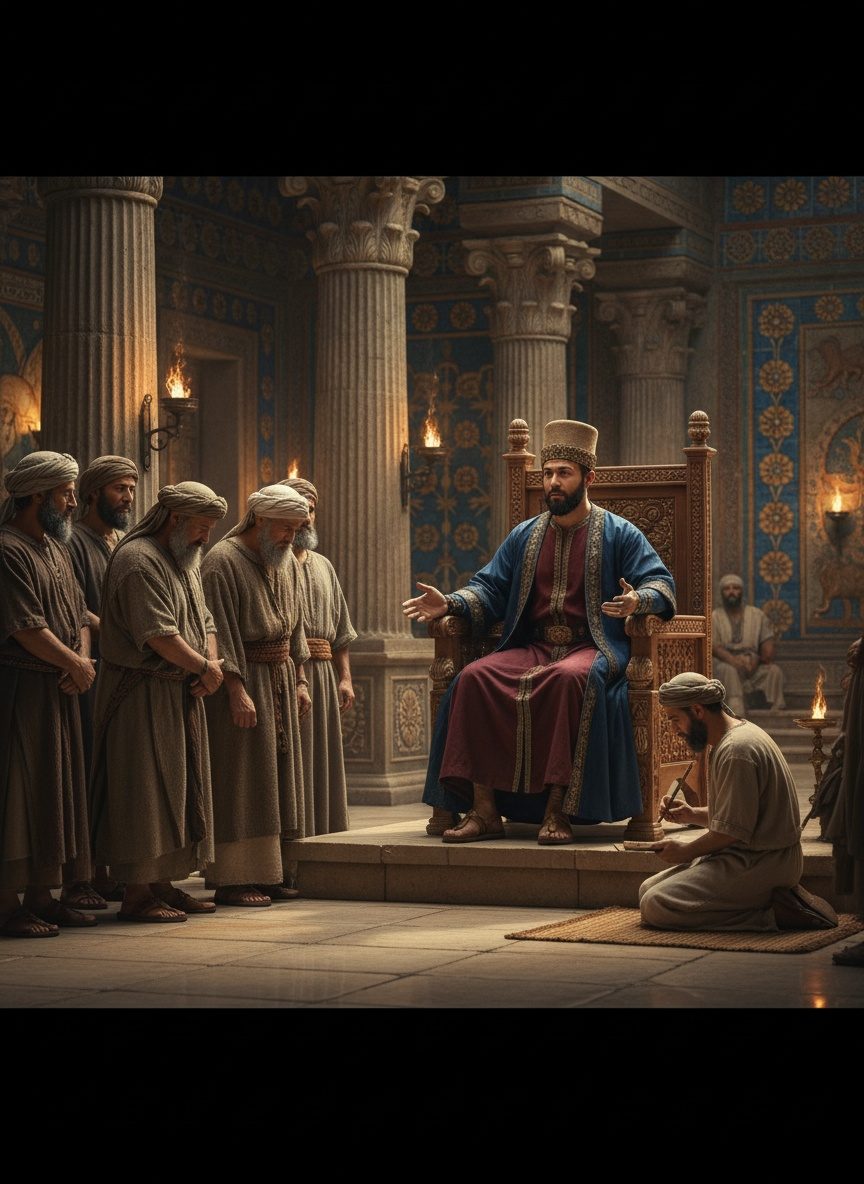
In 521 BC, the vast Persian Empire pulsed with a plethora of tongues and traditions. At its helm was Darius the Great, a figure who defied many of the expectations history would set for conquerors. He was not simply a ruler of territory; he became a liberator of temples and restorer of deities. Darius inherited from his predecessors a land littered with the annexed cultures of fallen kingdoms, yet instead of tightening this complex web of conquered peoples, he chose an unorthodox path. He decided to let them go.
The Babylonians, among others, had surrendered their deities, their symbols of hope and identity, as trophies to the Achaemenid victors. History had taught them that defeat meant assimilation or annihilation. But Darius, driven by a strategic blend of practicality and respect—or perhaps a radical vision—turned from typical imperial dogma. In one of history's most overlooked gestures of restraint, he chose to restore the gods, returning their sacred idols and traditions. In Babylon, the response was disbelief laced with relief as temple doors reopened, inviting deities back to their rightful sanctuaries.
The returning of the gods was not merely an act of religious restitution but a sophisticated political strategy. Darius understood that to maintain an empire stretched across continents, encompassing the myriad cultures from Egyptians to Greeks, he needed more than military might. He needed cooperation grounded in respect. It was a calculated act, to install loyalty not through fear, but through acknowledgment of cultural identity. By allowing captive peoples the autonomy to worship their gods and maintain their cultural sovereignty, Darius strengthened the empire's cohesion rather than cracking it.
Parallel to the reopening of temples was the unique economic strategy Darius employed. The Persian treasury could very well have viewed the conquered slaves as cheap labor. Instead, the emperor chose a revolutionary approach by reinstating wages. Craftsmen, once yoked and forced to labor, found themselves hired as workers instead of prisoners. This system of payment was not simply an ethical decision—it reverberated economic wisdom. Laborers, content in their work and satisfied with fair compensation, infused the empire with productivity and innovation that benefitted everyone, including the imperial coffers.
This unexpected benevolence extended beyond monetary compensation. It restored dignity. In an age where power often manifested as ruthless control, Darius' policy was a bold declaration that authority and empathy could coexist—the empire swelled with productivity born from a spirit of voluntary contribution rather than coerced labor.
As the empire expanded, so too did Darius' ambition to integrate rather than isolate. Instead of ruling over territories with a heavy hand, he preferred a form of governance that encouraged the very peoples once subjugated to willingly support their new overlords. It's as if the restoration of worship and remuneration were pieces of a broader mosaic, gluing disparate cultures into a single, functioning entity—not through imperial might, but through peace and prosperity.
In this context, the emphasis on regional governance burgeoned. Satraps, regional governors, were appointed. However, their control was tempered by accountability to the central authority—a clever move ensuring loyalty both locally and to the throne. This decentralized power allowed for adaptability without descent into chaos. Each region, its gods recognized and craftsmen rewarded, practiced a form of autonomy under the imperial umbrella that most empires found elusive.
Darius’ actions left an indelible mark on the subject peoples of his time. His example demonstrated that even within the iron grip of empire, humanity had a place. Ideas of equitable rule and cultural respect prefigured policies modern leaders still strive to implement. Exchange of culture and goods among these far-flung regions found pathways deeper than surface-level trade, leading to a more intricate and synergistic empire. By celebrating differences rather than smothering them, Darius' empire achieved an internal harmony unseen among history's sprawling dominions.
The story of Darius the Great serves not only as a reminder of the possibility for power wielded with wisdom but also as a presage to a world where peace and prosperity flourish from inclusive governance. In an era when empires both rose and fell by force, Darius’ reign quietly illustrated that the strongest ties are often spun not from steel, but from the delicate fibers of understanding and respect. The lessons of this ancient choice ripple today, begging us to remember that empires are stronger when built on foundations of shared humanity, rather than just dominion over lands.