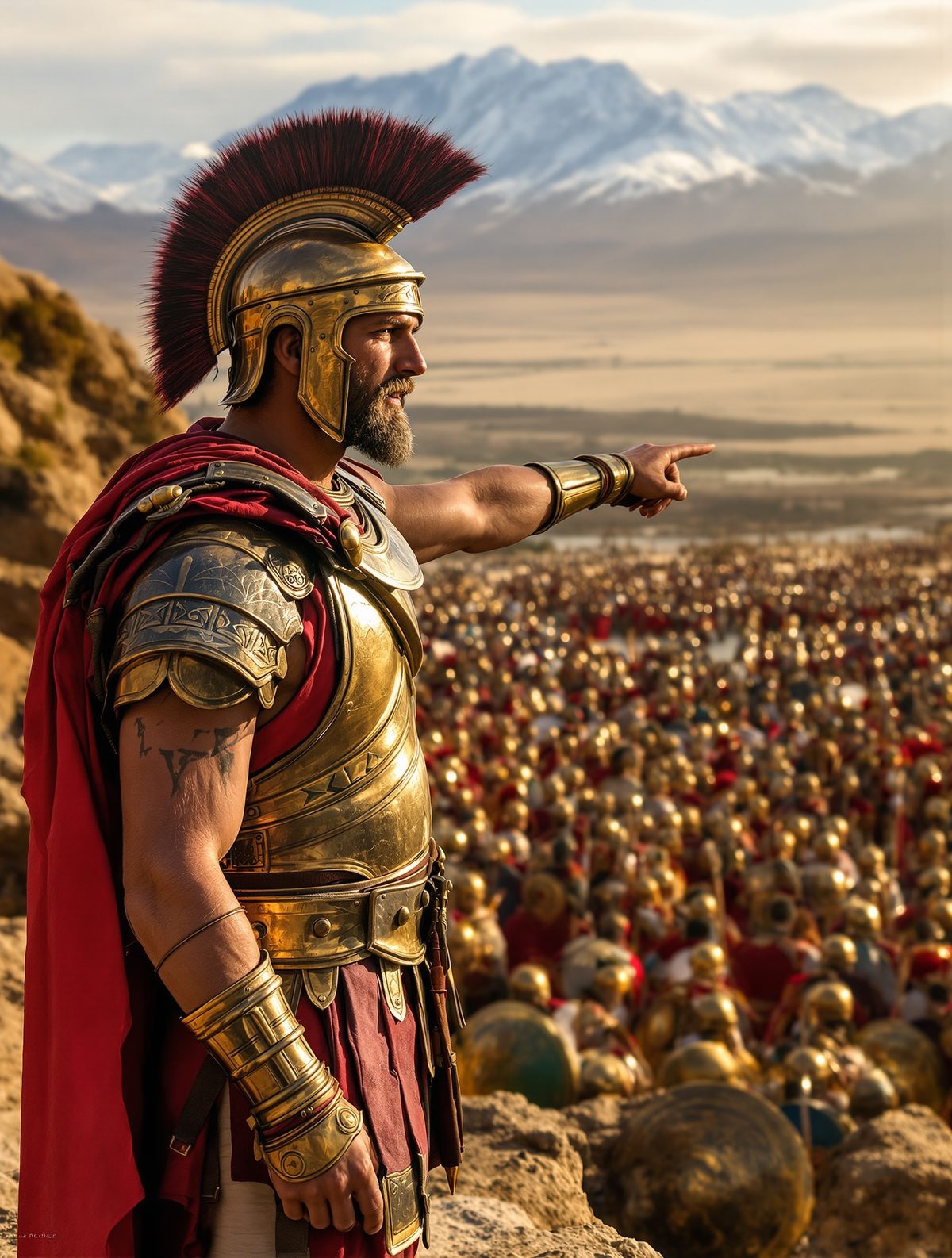
Picture this: In the scorching heat of a Mesopotamian plain, 10,000 bronze-armored Greeks lower their spears and begin their battle cry. Before them stretches the largest army the world has ever seen—nearly a million Persian soldiers gleaming in silk and gold. The year is 401 BC, and these mercenaries are about to charge straight into the heart of an empire that spans three continents. Their mission? Help a rebellious prince murder his own brother and seize the throne of the known world.
This isn't the stuff of Hollywood fiction. This is the true story of Cyrus the Younger, a Persian prince who hatched the most audacious military coup in ancient history—and the 10,000 Greek warriors who became his instruments of fratricide.
The Prince Who Craved a Crown
Cyrus the Younger wasn't supposed to be a footnote in history. Born around 424 BC, he was the second son of Darius II, ruler of the Persian Empire. But in the ancient world, being second meant being nothing. When his father died in 404 BC, the throne passed to his older brother, who took the name Artaxerxes II. Cyrus received a consolation prize: governorship of Lydia and command of Persian forces in Asia Minor.
For most men, ruling a territory larger than modern-day Turkey would have been enough. But Cyrus the Younger burned with ambition that his modest title couldn't contain. He believed—perhaps rightly—that he possessed superior military skills and political acumen. Ancient sources suggest his mother, Queen Parysatis, even preferred him to his brother. Yet none of that mattered when it came to Persian succession law.
So Cyrus began planning something unprecedented: he would buy himself an army and take by force what birthright had denied him.
The World's Most Expensive Military Shopping Spree
By 402 BC, Cyrus had begun secretly assembling the largest mercenary force in ancient history. His recruiting grounds? The war-torn city-states of Greece, where professional soldiers wandered between conflicts like deadly nomads, selling their skills to the highest bidder.
These weren't desperate peasants looking for coin. The Greeks Cyrus hired were elite warriors—veterans of the Peloponnesian War who had spent decades perfecting the art of killing. They fought in the phalanx formation, a nearly impenetrable wall of overlapping shields and bronze-tipped spears that had made Greek armies legendary across the Mediterranean.
Cyrus offered them something irresistible: one daric per month (roughly four times a normal Greek soldier's pay), plus bonuses for exceptional service. Within months, mercenary captains like Clearchus of Sparta, Menon of Thessaly, and Proxenus of Boeotia had assembled contingents totaling exactly 10,400 Greek hoplites and 2,500 peltasts (light infantry).
But here's what makes this story truly remarkable: Cyrus lied to most of them about the mission. He told his Greek commanders they were marching to put down rebellions in Pisidia and Cilicia. Only his most trusted captains knew they were actually marching 1,500 miles across the Persian Empire to commit regicide.
The March That Shook an Empire
In spring 401 BC, Cyrus's army began their epic journey from Sardis in western Turkey toward the heart of Mesopotamia. Picture this enormous column snaking across the ancient world: 10,000+ Greeks in bronze armor, thousands of Persian and Anatolian troops loyal to Cyrus, plus baggage trains, camp followers, and siege equipment. Ancient historian Xenophon, who participated in the expedition, estimated the total force at nearly 100,000 people.
The logistics alone were staggering. Feeding this massive army required coordination with dozens of local governors and merchants. They consumed roughly 150 tons of grain daily, plus meat, wine, and fodder for thousands of horses and pack animals. Yet somehow, Cyrus kept this enormous military machine moving 15-20 miles per day across some of the world's most challenging terrain.
Word of the approaching army sent shockwaves through the Persian Empire. Provincial governors faced an impossible choice: remain loyal to King Artaxerxes II or join his brother's rebellion. Many chose Cyrus, swelling his ranks with additional Persian troops and cavalry. By the time the army reached Cunaxa, about 60 miles north of Babylon, Cyrus commanded perhaps the most formidable military force assembled since Alexander the Great's campaigns (which hadn't happened yet).
Cunaxa: When Brothers Clash and Empires Hang in the Balance
September 3, 401 BC. The dusty plains near Cunaxa became the stage for one of history's most consequential battles—and one of its greatest "what-ifs."
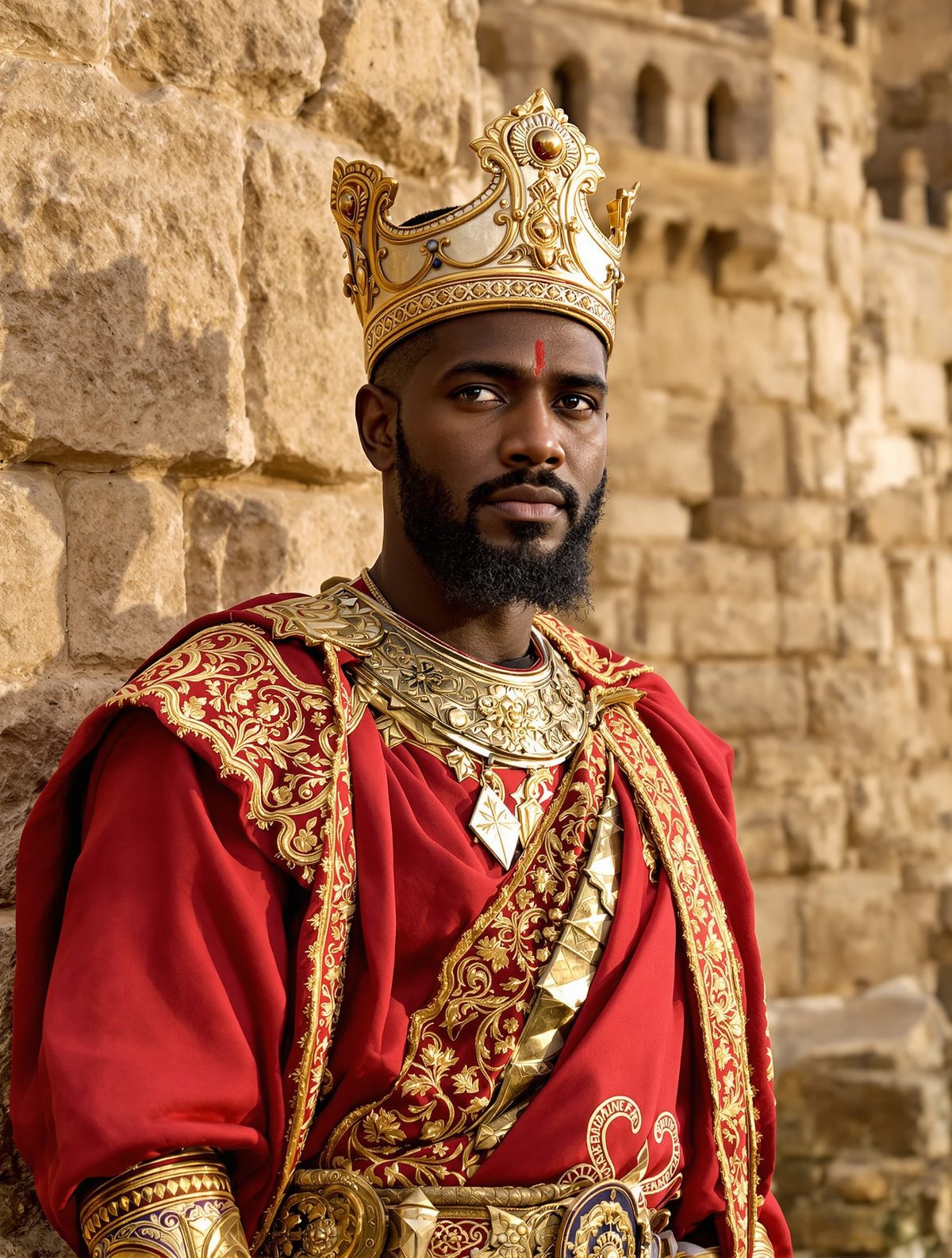
King Artaxerxes II had finally assembled his response: a royal army numbering between 400,000 and 900,000 men (ancient sources vary wildly, but all agree it was massive). Persians, Medes, Babylonians, Armenians, and dozens of other subject peoples formed a battle line stretching beyond the horizon. The king himself commanded the center, surrounded by his elite guard and wearing the royal tiara that Cyrus coveted.
Cyrus positioned his Greeks on the right wing—the place of honor—knowing they were his best troops. When battle commenced, these professional warriors did exactly what they'd been paid to do: they smashed through everything in front of them like a bronze-tipped avalanche. The Persian left wing, faced with the disciplined fury of the Greek phalanx, simply disintegrated.
But here's where the story takes a tragic turn that changed world history. Instead of staying with his winning strategy, Cyrus made a fatal decision. Spotting his brother in the distance, he spurred his horse forward with a small group of companions in a desperate attempt to kill Artaxerxes personally. It was the ancient equivalent of a medieval knight's fantasy—single combat deciding the fate of empires.
The brothers actually came within striking distance of each other. Cyrus hurled his javelin at the king but missed. Moments later, a Persian noble named Mithridates struck Cyrus below the eye with his own spear. The prince who would be king fell dead in the dust, and with him died the dreams of 10,000 Greeks who suddenly found themselves victorious but leaderless, 1,500 miles from home, surrounded by enemies.
The Retreat That Became Legend
What happened next became one of the greatest survival stories in military history. The 10,000 Greeks, now led by the philosopher-soldier Xenophon, fought their way out of Mesopotamia in an epic fighting retreat called the Anabasis. They battled through Kurdistan, crossed the mountains of Armenia in winter, and finally reached the Black Sea after months of constant warfare.
When the survivors finally saw the sea and shouted "Thalatta! Thalatta!" (The sea! The sea!), they weren't just celebrating their salvation—they were marking the end of the most audacious military adventure in ancient history.
But the real legacy of Cyrus the Younger's failed coup wasn't the retreat. It was what the expedition revealed about Persian weakness. These 10,000 Greeks had marched to the empire's heart, won every battle they fought, and escaped despite being surrounded by hundreds of thousands of enemies. A young Macedonian prince named Alexander would study their example carefully, and 60 years later, he would finish what Cyrus the Younger started.
The Brother Who Changed the World
Today, Cyrus the Younger is remembered mainly as a footnote to his famous ancestor, Cyrus the Great, or as the patron of Xenophon's literary masterpiece. But his story deserves better. This forgotten prince came within a spear's thrust of changing the course of world history.
Had Cyrus succeeded at Cunaxa, the Persian Empire might have been revitalized under aggressive leadership, potentially preventing Alexander's conquests and altering the entire trajectory of Western civilization. Instead, his death left the empire in the hands of Artaxerxes II, whose long but weak reign allowed Persian power to gradually decay—setting the stage for Macedonian conquest and the Hellenistic age that followed.
The story of Cyrus the Younger reminds us that history often turns on the smallest moments: a missed javelin throw, a prince's impulsive charge, a single spear thrust that killed an empire's last chance for renewal. Sometimes the most important stories are about the futures that never came to pass—and the ambitious dreamers who died trying to create them.