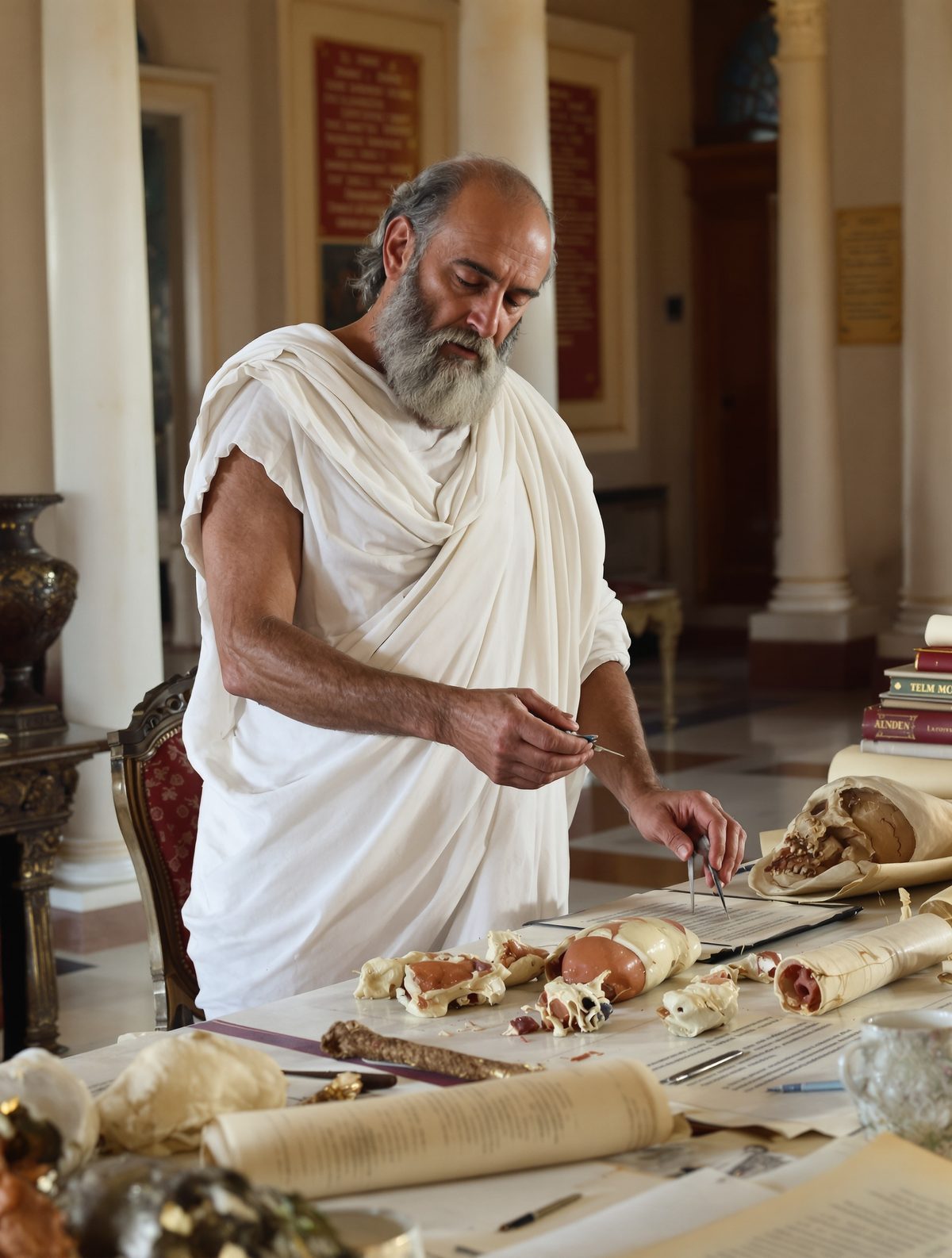
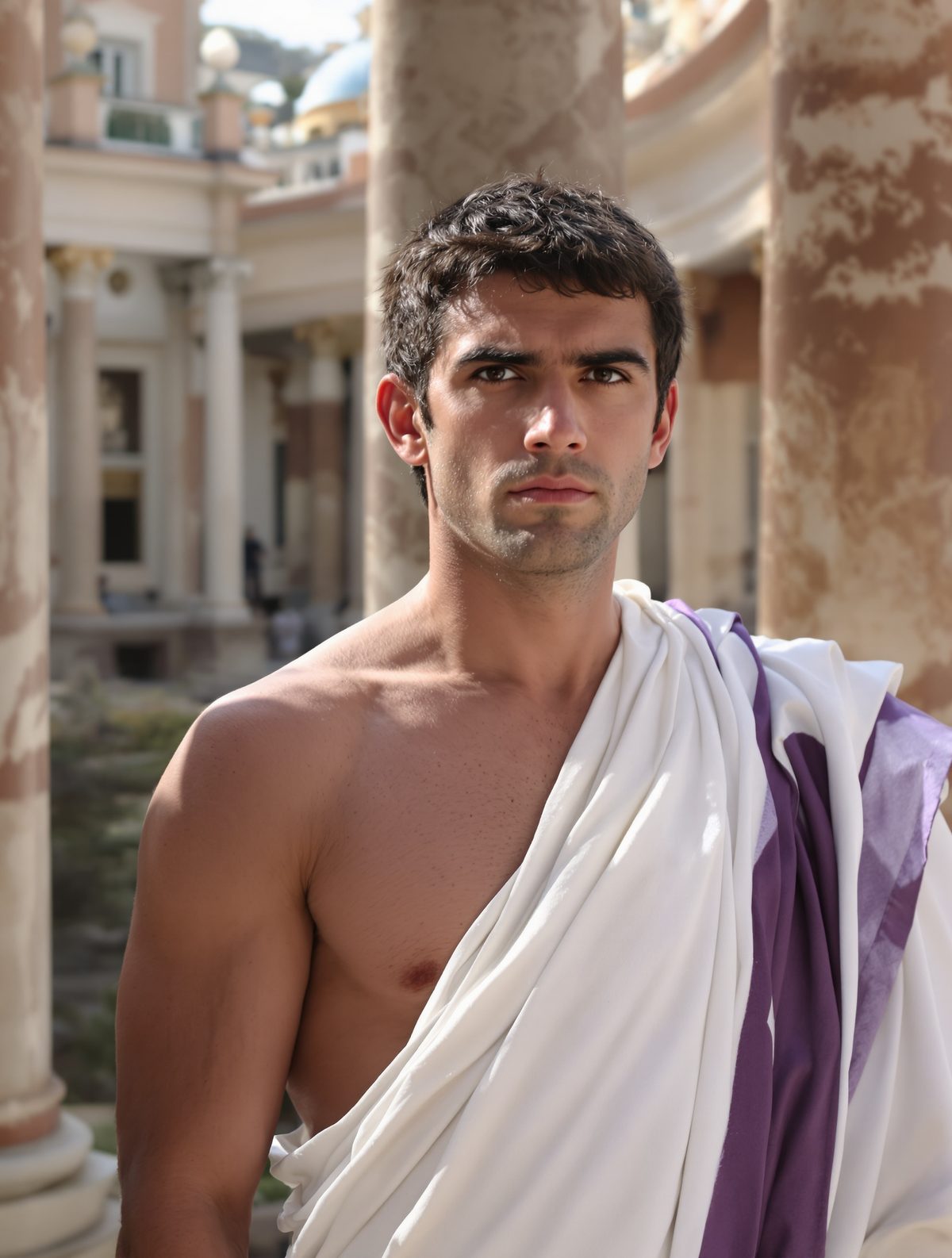
Picture this: It's 508 BC, and the most powerful politician in Athens is pacing frantically in his marble villa. Outside, the city buzzes with rumors of his impending downfall. Cleisthenes—descendant of tyrants, member of the elite Alcmaeonid family—is about to lose everything to his aristocratic rival. He has no army, no faction of nobles backing him, and no obvious path to victory.
What he does next will seem so desperate, so unprecedented, that it will accidentally create the foundation of every democratic government for the next 2,500 years. In a moment of pure political calculation, Cleisthenes is about to hand power to the one group no Greek politician had ever seriously courted: the common people.
This is the story of how democracy was born not from high-minded philosophy, but from a losing candidate's last-ditch campaign strategy.
The Aristocrat with Everything to Lose
To understand just how radical Cleisthenes' gamble was, you need to picture Athens in 510 BC. This wasn't the democratic powerhouse we remember from textbooks—it was a city-state where a handful of wealthy families had spent generations trading power back and forth like a game of musical chairs.
Cleisthenes came from political royalty. His grandfather was the tyrant Cleisthenes of Sicyon, and his family, the Alcmaeonids, had been major players in Athenian politics for decades. They'd even helped fund the rebuilding of the Oracle at Delphi—a ancient world equivalent of donating a hospital wing to get your name on the building. When the Spartan king Cleomenes drove out the tyrant Hippias in 510 BC, it seemed natural that the Alcmaeonids would return to their rightful place at the top of the political food chain.
But politics, as Cleisthenes was about to learn, rarely follows a script. His main rival, Isagoras, had something Cleisthenes lacked: the backing of the established aristocratic families and a powerful alliance with Sparta. In the traditional power game, this should have been checkmate.
Here's where the story gets interesting. Archaeological evidence suggests that Athens at this time had a population of roughly 250,000 people. Of these, perhaps 30,000 were adult male citizens—and of those, maybe 5,000 belonged to the aristocratic and wealthy merchant classes that actually participated in politics. Cleisthenes was fighting over the support of this tiny elite, while 25,000 ordinary citizens—farmers, craftsmen, traders—had no real voice in who ruled them.
The Unprecedented Alliance
In 508 BC, Isagoras won the archonship—essentially becoming Athens' chief executive. Cleisthenes had lost the conventional political battle. In most city-states, this would have meant exile, political irrelevance, or worse. But instead of accepting defeat, Cleisthenes made a choice that must have seemed insane to his aristocratic peers.
He went directly to the demos—the common people—and offered them something no politician ever had: actual political power.
Picture the scene: Cleisthenes, dressed in the finest robes money could buy, standing in the agora before crowds of farmers with dirt under their fingernails, potters with clay-stained hands, and merchants who'd never set foot in a symposium. He's promising them not just a voice, but the voice in how Athens is governed. The audacity of it would have been breathtaking.
This wasn't some gradual evolution toward enlightenment—it was a desperate political maneuver. As the historian Herodotus puts it, Cleisthenes "took the people into partnership." But here's the remarkable thing: it worked.
The common citizens rallied behind Cleisthenes with an enthusiasm that shocked everyone, including probably Cleisthenes himself. When Isagoras realized what was happening, he panicked and called in his Spartan allies. King Cleomenes arrived with a small force and tried to dissolve the Council and install a narrow oligarchy of 300 supporters of Isagoras.
When the People Fought Back
What happened next was unprecedented in Greek politics. The Athenian people—not the aristocrats, not the military elite, but ordinary citizens—spontaneously rose up against the Spartan intervention. They besieged Cleomenes and Isagoras on the Acropolis for three days.
Think about this moment: for the first time in recorded history, common citizens were fighting not just to defend their city, but to defend their right to participate in governing it. They had tasted political power for just a few months, and they weren't about to give it up.
The siege was successful. Cleomenes negotiated a safe passage out of Athens, taking Isagoras with him. Cleisthenes returned from a brief exile to find himself not just victorious, but committed to actually implementing the revolutionary system he'd promised.
Here's a detail that doesn't make it into most textbooks: ancient sources suggest that during those three days on the Acropolis, there were heated debates among the besiegers about what kind of government they actually wanted. Some voices called for direct popular rule, others for a mixed system. Cleisthenes wasn't just implementing his own vision—he was negotiating in real-time with a political coalition that had never existed before.
Building Democracy from Scratch
Once in power, Cleisthenes faced a problem no politician had ever encountered: how do you actually give political power to 30,000 people? There was no handbook for democracy because democracy had never existed.
His solution was brilliantly practical. He reorganized the entire structure of Athenian society, creating 10 new tribes that mixed citizens from the city, the coast, and the inland areas. This wasn't just administrative reorganization—it was social engineering designed to break up the traditional power networks that had dominated Athens for generations.
Each tribe would select 50 representatives to a new Council of 500, which would prepare business for a popular assembly where every citizen could vote. He introduced ostracism—the ability to exile overly powerful politicians by popular vote. He created local councils called demes that gave citizens direct experience in self-governance.
The numbers tell the story of how radical this was: under the old system, maybe 1-2% of citizens had real political influence. Under Cleisthenes' reforms, every adult male citizen—roughly 12% of the total population—had a vote and the opportunity to serve in government. For comparison, women wouldn't gain the vote in the United States until 1920, and many democracies didn't achieve universal adult suffrage until the mid-20th century.
But here's perhaps the most surprising detail: Cleisthenes' system included what we'd now call term limits and salary caps. Council members served for just one year and couldn't serve consecutive terms. Many positions were filled by lottery rather than election, to prevent the wealthy from buying their way into power.
The Accidental Revolutionary
Within a generation, Athenian democracy had become powerful enough to lead the Greek resistance against the Persian Empire. The citizen-soldiers who fought at Marathon in 490 BC weren't fighting just for their city—they were fighting for their right to govern themselves. Democracy had gone from desperate campaign strategy to worth-dying-for political principle in less than 20 years.
But we shouldn't romanticize what Cleisthenes created. His democracy still excluded women, slaves, and foreigners—roughly 88% of the population. It was direct rather than representative, meaning it could only work in a small city-state. And it remained vulnerable to demagogues and mob rule, as critics like Plato would later point out.
Still, the core insight was revolutionary: that ordinary people could be trusted with political power, that governance worked better when those being governed had a say in the process. This idea would lie dormant for centuries, dismissed by most political philosophers as naive and dangerous, before resurging in the Enlightenment and becoming the foundation of the modern world.
Why This Story Matters Today
Every time you vote, every time a politician makes a campaign promise to "give power back to the people," every time someone demands a say in the decisions that affect their life, you're witnessing the echo of that desperate gamble Cleisthenes made in 508 BC.
The lesson isn't that democracy emerged from pure motives—it's that transformational change often comes from unexpected places and impure motivations. Cleisthenes wasn't a visionary philosopher; he was a politician trying to win. But in trying to save his own career, he stumbled onto something that would outlive the entire Greek civilization.
Today, as democracies around the world face challenges from authoritarianism, polarization, and voter apathy, it's worth remembering that democracy's first moment wasn't born in a philosophy classroom or a constitutional convention. It was born in a moment of political desperation, when someone was willing to bet everything on the radical idea that ordinary people might actually know how to govern themselves.
That bet paid off once. The question for our time is whether we still believe it's worth making.