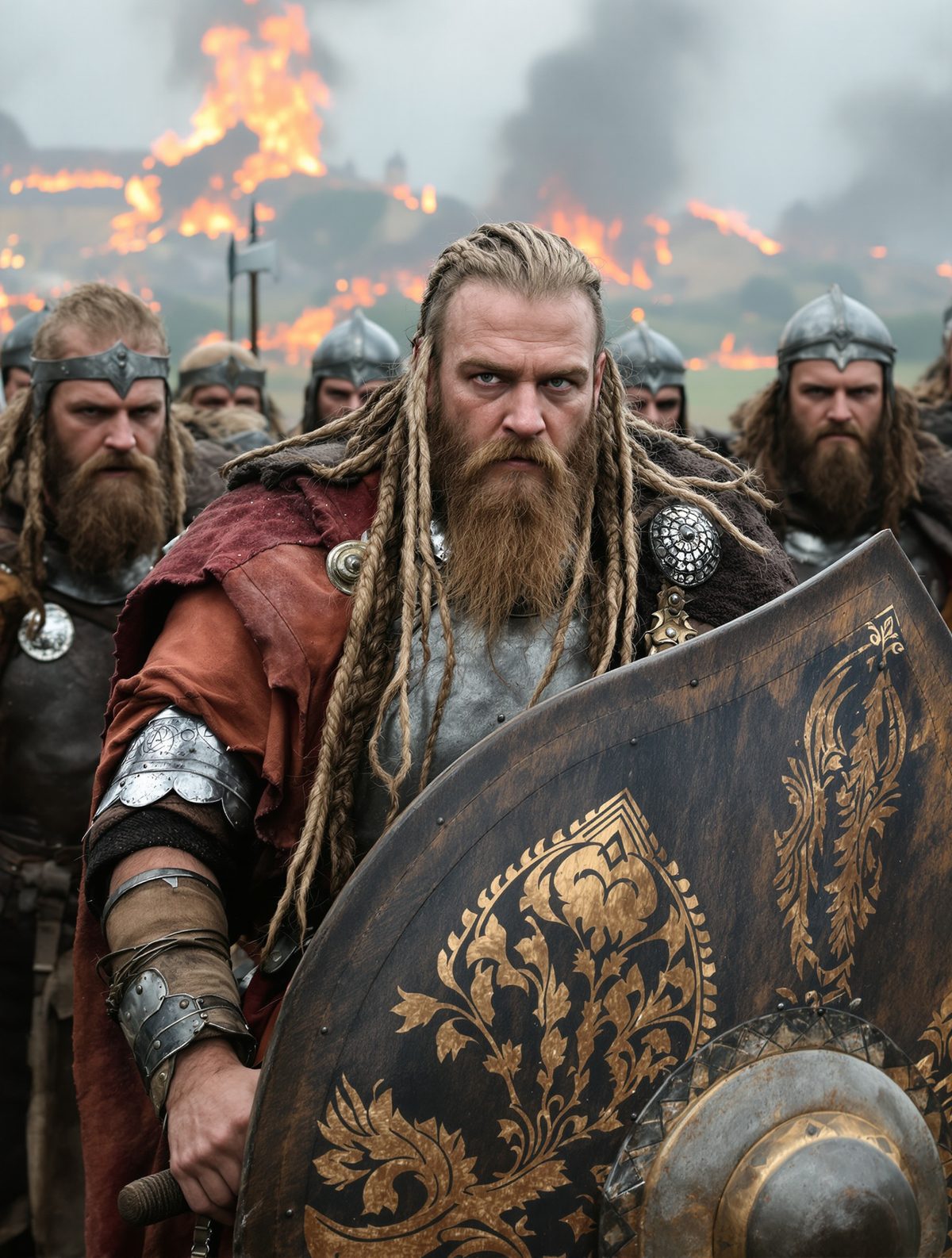
Picture this: a scruffy monk, barely five feet tall, rides through the French countryside on a donkey so small his feet nearly drag on the ground. Behind him stretches a procession that defies belief—40,000 peasants, children, elderly farmers, and desperate souls, all convinced that this wild-eyed preacher holds the key to salvation. They've abandoned their homes, sold their livestock, and kissed their old lives goodbye. Ahead lies Jerusalem. Between them and the Holy City stretch thousands of miles of hostile territory, brutal weather, and almost certain death.
This was the People's Crusade of 1096, and at its head marched Peter the Hermit—a man whose silver tongue would orchestrate one of history's most tragic mass movements. What happened next would shock even the blood-soaked medieval world.
The Preacher Who Set Europe Ablaze
Peter the Hermit didn't look like a man who could move mountains. Contemporary chroniclers described him as short and swarthy, with piercing dark eyes that seemed to burn with divine fire. He dressed in a coarse woolen tunic, went barefoot regardless of weather, and subsisted on little more than bread and wine. Yet when this unremarkable French monk opened his mouth, something extraordinary happened.
In early 1096, just months after Pope Urban II had called for the First Crusade at the Council of Clermont, Peter began preaching throughout northern France and the German territories. But where the Pope had appealed primarily to knights and nobles, Peter's message resonated with an entirely different audience: the poor, the desperate, and the dispossessed.
"Christ himself has chosen you!" Peter would cry to crowds of unwashed peasants. He claimed to carry letters written by Jesus, demanding that Christians reclaim Jerusalem from Muslim rule. In an age when few could read and divine visions were accepted as fact, Peter's words carried the weight of prophecy.
What made Peter's preaching so effective wasn't just his charisma—it was his timing. Europe in 1096 was a powder keg of social tensions. A series of poor harvests had left many starving. Feudal obligations trapped peasants in cycles of poverty and servitude. Disease was rampant. When Peter promised that joining his crusade would guarantee immediate forgiveness of all sins and a place in heaven, thousands saw it as their only escape from earthly misery.
The Great Exodus Begins
By spring 1096, Peter's following had swollen beyond all expectations. Unlike the official crusade being organized by nobles and bishops, Peter's movement was startlingly democratic in its desperation. Entire families joined: grandmothers pushing handcarts, pregnant women, children barely old enough to walk. They brought everything they owned, which wasn't much.
The procession that finally departed from France in April 1096 numbered an estimated 40,000 souls—making it one of the largest mass migrations in medieval European history. They called themselves "pilgrims," but they were really refugees fleeing toward what they believed would be a better life in the Holy Land.
Peter had made catastrophic miscalculations from the start. He'd provided no meaningful supplies, no military organization, and no realistic timeline. His followers believed God would provide food along the way, but divine intervention proved frustratingly absent. Within weeks, the procession was strung out across hundreds of miles as the weak fell behind and the strong pressed forward.
Contemporary chronicles describe scenes of biblical suffering: mothers carrying dead infants, elderly pilgrims collapsing by roadside shrines, desperate families trading their few remaining possessions for moldy bread. The crusaders left a trail of unmarked graves from France to Hungary.
When Faith Meets Reality
As Peter's army stumbled through Germany and into Eastern Europe, their reception grew increasingly hostile. What had begun as a holy pilgrimage was transforming into something far darker. Hungry and desperate, some crusaders turned to robbery and violence to survive.
The situation exploded when they reached the Rhineland. Whipped into religious frenzy and seeking scapegoats for their suffering, mobs of crusaders launched brutal pogroms against Jewish communities in Speyer, Worms, Mainz, and other cities. Thousands of innocent Jews were murdered in what historians now recognize as the first systematic Holocaust in European history. Peter himself seems to have been horrified by this violence, but he'd lost control of his movement.
By the time the surviving crusaders limped into Hungary, their numbers had been decimated by starvation, disease, and desertion. King Coloman of Hungary, alarmed by reports of the chaos trailing in their wake, demanded hostages to ensure good behavior as they crossed his territory. Even then, clashes between crusaders and Hungarian troops left hundreds more dead.
The Byzantine Emperor Alexios I, who had originally requested Western aid against Muslim forces, watched Peter's ragtag army approach Constantinople with growing horror. These weren't the disciplined knights he'd hoped for—they were a starving mob that threatened to destabilize his own kingdom.
The Slaughter at Civetot
In August 1096, what remained of Peter's People's Crusade—perhaps 20,000 survivors—finally reached Byzantine territory. Emperor Alexios quickly ferried them across the Bosphorus into Anatolia, eager to get them away from Constantinople before they could cause more trouble.
Peter had managed to keep most of his followers together through sheer force of personality, but now even his authority was crumbling. Different factions within the crusader camp began operating independently, launching unauthorized raids against nearby Muslim settlements. These attacks were military disasters that only served to alert Turkish forces to their presence.
The end came swiftly and brutally. On October 21, 1096, Sultan Kilij Arslan I of the Seljuk Turks launched a surprise attack on the main crusader camp near Civetot. The peasant crusaders, possessing neither military training nor adequate weapons, were slaughtered almost to the last man, woman, and child.
Contemporary Muslim sources describe piles of Christian bodies so high they formed small mountains. Of the original 40,000 who had followed Peter from France, fewer than 3,000 survived the massacre. Most of Peter's inner circle perished, though Peter himself had been away in Constantinople seeking supplies when the attack occurred—a detail that would haunt him for the rest of his life.
The Aftermath of a Dream Deferred
Peter the Hermit survived his crusade's destruction, though he was never quite the same man afterward. He eventually joined the official First Crusade led by professional knights and was present for the capture of Jerusalem in 1099. But he never again wielded the hypnotic influence that had once moved multitudes.
The failure of the People's Crusade sent shockwaves through medieval Europe. It demonstrated the gulf between religious enthusiasm and military reality, between divine promises and earthly logistics. The scattered bones of Peter's followers became a cautionary tale about the dangers of mass hysteria and charismatic leadership unchecked by practical planning.
Yet the People's Crusade also revealed something profound about the desperation of medieval common folk—their willingness to risk everything for the promise of a better life, their hunger for meaning in a world that offered them little hope. Peter's followers weren't naive fools; they were people with nothing left to lose, reaching for the only salvation they could imagine.
Today, as we watch crowds respond to charismatic leaders promising simple solutions to complex problems, Peter the Hermit's story feels uncomfortably relevant. The monk's tale reminds us that the most dangerous movements often begin not with evil intentions, but with desperate people seeking hope in a hopeless world. The road to catastrophe, it turns out, can be paved with the very best of intentions—and littered with the bones of true believers who trusted too much and questioned too little.