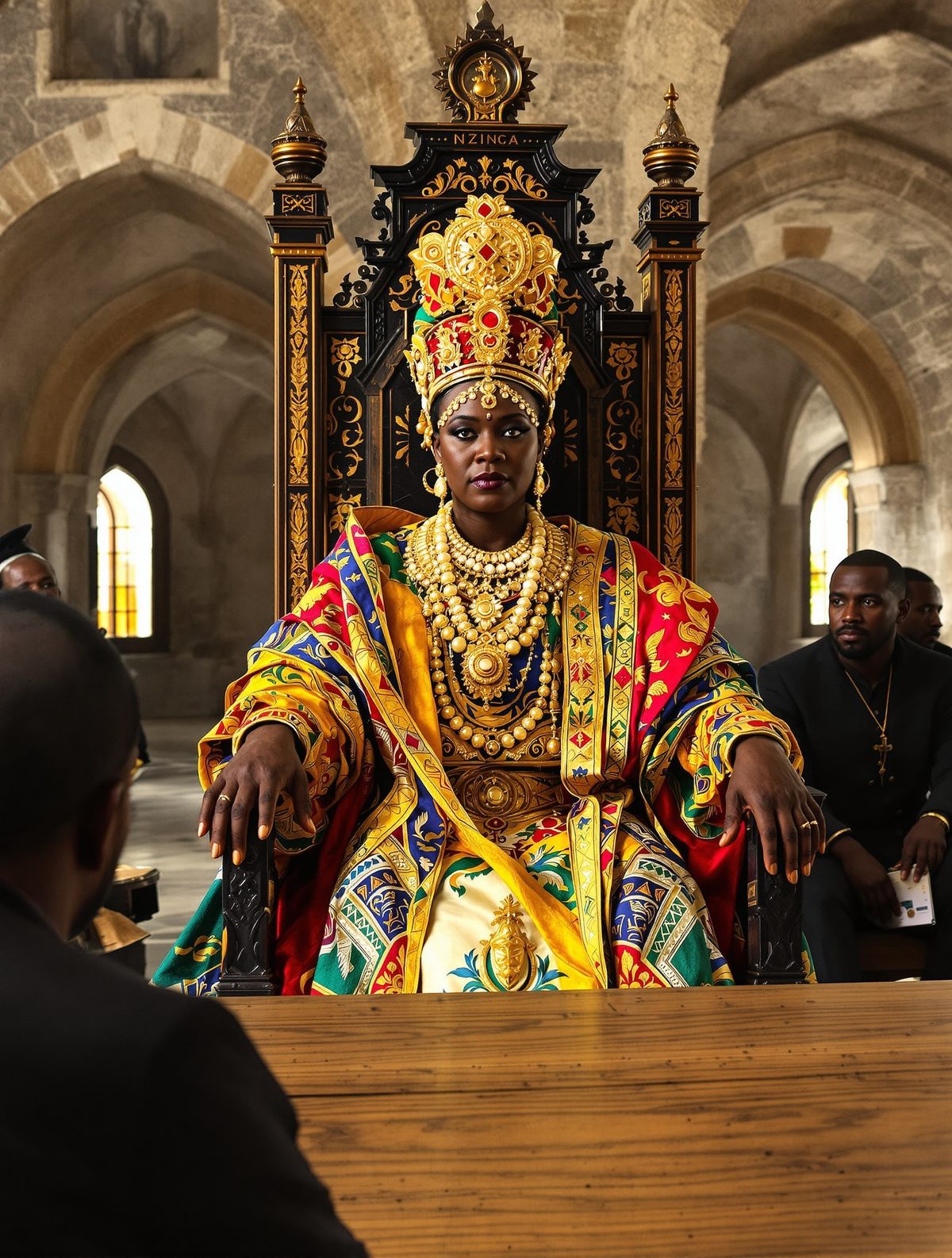
The knife glinted in the torchlight as it descended toward the sacred bull's throat. Around the altar, Egyptian priests wailed in horror as their living god—a magnificent black bull adorned with golden ornaments—bled out onto the temple stones. But this wasn't a ritual sacrifice to honor the divine. This was conquest cuisine. Artaxerxes III, the Persian king who had just reclaimed Egypt after six decades of rebellion, was about to commit the ultimate act of cultural domination: he was going to eat their gods for dinner.
The year was 343 BC, and the Persian Empire was hungry—quite literally—for revenge against the upstart Egyptians who had dared to break free from imperial control. What followed would be remembered as one of history's most shocking acts of religious desecration, a calculated insult that cut deeper than any sword.
The Bull That Thought It Was God
To understand the sheer audacity of Artaxerxes III's dinner choice, you need to grasp just how sacred these animals were to the Egyptians. The Apis bull wasn't just any bull—it was literally considered the earthly incarnation of Ptah, one of Egypt's most important creator gods. These weren't ordinary cattle that happened to live in temples. Each Apis bull was carefully selected based on specific divine markings: a white triangle on its forehead, an eagle-shaped patch on its back, double hairs on its tail, and a scarab-shaped mark under its tongue.
When an Apis bull died, the entire nation went into mourning. The sacred animal was mummified with the same care given to pharaohs, wrapped in linen bandages, and entombed in massive granite sarcophagi in the underground galleries of Saqqara. Some of these sarcophagi weighed over 60 tons—more elaborate than the burial chambers of many human rulers. The search for the next Apis bull would then begin, with priests traveling throughout Egypt until they found another animal bearing the divine marks.
During its lifetime, the Apis bull lived in luxury that would make modern billionaires jealous. It resided in specially constructed temples with its own harem of sacred cows, was fed the finest foods, and was consulted as an oracle. Egyptians would present questions to the bull, and its movements—whether it entered the eastern or western chamber of its temple—were interpreted as divine answers. This wasn't superstition to the Egyptians; this was as real as gravity.
Sixty Years of Sweet Freedom
Egypt's defiance of Persian rule began in 404 BC when Amyrtaeus, a native Egyptian prince, successfully expelled the Persian occupiers and declared independence. For nearly six decades, Egypt remained free from Persian control—a remarkable achievement that galled successive Persian rulers. The Egyptians weren't content to simply defend their borders; they actively supported other rebellions against Persian rule throughout the empire.
The Persians made several attempts to reconquer Egypt during this period, but the Nile Delta's geography proved to be Egypt's greatest ally. The maze of waterways, combined with Egypt's wealth and ability to hire Greek mercenaries, turned every invasion into a costly nightmare. Persian armies would advance down the eastern Mediterranean coast, only to become bogged down in siege warfare against heavily fortified Egyptian positions.
By the time Artaxerxes III ascended to the Persian throne in 358 BC, Egyptian independence had become more than a military problem—it was a symbol of Persian weakness that encouraged rebellion throughout the empire. The new king, known for his ruthless efficiency, was determined to end this embarrassment once and for all.
The Iron Fist of Artaxerxes III
Artaxerxes III, whose reign name meant "the kingdom of righteousness," was anything but righteous in the conventional sense. Modern historians consider him one of the most brutal Persian rulers, a man who secured his throne by murdering most of his family members and who governed through terror and overwhelming force. When he decided to reconquer Egypt, he didn't just plan a military campaign—he orchestrated a systematic destruction of Egyptian morale.
The Persian invasion of 343 BC was meticulously planned. Artaxerxes assembled a massive force that included not only Persian troops but also Greek mercenaries, Phoenician naval units, and auxiliary forces from across the empire. The Persian king had learned from previous failed invasions and avoided the trap of advancing directly into the Delta's defensive maze. Instead, he struck swiftly at key strategic points while simultaneously bribing Egyptian commanders to switch sides.
The Egyptian pharaoh Nectanebo II, last of the native Egyptian rulers, found his forces crumbling as Persian gold proved more persuasive than patriotic appeals. City after city opened their gates to the Persian advance, and within months, the dream of Egyptian independence was over. Nectanebo fled south to Nubia, leaving his people to face the wrath of the Persian conqueror.
When Gods Become Groceries
What happened next shocked even the Persian soldiers who witnessed it. Artaxerxes III didn't content himself with the usual conquest ritual of accepting submission and installing Persian administrators. He systematically targeted the very heart of Egyptian religious life: their sacred animals.
The king ordered the slaughter of Apis bulls throughout Egypt—not just the primary bull in Memphis, but the sacred animals in temples across the conquered territory. According to Egyptian sources, which admittedly may have exaggerated the horror for dramatic effect, Artaxerxes personally participated in some of these killings. The bulls were butchered in front of their priests and worshippers, their blood spilling across temple floors that had never been defiled by such violence.
But the killing was only the beginning. Artaxerxes ordered the sacred meat to be prepared for royal feasts, and—in a detail that Egyptian chroniclers recorded with particular horror—he reportedly served portions to Egyptian nobles and officials who had submitted to Persian rule. Imagine the psychological impact: being forced to consume the flesh of your own gods as an act of political submission.
The Persian king didn't stop with the Apis bulls. He also ordered the destruction of other sacred animals throughout Egypt, turning what should have been temples of worship into scenes of carnage. This wasn't random violence—it was calculated psychological warfare designed to break Egyptian resistance by destroying the spiritual foundations of their culture.
The Feast That Broke a Civilization
The royal banquet where Artaxerxes consumed the sacred bull flesh became legendary in Egyptian memory, passed down through generations as the ultimate symbol of foreign domination. Egyptian priests, forced to watch their deities being carved and served like common livestock, understood that this was more than conquest—this was cultural annihilation.
The psychological impact was devastating and immediate. Throughout Egypt, resistance collapsed not because of military defeat, but because of spiritual despair. If the gods themselves could be butchered and eaten by a foreign king, what hope did mere mortals have? The Persian conquest wasn't just political; it was theological, challenging the very foundations of Egyptian cosmology.
Some Egyptian sources claim that Artaxerxes suffered divine punishment for his sacrilege—supposedly dying from mysterious illnesses shortly after his conquest. While the Persian king did die in 338 BC, just five years after conquering Egypt, there's no evidence that Egyptian gods were responsible. More likely, he fell victim to the same palace intrigue and poisoning that plagued many Persian rulers.
When Conquest Becomes Cuisine
The story of Artaxerxes III and his divine dinner reveals something profound about the nature of cultural conquest. Military victory can occupy territory and control populations, but the destruction of sacred symbols strikes at something deeper—the collective identity that binds a people together.
In our modern world, we witness similar dynamics when conquerors target libraries, museums, and religious sites. The impulse to erase not just political opposition but cultural memory itself seems to be a constant in human history. Whether it's the burning of the Library of Alexandria, the Taliban's destruction of Buddhist statues, or ISIS's demolition of ancient temples, the pattern remains consistent: those who seek total domination understand that you must kill not just bodies, but souls.
The Persian king who ate Egypt's gods understood this principle instinctively. His feast wasn't just a meal—it was a statement that some conquests are so complete they digest their victims' very identity. That such acts continue to shock us across millennia perhaps suggests that somewhere in our collective human consciousness, we still believe that some things should remain sacred, even in the darkest hours of defeat.