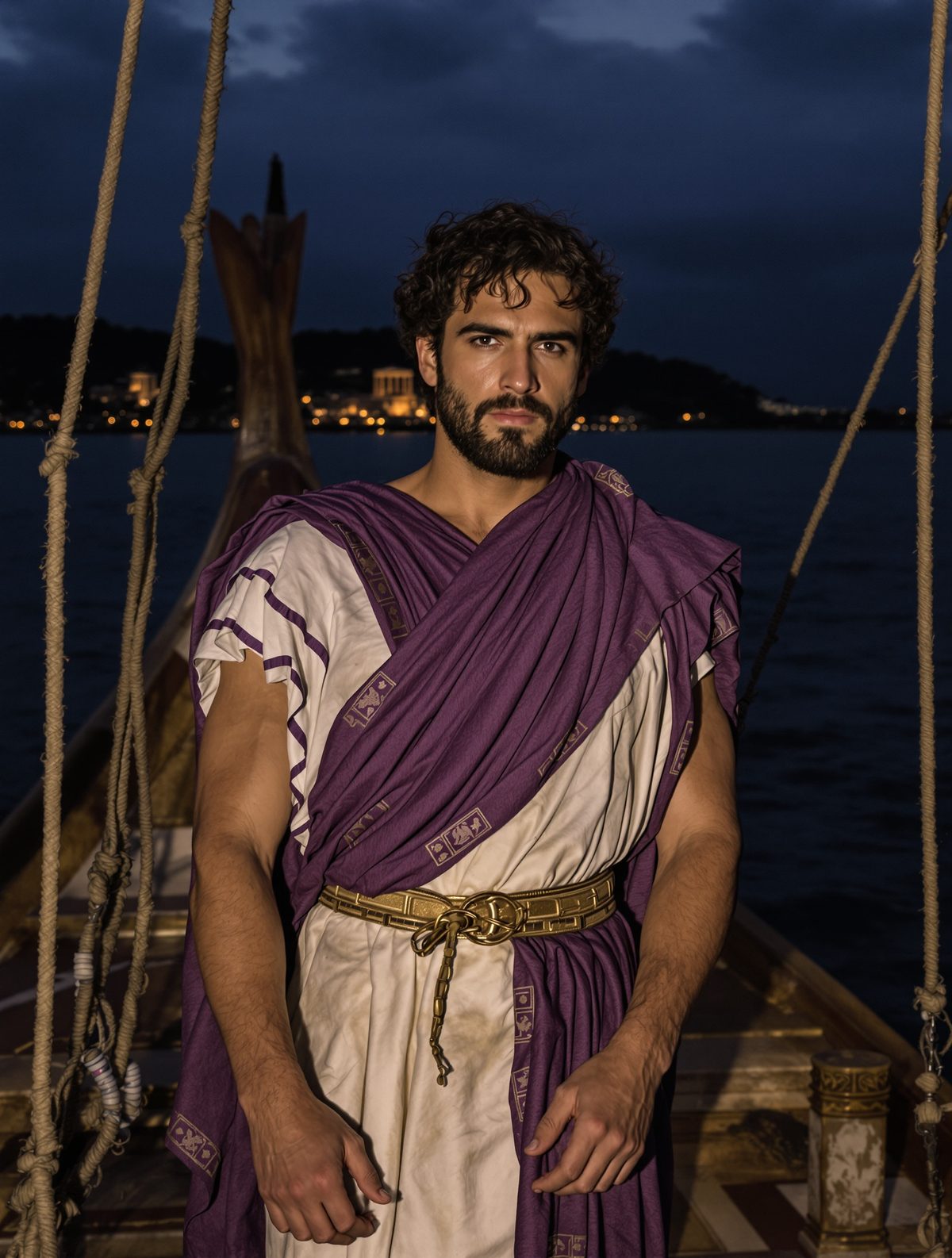
Amid the glittering splendor of ancient Athens, a city vibrant with the bustle of democracy and the heartbeat of empire, one man stood as a colossus among men. Alcibiades, brilliant yet treacherous, daring yet reckless, played a game of power that would alter the course of history. As Athens prepared to embark on its greatest military expedition — an ambitious conquest of Sicily — little did they know that their most celebrated general would soon betray them, revealing their greatest secret to their bitterest rivals.
The Golden Boy of Athens
Alcibiades was the epitome of what it meant to be an Athenian in the heady days of the 5th century BC. Born into one of the city’s wealthiest families, he was tutored by none other than the philosopher Socrates. With his arresting looks and unrivaled charm, Alcibiades could captivate an audience with his eloquence and cunning. Yet, beneath his glistening exterior lurked a man of unchecked ambition, a man for whom the ends always justified the means. By 415 BC, as Athens set its sights on Sicily, Alcibiades was at the pinnacle of his political and military career.
The Sicilian Expedition was a grand venture that could secure trade routes and resources crucial for Athenian dominance. With a fleet of 200 ships and an army numbering thousands, Athens sought to extend its influence over the rich island. Alcibiades, along with Nicias and Lamachus, shared command of this ambitious operation. But as the armada weighed anchor, sinister plots were brewing back in Athens.
The Night of Desecration
Just as the expedition was about to sail, a scandal rocked the city. In a single night, the sacred stone statues known as Herms — icons of travel and protection — were found mutilated. This sacrilege was an ominous sign, and panic spread through the populace like wildfire. To the Athenians, this was no mere vandalism; it was a sign of conspiracy, a blasphemy that threatened the favor of the gods upon their mission. And Alcibiades, a man who had collected as many enemies as admirers, became the prime suspect.
His political rivals seized this opportunity with both hands. Accused of profaning the sacred Mysteries, Alcibiades faced charges that could lead to his execution. Yet, the urgency of the Sicilian Expedition took precedence, and Alcibiades sailed, leaving the storm to wait for his return. Little did Athens know that their attempt to humble him would set the stage for his ultimate betrayal.
Betrayal in the Heart of the Peloponnese
Matters came to a head when, during a stop in Southern Italy, Alcibiades received a chilling summons to return home and face judgment. Sensing the tide of fate turning against him, he made a fateful decision: he vanished, seeking sanctuary not just anywhere, but in the heart of enemy territory — Sparta.
Alcibiades, who had fought and bled for Athens, now sat among the Spartans, sharing secrets that would shift the balance of power in the Peloponnesian War. With his keen insights into Athenian strategy, his advice was invaluable. He counselled them to fortify positions, to incite revolts among Athens’ allied states, and most crucially, to seize and fortify Decelea, thereby crippling Athens’ food and supply lines.
It is said that in defiance, Alcibiades stood before the Spartans, saying, “Watch how I shall do service to the Lacedaemonians, in return for the wrongs I have suffered.” The Spartan king, enthralled by his audacity, welcomed him, and the impact of his defection was nothing short of seismic.
The Fall of Syracuse
With Alcibiades' guidance, the Spartan strategy was unerring. The Athenians, caught in a protracted siege at Syracuse, found their forces sapped by disease and strategic blunders. The Sicilian Expedition turned from grand conquest to disastrous retreat. By 413 BC, the entire Athenian force was annihilated — a catastrophe from which Athens would never fully recover.
The Spartan grip tightened. Following Alcibiades’ advice, they fortified Decelea, using it as a base to continuously harass Athenian lands, draining the city’s economy and moral resolve. Alcibiades, once adored in Athens, now symbolized its potential undoing. His betrayal struck at the very heart of Athenian pride and set them on a path of decline.
The Price of Pride and Treachery
Alcibiades, never one to remain still for long, would continue to roam, endlessly switching allegiances — a living embodiment of political opportunism that was both his blessing and his curse. His storied life would eventually lead to a lonely death in 404 BC, in a remote village far from the city he once sought to dominate. In the shimmering light of Athenian torches, no statue stands in his honor, no epitaph praises his name. Yet, his legacy persists; a lesson in the dangers of unchecked ambition and the cost of betrayal.
The tale of Alcibiades resonates through history, a poignant reminder that personal ambition unchecked by loyalty or integrity can have far-reaching consequences. Today, as we reflect on the cunning of this ancient Athenian, we are reminded of the timeless nature of human ambition and betrayal. In our modern world, where secrets and powerplays still shape the fates of nations, the story of Alcibiades serves as a cautionary tale — a testament that not even the brightest among us are immune to the darkness within.