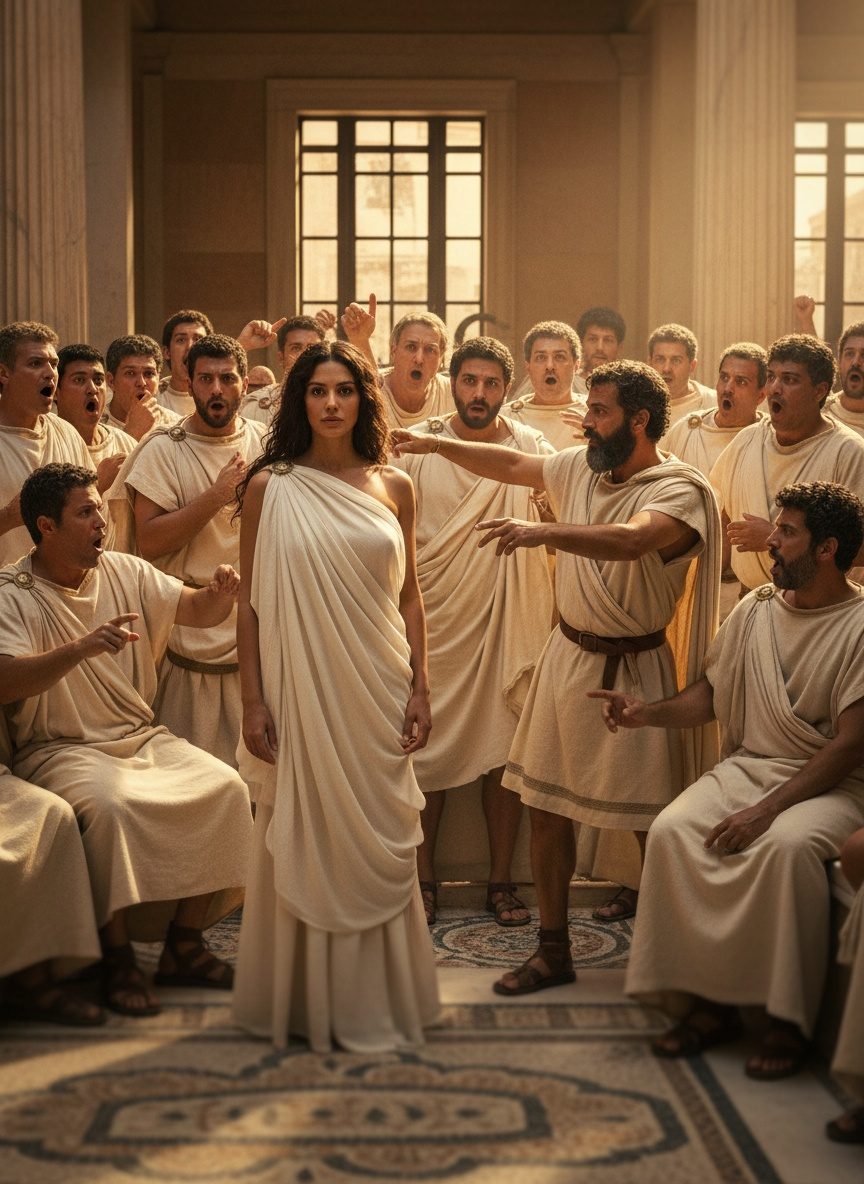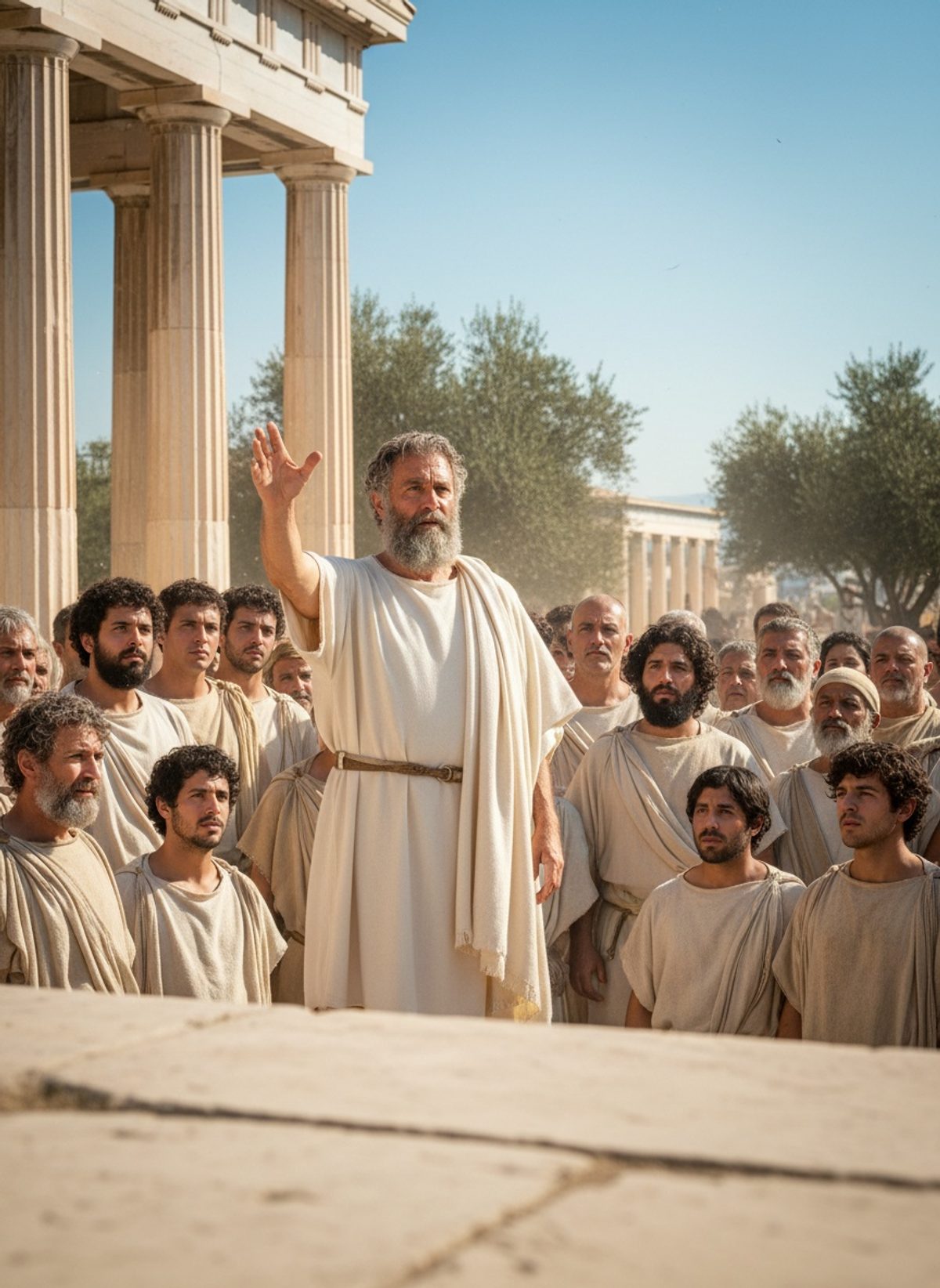
The air in Ancient Athens was thick and warm, a stillness in the atmosphere that hung heavy over the city as if it, too, anticipated the tension beneath the surface. The Acropolis, standing high above, cast its long shadow over the sprawling labyrinth of narrow streets and whitewashed houses. The hum of the bustling agora was punctuated by heated debates and impassioned speeches, syllables echoing off marble columns. Most of Athens' citizens were restless and simmering; the city was on the brink of tearing itself apart. This was the stage for Solon, a figure poised not just to rewrite laws but to reshape destinies.
The Brink of Ruin
Athens in 594 BC was a society deeply fractured, teetering on the verge of chaos. The gap between rich and poor had grown into a chasm, a gulf so vast it threatened to swallow the city whole. The rich elite held power with an iron grip, while countless lower-class Athenians found themselves shackled, sometimes literally, as they spiraled into debt they could never hope to repay. Slavery loomed large over those who borrowed, the consequence of falling short—a cruel reality of the era’s socioeconomic landscape.
The Athenian farmer, once the backbone of the city-state, had become a pawn at the mercy of aggressive landowners. The weight of their debts was a constant, invisible presence, burdening every breath, every decision. It was a climate ripe for revolt; civil war lurked in the shadows, waiting to pounce. The necessity for radical reform was imperative, and it was under these precarious conditions that Solon rose to prominence. He was entrusted with absolute power, a rare and dangerous precedent that mirrored both desperation and hope.
The Radical Reforms
Solon's appointment was a turning point. It was not just about crafting new laws; it was an odyssey of unraveling centuries of entrenched practices. His first and perhaps most revolutionary act was the *Seisachtheia*, the "shaking off of burdens." This legislation relieved the weight of debt crushing the poor —an audacious step that instantly changed the lives of many Athenians. Slaves held for debt were set free, their shackles not just removed physically but figuratively, sending shockwaves through the city.
Moreover, Solon took measures to restructure the political landscape itself. He broke the monopoly of the aristocracy by reorganizing the Athenian social classes, basing them on wealth rather than birth. This move was contentious but brilliantly strategic, as it redistributed power, giving more citizens a voice in governance. Suddenly, the doors of opportunity creaked open for those who had once been voiceless.
The legal reforms did not stop there. Solon’s new parameters outlawed enslavement for unpaid debts altogether. It was as if he drew a vivid line in the sands of time, a declaration that Athens would no longer allow its citizens to be bonded in such a dehumanizing way. This move, radical and generous, redefined what it meant to be a citizen of Athens, not just for the present but for generations to follow.
The Reluctant Autocrat
With the power Solon wielded, it would have been understandable if he had chosen to keep it, to become the permanent ruler of Athens. Many before and after him would have succumbed to the allure of perpetual authority. Yet, in a decision that defied expectation and echoed through the ages, Solon did the unthinkable: he stepped down, relinquishing the power he held.
For Solon, governance was a means to an end, not the end itself. He valued the Athenian ideal of fair governance over the intoxicating allure of kingship. Thus, he enacted his sweeping reforms, established a framework for the future, and then faded intentionally into the backdrop of the city he helped stabilize. Solon's departure from power was as deliberate as his ascent, a testament to his vision of democracy that was so far ahead of its time.
In walking away, Solon left a legacy of temperance and wisdom that continues to puzzle and inspire historians. In an era where power was seldom relinquished without turmoil, his decision stood in sharp relief, coloring the narrative of leadership with a character seldom seen: that of a ruler who sought not to rule but to foster equilibrium.
The Aftermath and Resonance
Without Solon's steady hand, Athens could easily have dissolved into discord. Instead, his reforms laid the foundation for what would later bloom into one of the world’s most renowned democracies. He demonstrated that the pen indeed could be mightier than the sword, that laws could guide a city away from the brink more effectively than armies.
Solon's actions gave birth to a new social contract in Athens. For the first time, a glimmer of what we now view as democratic principles—equality, fairness, and justice—began to shine over the populace. The triumph of Solon was not merely his reforms but the idea that such reforms made at such a time could last beyond his tenure, living on as part of Athens’ evolving identity.
This story, of a leader who sought not the crown but the common good, challenges us even today. It asks us to ponder the essence of governance and the responsibility of power. Solon's legacy whispers through the corridors of history, reminding us that true leadership lies not in the might of one who rules but in the strength of what is left behind. His relinquishment of power was more than an act—it was a message etched into the ethos of humanity: that the greatest leaders are those who can let go. In the annals of history, Solon's name resonates not because he held power, but because he chose to set it free.