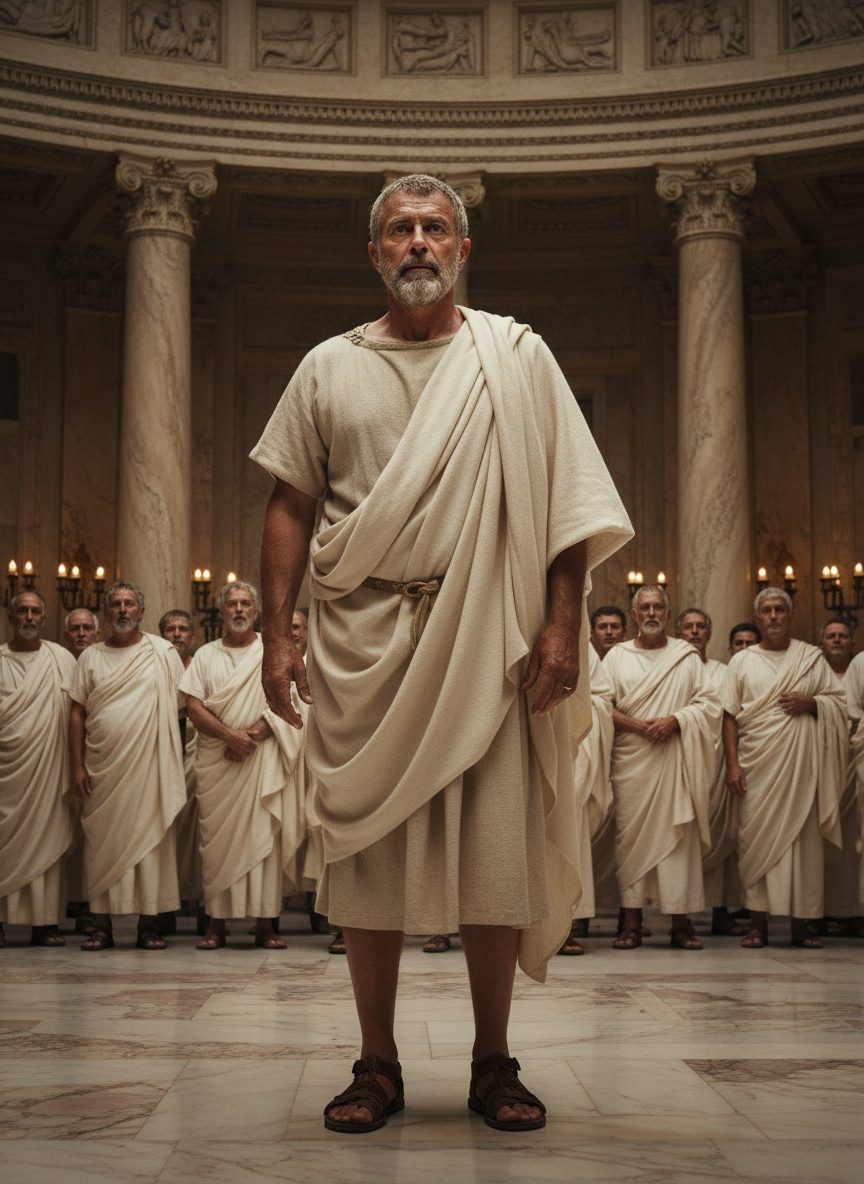
The early sun cast long shadows over the Forum, its rays filtering through the pillars and illuminating the marble facades with a golden hue. The air was crisp, yet tinged with the hum of anticipation and the murmur of a city on the cusp of history. Within this heart of Rome, all that was grand and gritty about the Republic converged. Senators in their white togas, the insignia of their office embroidered in purple, were gathering, their sandals echoing on the stone floors as they made their way to a decision that could shape the destiny of their Republic.
Among them strode a man whose journey to this moment had been both unexpected and hauntingly solemn. Marcus Atilius Regulus, perhaps the finest general of his age, walked with a serenity that belied the gravity of his mission. The lines etched on his weathered face told tales of fierce battles under the scorching African sun. Now back in the capitol he had served with unyielding devotion, Regulus had returned not in triumph but in chains of honor that only his conscience could see.
Two cities locked in the Punic Wars — Rome and Carthage — staked fortunes in a lengthy and bitter conflict that had stretched men and resources to their limits. Regulus once held the fate of Carthage in his hands during his triumphant campaign in Africa. The decisive victory at Cape Ecnomus was still fresh in Roman memory, a testament to his strategic brilliance. However, fortunes had reversed, leaving the general at the mercy of his adversaries, captured after the ill-fated Battle of Tunis in 255 BC.
Carthage extended an olive branch cloaked in cunning: Regulus was to return to Rome to broker a peace, a peace that would serve their interests, halting Rome’s ascent as a burgeoning power of the Mediterranean. The terms were clear — he would have his freedom if he succeeded, yet perhaps what they underestimated was the soul of the man they released. Rome would hear its son speak not as a captive, but as a patriot.
Standing before the Senate, Regulus gazed at his peers, the stewards of Rome. His voice, seasoned by equal measures of resolve and weariness, carried through the marble halls. He urged them to refuse Carthage’s overtures, to continue the fight for the very foundations of Roman supremacy were at stake. A lesser man might have succumbed to the pull of freedom, to the comforts of life unencumbered by enemies. Yet bound by the honor code of *fides* — the Latin for faith and trust — Regulus chose a higher path, one that affirmed Rome’s relentless ambition.
The silence, dense with the weight of impending consequences, swallowed the room. The Roman Senate, steeped in tradition yet straining under the burden of decision, felt the pulse of empire-building in Regulus’s stirring appeal. Honor, courage, and the Republic itself were palpably present in that moment, etched into the stones as much as into the hearts of those gathered.
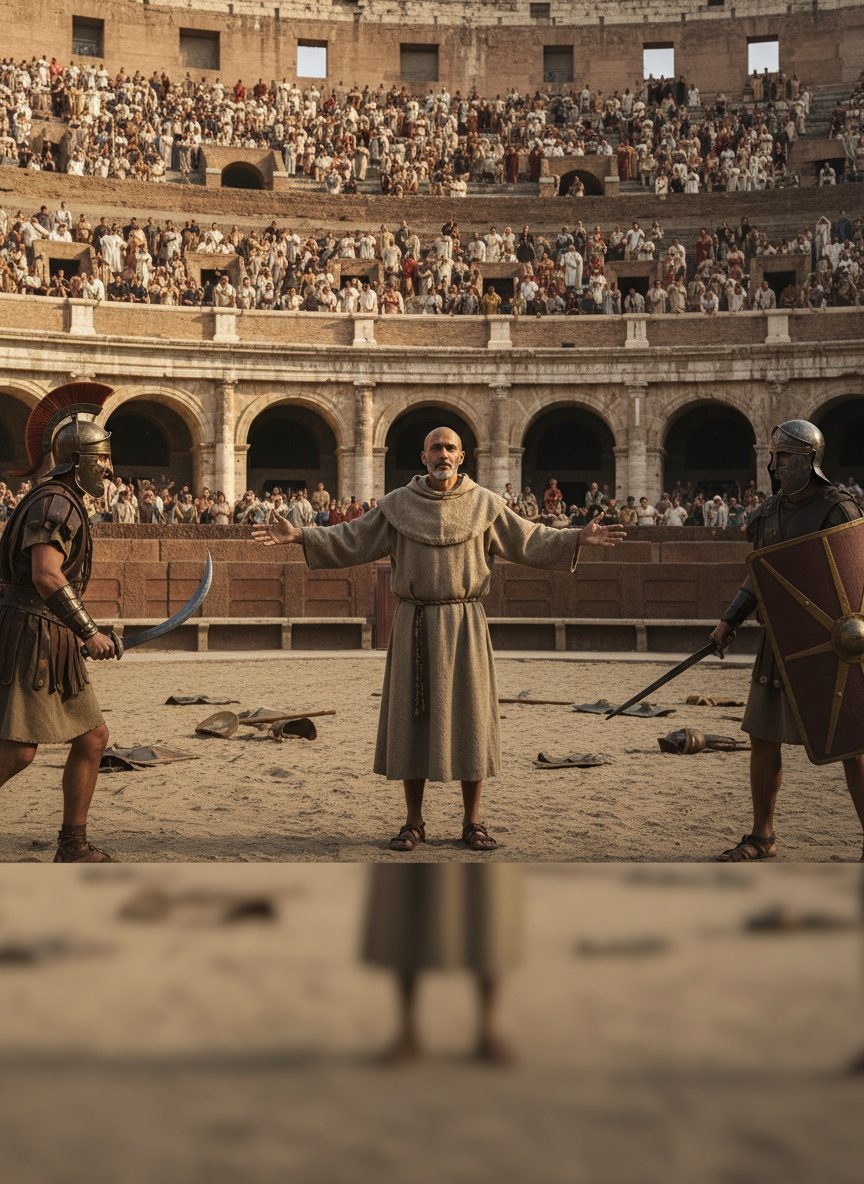
When Marcus Atilius Regulus finished his oration, the decision was made with an understanding shared by those who championed the Republic over ruin. And so, the general touched by fate turned and made his way back along the paths that would lead him once more into captivity. Every step resounded as a testament to his unyielding character, echoing their silent promise through the ages. He had chosen to walk back into chains not just as a prisoner of Carthage, but as a man bound by integrity to something far greater.
The streets of Rome bid farewell as he left the city’s embraces, its citizens watching with a poignant mixture of grief and admiration. Tales of his journey would reverberate through the annals of history, regaled as a narrative of unwritten oaths and the backbone of a republic’s ascent. Rome, anchored by its extraordinary tales of heroism, continued its confrontation with Carthage, spurred by the example of its errant son who had foregone personal liberty to give voice to a larger, relentless vision.
The simple truth that Regulus chose captivity over compromise marks a story entwined with the ethos of Roman values. In a world that often tests such ideals, the narrative of Marcus Atilius Regulus prompts reflection on a question that remains relevant through centuries: What is the price of honor when weighed against the scales of ambition? The echoes of his legacy hint at answers that bind past and present in a timeless dialogue.