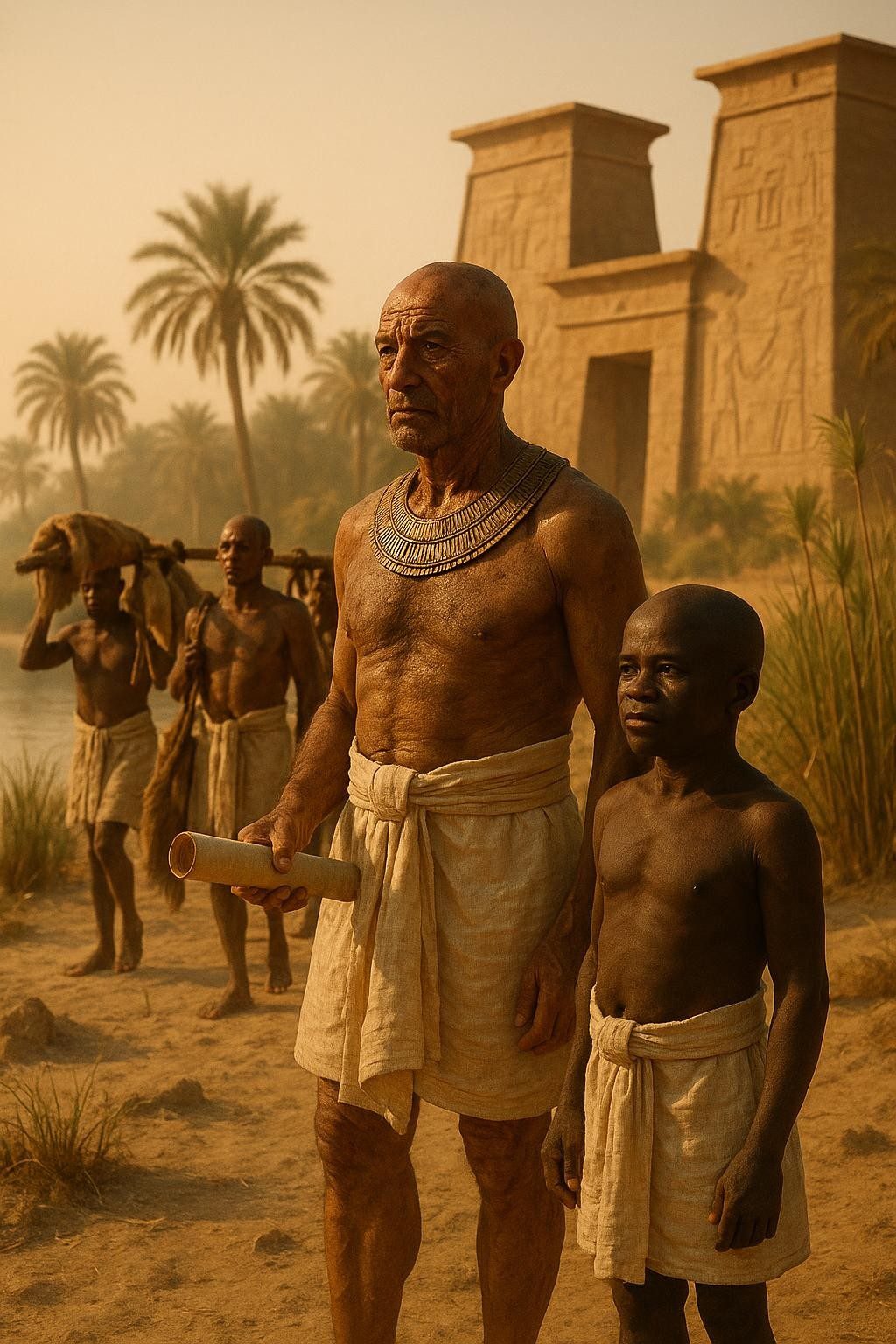
2280 BC. The desert sun glared fiercely over the western horizon, casting long, wavering shadows on the dunes. It was a land of extreme heat and endless sand, where not many men dared to wander. But for Harkhuf, chief of trade expeditions and a distinguished official of Ancient Egypt’s Old Kingdom, this was familiar territory.
The Envoy from Elephantine
Harkhuf hailed from Elephantine, an island nestled at the southern border of Egypt. Known for its strategic location, Elephantine was a crucial point of exchange for goods with Nubia and beyond. As a trusted emissary, Harkhuf was accustomed to traveling long distances, braving harsh conditions to expand Egypt’s horizons and accrue wealth for the pharaoh’s treasury.
On this particular journey, Harkhuf had ventured deep into the enigmatic lands south of Egypt, traversing through the perilous desert. This was his fourth expedition into the depths of the "pagan land," as the Egyptians referred to the unknown territories of Africa. Yet this venture promised something more intriguing than gold, incense, or ivory: a diminutive treasure that danced and captivated—a pygmy from the mysterious heartlands.
A Letter Like No Other
Word of Harkhuf’s extraordinary acquisition reached Egypt ahead of his return, stirring excitement throughout the royal palace. Especially thrilled was Pepi II, the young pharaoh barely eight years old, enthralled by tales of far-off wonders and the exotic thrill of the natural world. His enthusiasm manifested in an extraordinary way: a personal letter penned by the boy-pharaoh himself, directed to Harkhuf.
Preserved on the walls of Harkhuf’s tomb, this letter was not just a communication—it was a testament to the pharaoh’s childlike wonder and his immediate desires. In the letter, Pepi II expressed boundless joy and anticipation for Harkhuf’s return, particularly for the arrival of the dancing dwarf, a creature so rare and marvelous that it seemed almost otherworldly. The pharaoh offered an unparalleled reward for ensuring the safe passage of this unique being to the royal court.
A Marvel from the Deep South
Dwarfs held a special place in Ancient Egyptian society, often associated with divine blessing and joyous entertainment. Known for their acrobatic dances and charming presence, dwarfs were deemed good omens at religious festivals and royal events. The acquisition of such an entertainer was more than a mere novelty—it was an opportunity to enhance the splendor of Pepi II’s reign.
The journey back to Egypt was filled with anticipation. Harkhuf ensured the pygmy was cared for with the utmost attention. This was not just a rare spectacle, but a symbol of the riches and wonders beyond Egyptian borders, an assurance of Egypt's dominance and diplomatic reach. Such a journey was perilous, enclosed by the harsh desert climate and unpredictable dangers, but the reward promised by the youthful ruler strengthened Harkhuf’s resolve with each step.
The Return and the Pharaoh’s Tears
As Harkhuf approached the Nile’s familiar path, the great river that sustained and connected the mighty Egyptian civilization, the entire journey seemed to culminate into a crescendo of emotions. News of the caravan and its extraordinary cargo spread like ripples across the golden landscapes. The pharaoh awaited eagerly, his curiosity and eagerness to witness the pygmy unyielding.
Upon arrival, the sight of the pygmy—itself a testament to Harkhuf’s valor and diplomacy—drew eyes and excitement at the young ruler’s court. One can only imagine the sparkle in Pepi II’s eyes as he beheld the dancing figure, a living legend from the lands of dreams and myths. It was said that the pharaoh wept with joy, perhaps moved by the magnificence of the world beyond Egypt and the possibilities it held.
A Story of Exploration and Connection
Harkhuf’s journey and the narrative of the dancing pygmy remain powerful relics of an ancient endeavor to connect with the world beyond one’s borders. This exchange was not merely about materialism or entertainment but was also symbolic of the curiosity and vigor of a civilization yearning for knowledge and alliances. It highlights the complexities of trade, diplomacy, and cultural appreciation—fundamental elements that continue to shape human interaction.
In the end, Harkhuf’s expeditions and the pharaoh’s letter serve as a poignant illustration of the ties that bind us through fascination with the unknown. These stories urge us to embrace exploration, to find wonder in diversity, and to understand the strength that lies in reaching beyond familiar horizons. Such lessons from the past resonate, reminding us that the pursuit of knowledge and connection is a timeless human aspiration anchored in personal and collective journeys. It is indeed the tales like these that cultivate our understanding of history, showing us not simply what was, but what is still possible today.