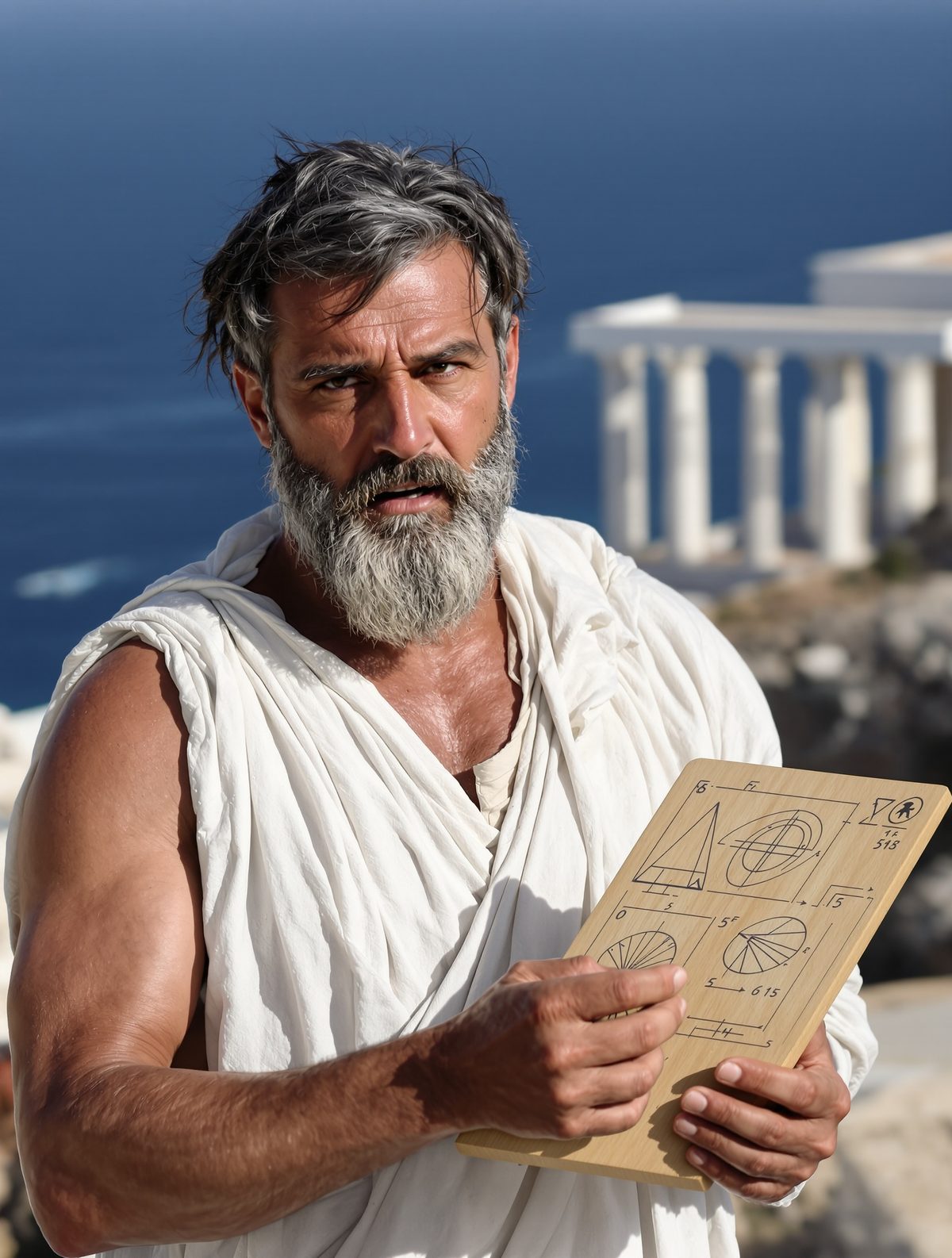
The flickering oil lamp cast dancing shadows across the cuneiform tablets as Bagapates worked alone in the royal archives deep beneath Persepolis. It was past midnight on a sweltering summer evening in 522 BC, and the royal scribe had been poring over birth records and genealogical documents for hours. What he discovered would make his blood run cold and his hands shake so violently he nearly dropped the precious clay tablet. The man who had been ruling the mighty Persian Empire for the past seven months—the man who commanded armies stretching from Egypt to India—was not King Bardiya at all.
He was Gaumata the Magian, a Zoroastrian priest who had murdered the real prince and assumed his identity. And now, Bagapates held the only written proof of the greatest royal deception in ancient history.
The Perfect Crime That Fooled an Empire
To understand the magnitude of this deception, we must first grasp the incredible audacity of Gaumata's plan. Prince Bardiya, son of the legendary Cyrus the Great, had been secretly murdered by his own brother King Cambyses II sometime around March 522 BC. But here's the twist that even Hollywood couldn't have scripted: Cambyses had the killing done so quietly that virtually no one in the vast Persian bureaucracy knew Bardiya was dead.
Gaumata, a priest from the Median city of Sikayauvati, seized upon this information vacuum with breathtaking boldness. The Magian bore a striking physical resemblance to the dead prince—so much so that he could fool even palace officials who had seen Bardiya before. In an age before photographs or detailed portraits, this resemblance was his golden ticket to absolute power.
On March 11, 522 BC, while King Cambyses was campaigning in Egypt, Gaumata proclaimed himself the rightful Bardiya from the fortress of Arakadri in the Arachosia province. His timing was perfect. The Persian Empire was war-weary and heavily taxed from Cambyses' expensive military campaigns. Gaumata promised what every subject wanted to hear: a three-year exemption from taxes and military service.
The response was immediate and overwhelming. Province after province declared for the "restored" Prince Bardiya. Even more remarkably, when news reached Cambyses in Egypt, the legitimate king died under mysterious circumstances—some say by suicide, others whisper of assassination—before he could expose the impostor.
The Scribe Who Held an Empire's Secret
Bagapates was no ordinary clerk. As keeper of the royal genealogies and birth records, he possessed access to documents that could trace bloodlines back generations. His position required absolute discretion and unwavering loyalty—qualities that made his next decision all the more extraordinary.
Working by lamplight in the sacred archives, Bagapates had been cross-referencing birth certificates, circumcision records, and physical descriptions when the discrepancies became impossible to ignore. The real Bardiya had distinctive scars from childhood accidents, specific birthmarks recorded by court physicians, and even dental records kept by royal healers. None of these matched the man currently sitting on the throne.
But most damning of all was a secret document that recorded Bardiya's execution—a document that Gaumata clearly didn't know existed. Hidden among routine administrative records, it contained details so specific and gruesome that Bagapates knew it had to be authentic.
The scribe faced an impossible choice. Expose the truth and likely face execution for allowing the deception to continue so long, or become complicit in the greatest fraud in Persian history. In a decision that would haunt him for months, Bagapates chose a third option: he would rewrite history itself.
Rewriting the Past, One Tablet at a Time
What Bagapates did next required extraordinary skill and nerves of steel. Working only during the darkest hours of night, he began systematically altering the official records. Birth certificates were modified, physical descriptions were changed, and most crucially, the execution order was moved to a different archive and buried among thousands of routine military dispatches.
The technical challenges were immense. Unlike papyrus or parchment, cuneiform tablets couldn't simply be erased and rewritten. Each alteration required creating entirely new tablets that perfectly matched the clay composition, firing techniques, and scribal styles of the originals. Bagapates had to become both forger and artist, recreating administrative documents that could fool his own colleagues.
But perhaps most ingeniously, he created false corroborating evidence. Medical records were altered to remove references to Bardiya's distinctive scars. Court ceremony logs were modified to explain away the king's changed behavior as the wisdom that comes with surviving assassination attempts. Even astrological charts—crucial for legitimizing Persian rulers—were subtly adjusted.
For nearly eight months, from March to December 522 BC, Bagapates maintained this incredible deception. Every day brought new risks: a casual conversation with a colleague about genealogical records, a routine audit of the archives, or worst of all, direct questions from the false king himself about his own documented history.
The House of Cards Begins to Crumble
Despite Gaumata's initial popularity, cracks began appearing in his rule by autumn 522 BC. The Magian had made a fatal error in his coronation ceremony: he had refused to appear in public without his turban, claiming religious devotion. What the crowds didn't know—but some sharp-eyed Persian nobles began to suspect—was that Gaumata was hiding a crucial deformity.
According to Herodotus and later confirmed by Darius the Great's own inscriptions at Behistun, the real reason for Gaumata's modesty was that he was missing his ears. They had been cut off years earlier as punishment for some crime, creating a distinctive identifying mark that would instantly expose his true identity.
Seven Persian nobles, led by Darius (a distant relative of the royal family), began quietly investigating the king's true identity. They noticed behavioral changes, unfamiliarity with court customs that Bardiya should have known intimately, and most tellingly, the king's reluctance to meet with nobles who had known the real prince personally.
As the conspiracy against Gaumata gained momentum, Bagapates found himself in an increasingly impossible position. He knew the truth, held the evidence, but was now so deeply implicated in the cover-up that revelation would mean certain death.
The Night That Changed Everything
On September 29, 522 BC, the seven conspirators made their move. In a coordinated assault on the royal palace at Sikayauvati, they confronted Gaumata directly. The scene that followed reads like something from an ancient thriller: a desperate chase through palace corridors, the false king barricading himself in his private chambers, and finally, the dramatic moment when Darius himself struck the killing blow.
But here's the detail that most history books skip: when the conspirators searched Gaumata's private quarters, they found documents that proved he had known about Bagapates' activities all along. The false king had been blackmailing the scribe, using threats against his family to ensure continued cooperation in maintaining the deception.
This revelation cast Bagapates' actions in an entirely different light. Rather than being a willing collaborator in royal fraud, he had been a victim of an elaborate extortion scheme. When Darius became king (as Darius I, he would later be known as "the Great"), he made a surprising decision: instead of executing Bagapates, he quietly reassigned him to a distant province with a generous pension.
The Legacy of History's Most Audacious Cover-Up
The story of Bagapates and Gaumata offers a fascinating glimpse into how easily historical truth can be manipulated, even in societies we consider to have robust record-keeping systems. For eight months, the most powerful empire on Earth was ruled by an impostor whose deception was enabled by the systematic falsification of official records.
This tale resonates powerfully in our digital age, where information can be altered, deleted, or fabricated with unprecedented ease. The Persian Empire's experience reminds us that the integrity of historical records has always been fragile, dependent on the honesty and courage of individuals who often have strong incentives to distort the truth.
Perhaps most remarkably, Bagapates' story survives at all only because Darius I chose transparency over cover-up. The new king could have buried this embarrassing episode entirely, but instead commissioned the famous Behistun Inscription—a massive rock carving in three languages that detailed Gaumata's deception for posterity. In doing so, Darius established a principle that would echo through history: legitimate rulers have nothing to hide from the truth.
Today, as we grapple with questions about truth, authority, and the reliability of information, the Persian scribe's dilemma feels surprisingly modern. In an world where a single person with access to the right databases could potentially alter records affecting millions, Bagapates' eight months of living with impossible knowledge serves as both a cautionary tale and a reminder that the truth, however buried, has a way of eventually surfacing.