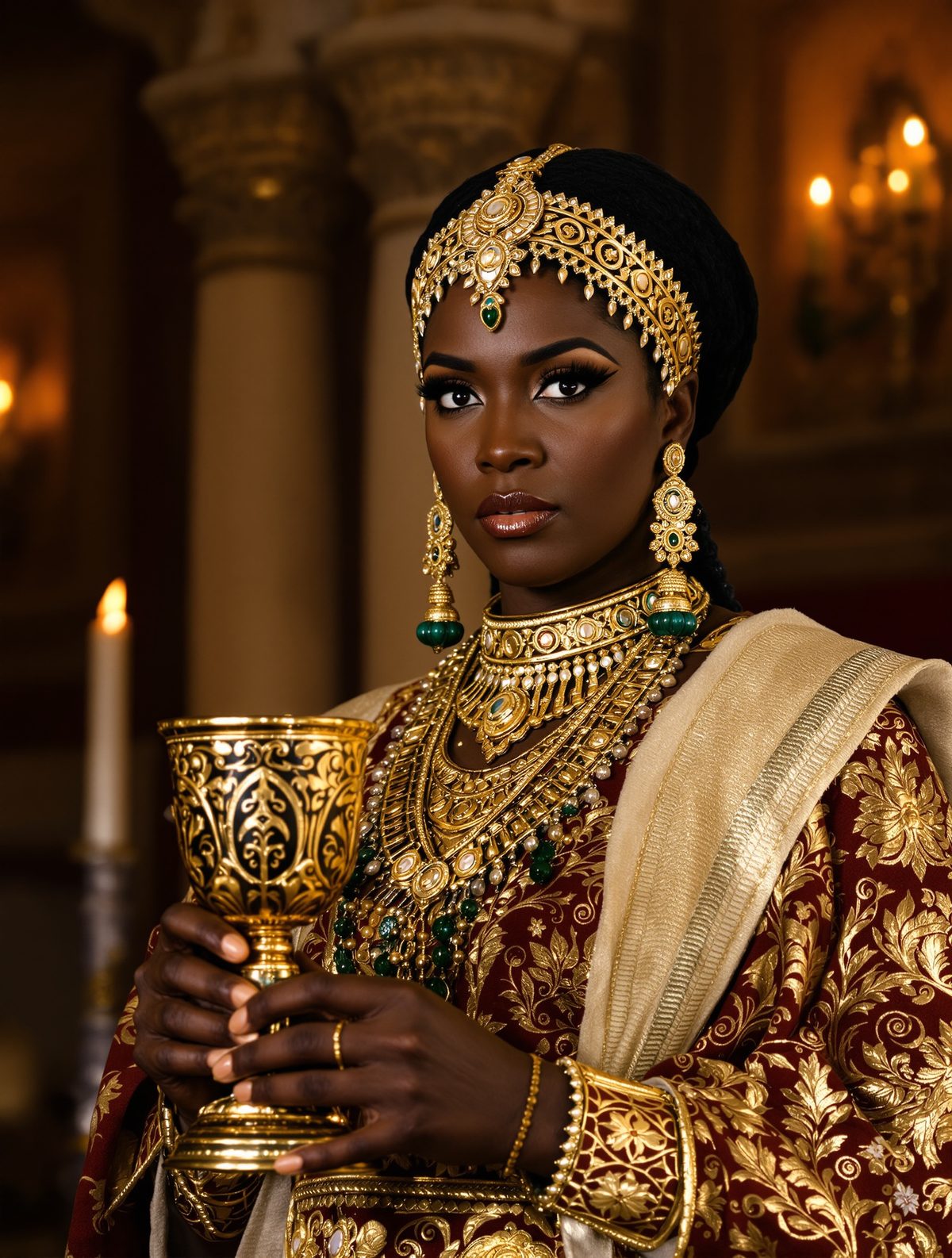
The chalice trembled in Queen Amestris's hands as she raised it to her lips, the dark liquid within catching the flickering torchlight of the Persian throne room. Every noble, every courtier, every guard held their breath as the most powerful woman in the Achaemenid Empire prepared to drink her husband's blood. King Darius II watched in stunned silence, crimson still dripping from the ceremonial cut on his wrist. What had begun as a royal scandal was about to become the most macabre display of loyalty the Persian court had ever witnessed.
This wasn't madness—it was calculated power. And in the blood-soaked politics of 5th century BC Persia, Amestris had just played her most brilliant hand.
The Affair That Shook an Empire
The year was 424 BC, and the Persian Empire stretched from the shores of the Mediterranean to the edges of India. At its heart sat Darius II, a king who had clawed his way to the throne through civil war and familial bloodshed. But for all his political cunning, Darius had made a fatal miscalculation—he had underestimated his wife.
Queen Amestris wasn't just any royal consort. She was the daughter of Otanes, one of the seven Persian nobles who had helped establish the Achaemenid dynasty. Her bloodline ran as blue as the lapis lazuli that adorned the walls of Persepolis, and her political instincts were sharper than any akinakes sword. When whispers reached her ears about Darius's affair with a young Babylonian concubine named Cosmartidene, she didn't retreat to her chambers to weep like other scorned wives might have.
Instead, she began to plan.
The affair itself was hardly unusual—Persian kings routinely took multiple wives and concubines, often for political advantage. But this liaison was different. Darius wasn't just sleeping with Cosmartidene; he was showering her with gifts meant for the queen, spending entire nights in her chambers, and worst of all, discussing matters of state with her. In the rigid hierarchy of the Persian court, this wasn't just adultery—it was a direct challenge to Amestris's position as queen.
A Queen's Calculated Fury
What happened next would have seemed impossible to those who didn't understand the intricate power dynamics of Achaemenid Persia. Rather than confronting her husband directly or demanding the concubine's removal, Amestris made a request so shocking that it left the entire court speechless.
She wanted Darius to prove his loyalty to her by allowing her to drink his blood in front of the assembled nobles.
The request was steeped in ancient Persian tradition and religious symbolism. In Zoroastrianism, the dominant faith of the empire, blood represented life force and divine connection. By drinking the king's blood, Amestris would be symbolically absorbing his essence, his power, and his sacred mandate to rule. More importantly, she would be forcing him to literally bleed for her in front of witnesses—a public demonstration that his body, and by extension his empire, belonged to her.
The Persian court was no stranger to dramatic displays. These were people who had watched Darius's predecessor, Artaxerxes I, order the execution of his own brother. They had witnessed elaborate ceremonies where captured enemies were trampled by elephants and rebels were flayed alive. But even by their standards, Amestris's demand was extraordinary.
The Ritual of Blood and Power
Darius found himself trapped in a web of his own making. To refuse would be to admit that his affair had indeed diminished his queen's status—a dangerous precedent that could invite challenges to royal authority. To agree would mean submitting to one of the most humiliating public displays in Persian history. Yet as he looked into his wife's cold, calculating eyes, he realized he had no choice.
The ceremony took place in the great audience hall of the palace, with its soaring columns and walls decorated with glazed brick reliefs showing the king receiving tribute from conquered nations. Nobles dressed in their finest robes lined the hall, their faces masks of fascination and horror. The king's personal physician was summoned to make the cut—a shallow slice across Darius's wrist that would produce blood without causing serious harm.
As the crimson liquid flowed into an ornate golden chalice, the only sound was the whisper of silk robes and the distant call of peacocks in the royal gardens. When the cup was filled, it was handed to Amestris with the reverence usually reserved for sacred relics.
What happened next would be whispered about in Persian courts for generations. Amestris didn't drink quickly or quietly. She savored each sip, her eyes never leaving her husband's face, ensuring that every person in that vast hall understood that she was literally consuming the king's life force. When she finally lowered the empty chalice, she smiled—not with joy, but with the cold satisfaction of someone who had just won a game that others didn't even realize they were playing.
The Iron Queen's Reign of Fear
The blood-drinking ceremony transformed Amestris from a wronged wife into the most feared woman in the Persian Empire. Word of her macabre display of loyalty spread throughout the satrapies—the vast provinces that made up the empire. Governors who had previously paid her little attention suddenly found themselves sending elaborate gifts to curry her favor. Rival court factions that had once dismissed her influence now treated her with the wary respect usually reserved for dangerous predators.
But Amestris wasn't content to simply restore her position—she was determined to expand it. Over the following months, she systematically eliminated anyone who had supported or enabled her husband's affair. Cosmartidene, the Babylonian concubine, was found dead in her chambers under mysterious circumstances. Several nobles who had encouraged the king's infidelity suddenly faced trumped-up charges and found themselves exiled to remote corners of the empire.
The queen's reputation for ruthless vengeance became legendary. She was said to have spies in every corner of the palace, informants who reported back on the slightest hint of disloyalty or disrespect. Even Darius himself seemed to walk more carefully around his wife, consulting her on major decisions and ensuring that her preferences were always considered.
This wasn't merely personal vindictiveness—it was strategic brilliance. In a political system where perception was reality, Amestris had transformed herself from a potentially disposable queen into an indispensable power broker. No one dared cross her because everyone had witnessed what she was willing to do to protect her position.
Legacy Written in Blood and Gold
The effects of Amestris's blood ritual extended far beyond the palace walls. Her demonstration of unwavering loyalty—however terrifying—set a new standard for royal marriages throughout the ancient world. Future Persian queens would invoke her name when asserting their own authority, and her story became a cautionary tale told to young nobles about the dangers of underestimating royal women.
Archaeological evidence from Persepolis suggests that Amestris's influence on state policy was substantial. Inscriptions from the later years of Darius II's reign frequently mention the queen's involvement in religious ceremonies and diplomatic missions—roles that had previously been reserved exclusively for male royalty. She had literally drunk her way into the power structure of the empire.
The queen's story also reveals the complex relationship between personal drama and political power in the ancient world. What might seem like a purely domestic dispute—a husband's infidelity and a wife's jealousy—was actually a sophisticated struggle for control over one of history's greatest empires. Amestris understood that in a world where legitimacy came from divine mandate and royal blood, controlling the symbolism of that blood meant controlling the empire itself.
When we strip away the sensational details of chalices and crimson liquid, we're left with a timeless story about power, perception, and the lengths to which people will go to protect their position. In our modern age of political theater and carefully orchestrated public displays, perhaps Queen Amestris's bloody gambit isn't so different from contemporary power plays. She simply understood, with chilling clarity, that sometimes the most effective way to demonstrate loyalty isn't through words or gestures—it's through making your opponents question just how far you're willing to go.
The chalice may have been emptied more than two millennia ago, but the lesson it contained continues to echo through the corridors of power: never underestimate someone who has everything to lose and the intelligence to turn their desperation into strength.