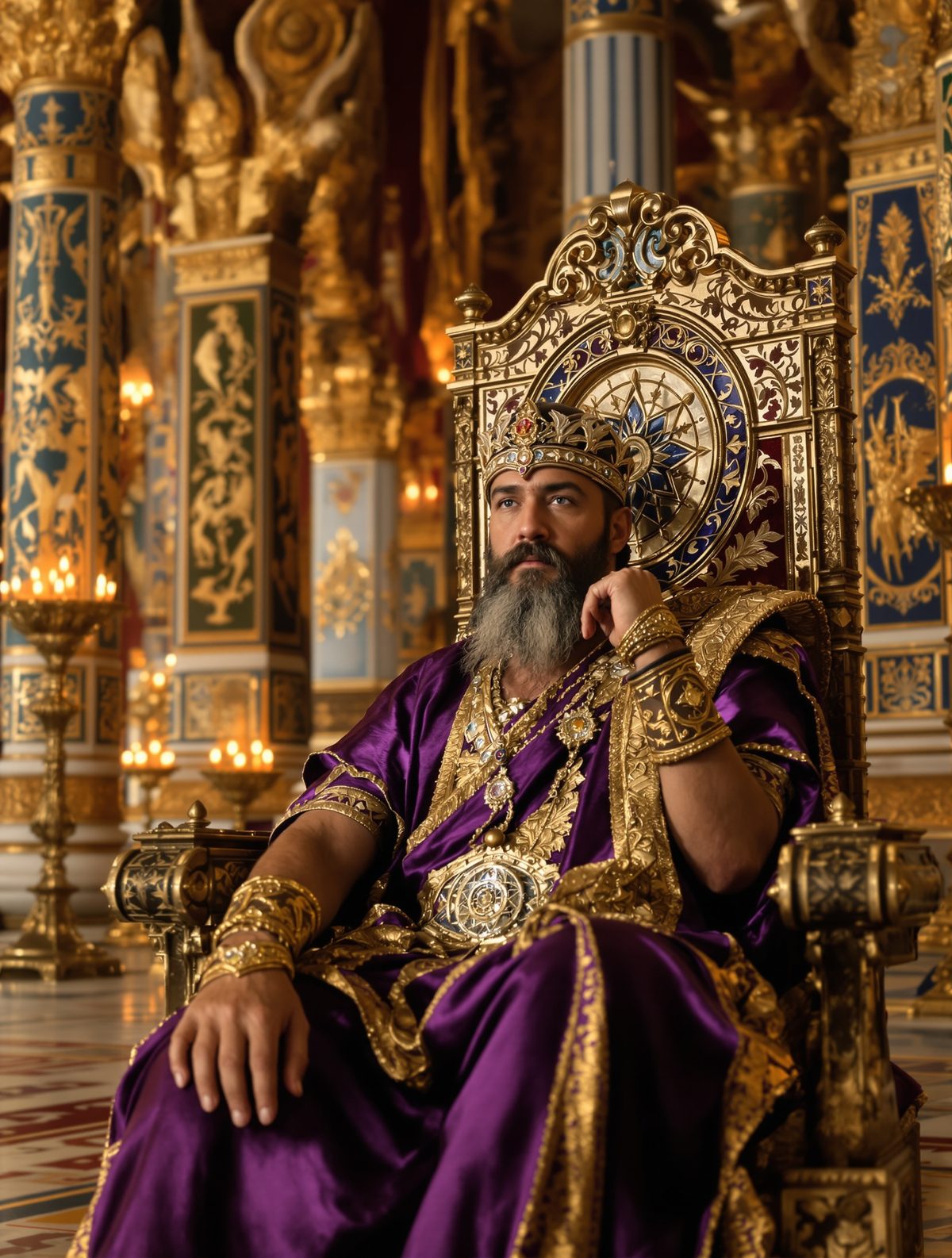
Picture this: a seven-year-old boy drags himself across the dusty courtyard of a West African palace, his useless legs trailing behind him as rivals whisper and point. The other princes run and play, but this child—heir to a kingdom—cannot even stand. His enemies call him "the crawling prince." His own people wonder if the gods have cursed their future king.
They had no idea they were watching the future architect of one of history's greatest empires take his first steps toward legendary power.
In 1217, when most of Europe was still struggling through the Dark Ages and before the Mongols had even begun their world conquest, a disabled prince in West Africa would overcome impossible odds to forge the Mali Empire—a golden kingdom that would stretch across an area larger than Western Europe and control more wealth than most nations could dream of.
This is the story they never taught you in school: how Sundiata Keita crawled his way to a crown.
The Cursed Prince of a Doomed Kingdom
The griots—West Africa's legendary storytellers and living libraries—still sing of the prophecy that changed everything. A mysterious hunter arrived at the court of Naré Maghann Konaté, king of the small Mandinka state that would become Mali's heart. The hunter carried with him a hunchbacked woman named Sogolon and a prediction that would echo through the centuries: marry this woman, and she will bear you a son who will become the greatest king the world has ever known.
When Sundiata Keita was born around 1217, no one could have imagined this sickly infant would fulfill such a grand prophecy. While his half-brothers grew strong and tall, Sundiata remained weak and frail. His legs refused to support his weight. Year after year, he crawled while others walked, sat while others stood, watched while others played.
But here's what makes this story remarkable: his mother Sogolon never stopped believing. In a society where physical strength determined leadership and a disabled heir could doom a dynasty, she protected her son and whispered the hunter's prophecy in his ear. The weakness they mocked would become his greatest strength—it taught him to think differently, to observe carefully, and to understand that true power doesn't always come from the obvious source.
The turning point came when Sundiata was seven years old. According to the griots, his mother needed leaves from a baobab tree, but none of the other children would help the mother of "the crawling prince." Something snapped inside young Sundiata. He called for an iron rod—some versions say it was a simple walking stick, others claim it was a massive iron bar that six men could barely lift.
What happened next depends on which version you believe, but all agree on the essential miracle: Sundiata grabbed that iron rod, pulled himself upright, and took his first steps. The boy who couldn't walk didn't just stand—he uprooted an entire baobab tree and laid it at his mother's feet.
When Death Came Calling
Just as Sundiata found his strength, tragedy struck the kingdom. Around 1224, Naré Maghann Konaté died, and the succession should have been straightforward. But palace politics are never simple, especially when there's a disabled prince in line for the throne.
Sundiata's half-brother Dankaran Touman seized power with the backing of the queen mother. This wasn't unusual—African kingdoms often chose the strongest candidate over the eldest son. What came next, however, would haunt the region for years.
Enter Sumanguru, the Sosso king whose name still sends chills through West African folklore. This wasn't just any rival ruler—Sumanguru was described as a sorcerer-king who wore human skin as clothing and turned his enemies' skulls into drinking cups. Whether or not you believe in his magical powers, his military might was undeniably real. The Sosso kingdom had grown powerful by controlling the region's iron production and trade routes, and Sumanguru had his eyes on the fertile lands and gold mines of the Mandinka territory.
When Sumanguru's armies swept through the region around 1235, they didn't just conquer—they systematically eliminated the Keita royal line. Eleven of Sundiata's brothers died in the massacre. The lucky ones died quickly in battle; others faced execution as Sumanguru sought to prevent any future challenges to his rule.
But here's where the story takes its most crucial turn: Sumanguru spared Sundiata. The former "crawling prince" was considered so harmless, so unlikely to ever pose a threat, that the conqueror didn't even bother having him killed. Instead, Sundiata was allowed to live in exile, forgotten and dismissed.
It was the costliest mistake in West African history.
The Exile Who Became a Legend
For nearly a decade, Sundiata lived in exile, moving from kingdom to kingdom across West Africa. But these weren't years of idle waiting—they were a master class in leadership, diplomacy, and military strategy. The prince who had spent his childhood observing from the sidelines now studied how different kingdoms operated, how alliances were forged, and how armies were built.
During his time in Ghana (not the modern nation, but the ancient West African empire), Sundiata learned the intricacies of the gold trade that made kingdoms wealthy. In other courts, he mastered the art of diplomacy and discovered how diverse ethnic groups could be united under a single banner. Most crucially, he began building a network of allies who believed in his cause—and his destiny.
The griots tell us that during this period, Sundiata also honed his military skills, transforming from the weak child who couldn't walk into a formidable warrior. But his greatest weapon wasn't his sword—it was his mind. He understood that defeating Sumanguru wouldn't just require military might; it would require uniting fractured communities under a common cause.
Meanwhile, back home, Sumanguru's rule was becoming increasingly brutal. The man who had been content to let the "harmless" prince live in exile was now ruling through terror, imposing crushing taxes, and treating conquered peoples as slaves rather than subjects. The very communities that had once accepted foreign rule began to long for liberation.
The Battle That Changed Everything
By 1235, the stage was set for one of Africa's most decisive battles. Sundiata had returned from exile not as a lone refugee, but as the leader of a growing coalition of displaced nobles, oppressed communities, and ambitious warriors who saw him as their path to freedom and prosperity.
The confrontation came at Kirina, a battlefield whose exact location historians still debate, but whose significance is undeniable. On one side stood Sumanguru with his battle-hardened Sosso warriors, confident in their iron weapons and their king's reputation for invincibility. On the other stood Sundiata with a diverse army of Mandinka, Fulani, and other West African peoples united by their shared desire for liberation.
But here's where the story becomes truly fascinating: the battle wasn't just won through superior tactics or numbers—it was won through psychological warfare and superior intelligence. The griots tell us that Sundiata had discovered Sumanguru's weakness: the sorcerer-king feared white roosters and arrows tipped with white rooster spurs.
Whether you believe in the magical elements of this story or interpret them as metaphors for superior intelligence gathering, the result was the same. When Sundiata's forces faced Sumanguru's army, they came prepared with specific knowledge of their enemy's fears and weaknesses. The "crippled prince" had learned that information could be more powerful than iron.
The Battle of Kirina ended with Sumanguru's defeat and death. The sorcerer-king who had seemed invincible was brought down by the prince he had dismissed as harmless. It was a victory that would reshape West African history and establish the foundation of the Mali Empire.
From Battlefield to Empire
What happened after Kirina separates Sundiata from countless other successful warlords throughout history. Instead of simply replacing one tyrant with another, he set about creating something entirely new: a decentralized empire that respected local customs while providing unprecedented stability and prosperity.
The Mali Empire that emerged under Sundiata's rule was revolutionary for its time. At its height, it controlled the gold fields of Bambuk and Bure, the salt mines of Taghaza, and the crucial trade routes that connected North Africa with sub-Saharan regions. But size and wealth weren't its only achievements.
Sundiata established what many historians consider Africa's first constitution—the Manden Charter, also known as the Kouroukan Fouga. This document, preserved through oral tradition for centuries, outlined principles that wouldn't look out of place in a modern democracy: protection of life and property, equality before the law, and even early concepts of women's rights and environmental protection.
The empire's capital, Niani, became a cosmopolitan center where Arab merchants, African traders, and Islamic scholars mingled freely. Under Sundiata's rule, Mali became not just wealthy, but intellectually and culturally vibrant. The foundations he laid would eventually support the legendary wealth of Mansa Musa, whose 14th-century pilgrimage to Mecca was so lavish that it reportedly caused inflation in Egypt that lasted for over a decade.
Perhaps most remarkably, Sundiata achieved all this while maintaining the respect and loyalty of diverse ethnic groups across his vast domain. The same diplomatic skills he had learned during his years of exile served him well as an emperor, allowing him to govern through consensus and local autonomy rather than brute force.
The Legacy of the Crawling Prince
When Sundiata Keita died around 1255, he left behind more than just a vast empire—he had fundamentally changed how people thought about leadership, diversity, and the sources of true power. The prince who had been mocked for his weakness had demonstrated that strength comes in many forms, and that the ability to unite people around a common vision might be more valuable than any physical prowess.
Today, as we grapple with questions of leadership, inclusion, and the value of diverse perspectives, Sundiata's story feels remarkably contemporary. His journey from disabled outcast to transformational leader challenges our assumptions about who gets to hold power and why.
The Mali Empire he founded lasted for more than 300 years, outlasting most European kingdoms of the same era. Its influence on trade, culture, and political organization shaped West Africa for centuries. Yet in many classrooms around the world, his name remains unknown, his achievements untaught.
Perhaps that's the most important lesson of all: how many other remarkable leaders and civilizations have been overlooked simply because they don't fit the traditional narratives we've been told? Sundiata Keita's story reminds us that greatness can emerge from the most unexpected places, that perceived weaknesses can become profound strengths, and that sometimes the person everyone underestimates is exactly the one who will change the world.
The boy who crawled to his coronation teaches us that the path to true leadership isn't always straight, smooth, or easy to walk. Sometimes, the greatest kings are made not in spite of their struggles, but because of them.