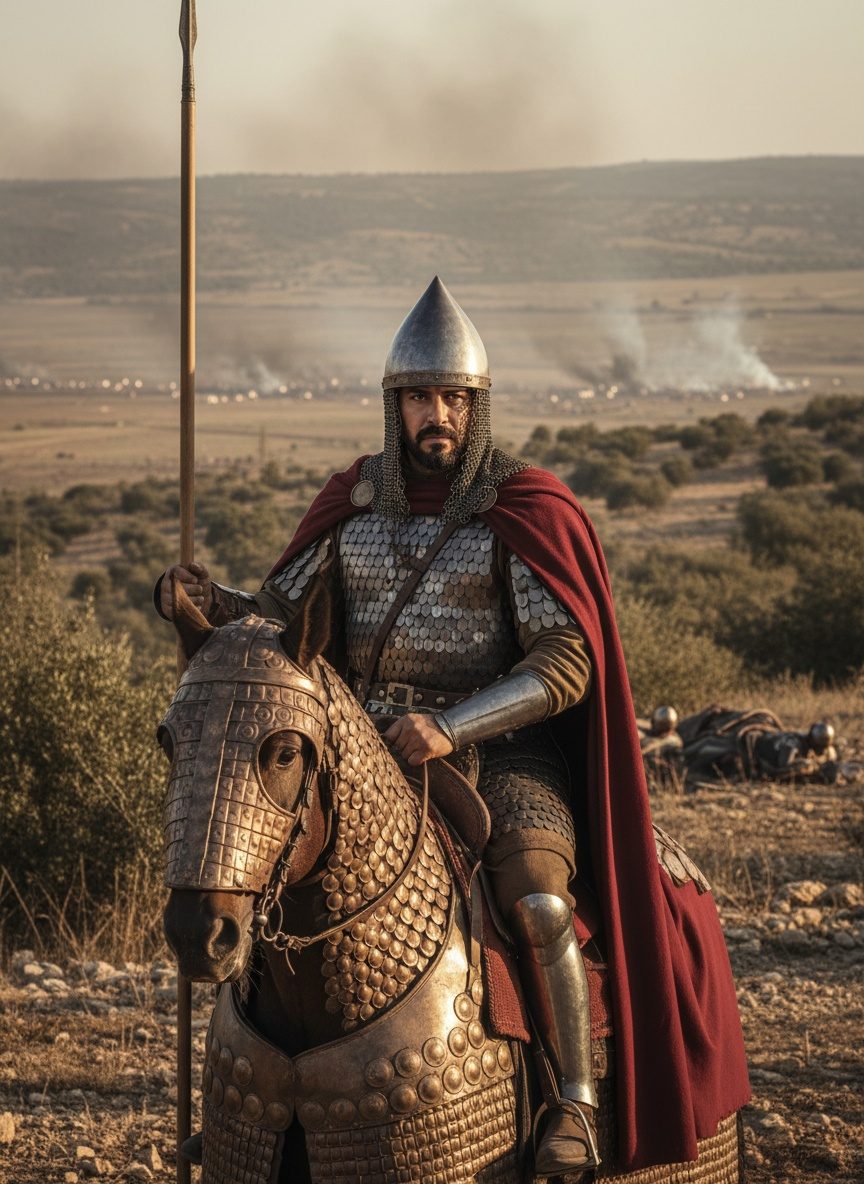
Pacorus marched at the peak of his might. Yet he never returned.
The Rising Star of the Parthian Empire
The year was 38 BCE, and the Parthian Empire was riding the crest of power. At its helm, the radiant prince Pacorus, who had recently given the mighty Roman Empire reason to tremble. The Parthians, rooted on the vast Iranian plateau, had found in Pacorus a leader who was not just a figurehead but a symbol of hope and ambition. His earlier victories had proven his mettle, orchestrating Parthian triumphs as Rome faltered. The dramatic expulsion of Roman forces from the East had only bolstered his reputation — a young prince capable of reshaping geopolitical landscapes.
Pacorus was more than a mere warrior prince; he was the vibrant heart of a complex civilization that thrived on trade, cultural exchange, and mastery of cavalry warfare. His armies, like phantoms on the battlefield, rode with unmatched agility, a blurring blend of man and steed that often left adversaries reeling. Even amidst the golden glow of Parthian opulence, Pacorus shone brighter, casting long shadows of foreboding over Rome's territorial ambitions.
The Ill-Fated Campaign
It seemed that fate favored Pacorus as he set his sights on Syria, a region caught in the relentless tug-of-war between Rome and the East. The Parthian prince gathered an immense army, crossing expanses that echoed with the drumbeats of destiny. Syria, with its flourishing cities and strategic position, appeared ripe for conquest. Pacorus' confidence brimmed, fueled by the resounding victories that had marked his campaign trail thus far.
Yet, as Pacorus advanced, his strategy overlooked the simmering undercurrents of deceit and cunning that lay in his path. Ventidius Bassus, a seemingly unremarkable Roman general, had been dispatched to confront the Parthian forces. Although lesser celebrated in Roman annals, Ventidius possessed an astute understanding of tactics that belied his humble origins. His arrival on the scene in Syria would thread an intricate weave of deception that beguiled the overconfident Parthians.
The Trap is Sprung
On the battlefield at what would become one of history's lesser-known turning points, Ventidius Bassus laid his meticulous trap. As Pacorus pushed into Roman lands, the Roman legions lay in wait. Underestimating the resourcefulness of Ventidius was Pacorus’ first misstep. The plains that should have heralded another easy victory morphed into a muted theater of collapse.
Ventidius employed an age-old stratagem — feigning retreat before turning ferociously on the Parthians. Enticing the Parthian cavalry forward, the Roman forces suddenly wheeled about, encircling the advance. Momentum skewed, Pacorus found himself beleaguered by forces he had dismissed too hastily. It was a clash not just of arms but of will, with Pacorus at the epicenter, resisting with the determination that had once carved his legend across Asia.
The moment of Pacorus’ fall was a devastating blow. The loss of their brilliant leader dulled the Parthian edge. Scattered and leaderless, his forces faltered against the harsh kiss of Roman steel. The tide had turned once more, and the dream of a Parthian Syria dissolved into the ether.
The Ripple Through Time
The death of Pacorus sent shockwaves through the Parthian realm, an empire largely accustomed to its prince's overarching successes. His father, consumed by grief, mourned a full year, marking time with the slow tolls of sorrow. The grand vision that Pacorus and his legions sought to etch upon history was stashed away, buried alongside his aspirations.
Yet, this episode divulges more than mere tragedy; it unfolds the complexity of empires in flux, the delicate choreography of ambition battling adversity. Pacorus embodied the chasm between potential and realization, his story a testament to the capricious favor of fate in the theater of ancient wars.
In peeling back the layers of forgotten conflicts, we glimpse the fragility of human endeavors amidst grand designs. Pacorus' campaign, while obscured by time, underscores a timeless narrative: power, pride, and fortune can alter their trajectories in an instant, forever reshaping the contours of history. It is this enduring lesson, hidden within the annals at the fringes of remembrance, that continues to resonate through the ages.