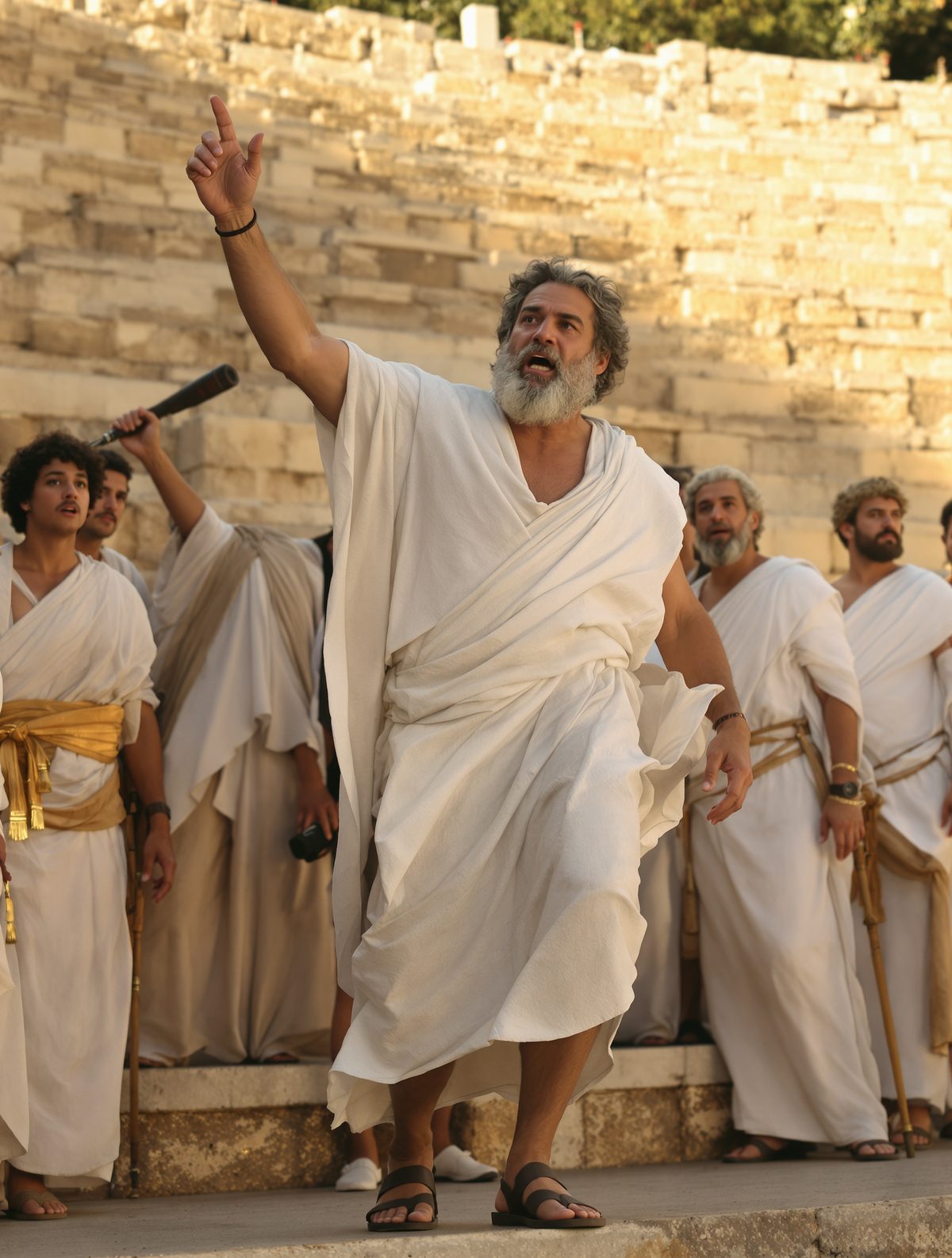
Picture this: You're standing in the marble halls of the Roman Senate, chains around your wrists, facing the most powerful men in the ancient world. They're offering you freedom, your family, your life back—all you have to do is say yes to a prisoner exchange. But instead, you clear your throat and argue passionately against your own release, knowing full well that your words are signing your death warrant. This isn't fiction. This is the true story of Marcus Atilius Regulus, a Roman general whose decision in 255 BC would echo through history as one of the most extraordinary displays of honor—or stubborn pride—the world has ever witnessed.
The General Who Conquered Africa
Marcus Atilius Regulus wasn't just any Roman officer. By 256 BC, he had earned his place among Rome's most celebrated commanders during the brutal First Punic War against Carthage. While most of this conflict raged across the Mediterranean's blue waters, Regulus convinced the Roman Senate to take a bold gamble: invade Africa itself and strike at Carthage's heartland.
Landing near Cape Bon with roughly 15,000 legionaries, Regulus achieved what seemed impossible. His forces stormed across the North African countryside, capturing the strategic city of Tunis and positioning themselves just 20 miles from mighty Carthage. Panic swept through the Carthaginian capital. Desperate envoys approached Regulus with peace terms, but the Roman general's demands were so harsh—complete surrender of Sicily, Sardinia, and a crushing tribute of 10,000 talents of silver—that even the terrified Carthaginians refused.
Here's where most history books gloss over a crucial detail: Regulus had grown dangerously overconfident. When Rome offered to send reinforcements, he dismissed most of his own troops, keeping only about 2,500 men. He believed the war was essentially over. He was catastrophically wrong.
When Sparta Came to Carthage's Rescue
Unbeknownst to Regulus, Carthage had hired a secret weapon: Xanthippus, a Spartan mercenary general who took one look at the Carthaginian military and immediately understood why they were losing. The Carthaginians had been fighting Rome's disciplined infantry formations in the hills and forests where Roman tactics excelled. But this was Africa—wide, flat plains perfect for cavalry charges and war elephants.
In spring 255 BC, Xanthippus led a reformed Carthaginian army against Regulus near Tunis. The Romans found themselves facing 12,000 infantry, 4,000 cavalry, and nearly 100 war elephants across an open plain. It was a tactical nightmare. The elephants shattered the Roman front lines while Carthaginian cavalry swept around the flanks, encircling the legionaries in a deadly embrace.
The slaughter was complete. Of Regulus's 15,000 men, only about 2,000 escaped to their ships. Five hundred were captured, including Regulus himself. The rest lay dead on African soil, their blood feeding the very land they had come to conquer. The great Roman invasion of Africa was over almost before it had truly begun.
Five Years in Carthaginian Chains
For five long years, Marcus Regulus disappeared from history's stage, languishing in a Carthaginian prison. But his captors weren't simply storing him away—they were watching the war's progression and calculating his potential value. By 250 BC, both Rome and Carthage were exhausted. Rome had won several naval victories but couldn't break Carthaginian resistance. Carthage controlled much of Sicily but couldn't drive the Romans into the sea.
It was then that some brilliant Carthaginian strategist—history hasn't preserved his name, unfortunately—conceived an audacious plan. Why not send Rome's captured hero home as an ambassador? Who better to negotiate a prisoner exchange and possible peace terms than Marcus Regulus himself?
Here's a detail that reveals just how desperate Carthage had become: they were holding approximately 500 Roman prisoners, but Rome held thousands of Carthaginians. A straight prisoner exchange would massively favor Rome. The Carthaginians needed their proposal to seem so reasonable, so appealing, that the Romans would accept an uneven trade. Regulus, as a former consul and celebrated general, was their ace in the hole.
The Speech That Defied Logic
When Regulus arrived in Rome sometime in early 250 BC, the scene must have been extraordinary. Here was a living legend, a man presumed dead, standing once again in the Senate house. He wore the simple clothes of a prisoner rather than a general's regalia, but his presence alone commanded attention. The senators leaned forward to hear what terms Carthage offered.
What happened next defies everything we understand about human self-preservation. According to the historian Polybius, who wrote just decades after these events, Regulus stood before the Senate and systematically dismantled every argument for accepting Carthage's proposal. He insisted that Rome was winning the war—a questionable claim at best. He argued that exchanging many Carthaginian prisoners for fewer Roman ones was foolish. Most remarkably, he declared that he had been so weakened by captivity that he was no longer fit for military service and therefore not worth trading for.
He literally argued himself out of freedom. The Senate, following the advice of the very man who had the most to lose, rejected Carthage's offer. But here's where the story becomes almost unbelievable: Regulus then announced he would return to Carthage as promised. When senators protested that he was no longer bound by any oath to his enemies, Regulus reportedly replied that a promise made, even to enemies, was sacred to his honor as a Roman.
The Return to Torment
The journey back to Carthage must have felt like sailing toward hell itself. Regulus knew exactly what awaited him. The Carthaginians, furious at his sabotage of their diplomatic mission, had no reason to show mercy to a man who had betrayed their trust and condemned their prisoners to continued captivity.
Later Roman sources, admittedly writing centuries after the fact, describe Regulus's execution in gruesome detail. They claim the Carthaginians cut off his eyelids and forced him to stare into the blazing African sun until he went blind, then locked him in a box lined with iron spikes that prevented him from lying down or sleeping. Whether these specific tortures occurred is debatable—Romans had a tendency to embellish Carthaginian cruelty for propaganda purposes—but there's no doubt that Regulus died horribly in Carthaginian custody.
What makes this even more tragic is a detail often overlooked: Regulus had a wife and children waiting for him in Rome. His decision didn't just cost him his life—it condemned his family to a lifetime of wondering whether their husband and father could have come home if only he had remained silent in the Senate house.
A Legacy That Outlived an Empire
Marcus Regulus became Rome's ultimate symbol of honor—the man who kept his word even when it meant certain death. His story was told and retold, inspiring Roman soldiers for centuries. The poet Horace immortalized him in verse, and even St. Augustine praised his integrity. But perhaps more importantly, Regulus embodied something that would define Roman culture: the idea that personal honor mattered more than personal survival.
Yet modern readers might ask: was Regulus truly heroic, or was he a stubborn fool who threw away his life and abandoned his family for an abstract principle? Did his refusal to accept freedom actually serve Rome's interests, or did it simply prolong a bloody war? These questions don't have easy answers, and maybe that's precisely why Regulus's story continues to fascinate us more than two millennia later.
In our age of flexible loyalties and situational ethics, Marcus Regulus stands as a reminder of what it once meant to believe that some principles were worth dying for. Whether we see him as a hero or a cautionary tale says less about him than it does about us—and the world we've built since Rome's eagles last flew over the Mediterranean.