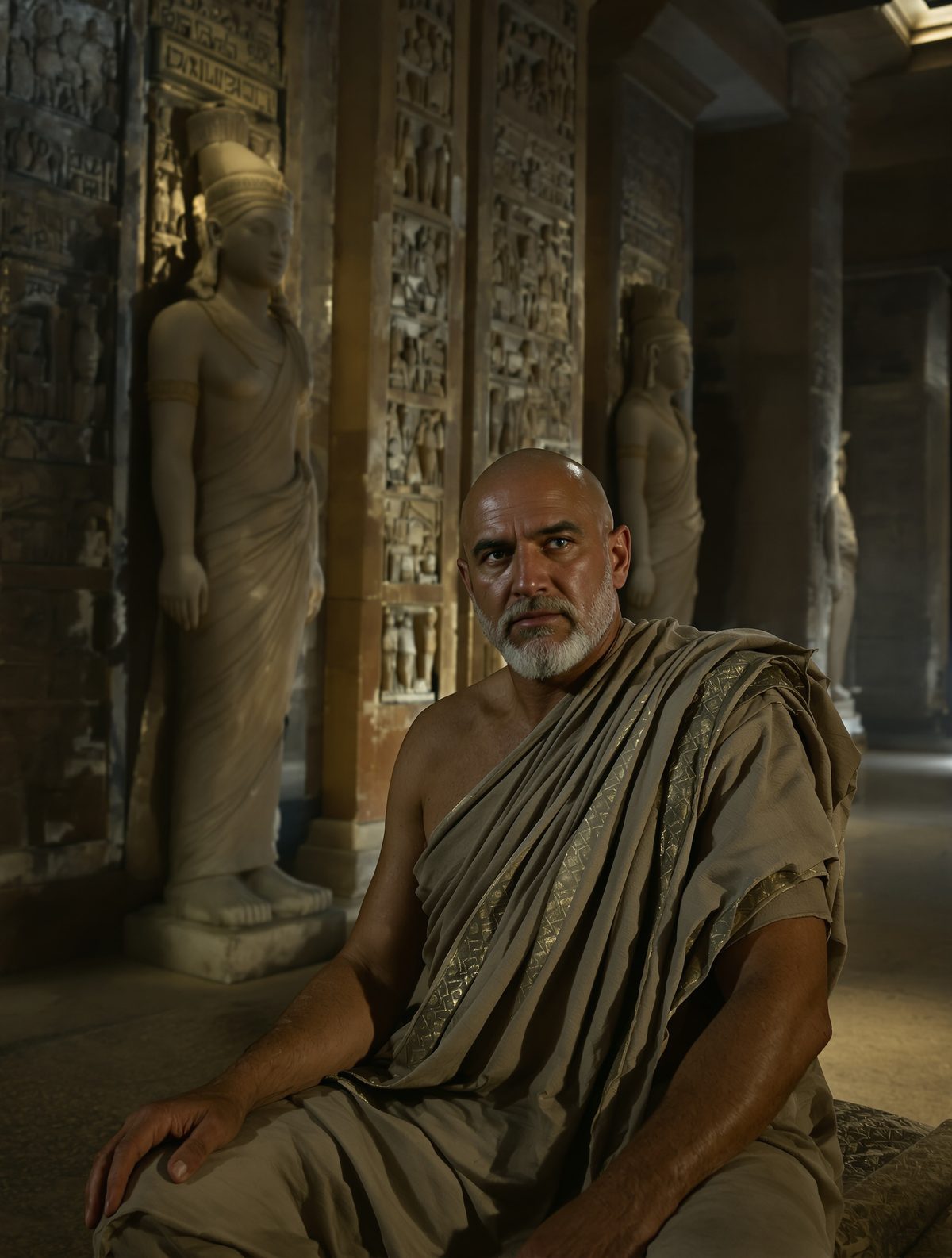
Picture this: You've just sacrificed everything to birth a new form of government. You've overthrown a tyrant king, established the world's first republic, and sworn a sacred oath that no monarch will ever again rule your people. Then you discover your own sons—your flesh and blood—are plotting to destroy everything you've built and restore the very tyranny you died to end. What do you do when saving your republic means condemning your children to death?
This wasn't a hypothetical dilemma for Lucius Junius Brutus in 509 BC. It was the most agonizing decision any father has ever faced—and his choice would echo through history for over two millennia.
The Birth of a Republic Built on Blood
To understand the weight of Brutus's impossible choice, we need to step back into the Rome of 509 BC—a city convulsing through one of history's most dramatic political transformations. For over two centuries, Rome had been ruled by kings, but the last of these monarchs, Tarquin the Proud (Tarquinius Superbus), had pushed Roman tolerance to its breaking point.
Tarquin wasn't just unpopular—he was a monster. He murdered senators who opposed him, ignored ancient customs, and ruled through fear and violence. But it was his son's rape of Lucretia, a virtuous Roman noblewoman, that finally shattered the people's patience. When Lucretia took her own life rather than live with the shame, her blood became the spark that ignited revolution.
Leading this uprising was Lucius Junius Brutus, a man who had spent years playing the fool to survive under tyranny. His very name "Brutus" meant "dull" or "stupid"—a mask he wore so successfully that the royal family never saw him as a threat. But behind this facade burned the mind of a political genius who understood that Rome's future lay not in replacing one king with another, but in creating something unprecedented: a republic where power belonged to the people.
On that fateful day in 509 BC, Brutus stood before the assembled Roman citizens in the Forum and administered the most consequential oath in Western history: "Never again shall any man be king in Rome." The crowd roared its approval, the Tarquin dynasty fled into exile, and Lucius Junius Brutus became Rome's first consul—the highest elected office in their brand-new republic.
The Price of Revolution
But here's what they don't tell you in the textbooks: revolutions are never as clean as they appear in hindsight. The Roman Republic wasn't born into a world of unanimous celebration. Powerful families who had thrived under royal patronage suddenly found themselves cut off from their source of wealth and influence. Senators who had grown comfortable with authoritarian rule now faced the messy uncertainty of democratic governance.
Among these discontented nobles lurked a dangerous truth: not everyone wanted the republic to succeed.
Within months of the monarchy's fall, whispers began circulating through Rome's elite neighborhoods. Secret meetings were held in shadowy corners of patrician villas. Messages were passed between conspirators who shared a common dream—or nightmare, depending on your perspective. They wanted their king back.
These weren't just idle complaints over wine at dinner parties. This was organized treason, a sophisticated plot involving some of Rome's most prominent families. The conspirators had established contact with the exiled Tarquin family and were actively working to restore the monarchy through a combination of internal sabotage and external military pressure.
What makes this conspiracy particularly chilling is how it reveals the fragility of that newborn republic. Democracy wasn't inevitable—it was a radical experiment that could have been snuffed out in its infancy by a handful of determined aristocrats who preferred the certainty of tyranny to the chaos of freedom.
A Father's Worst Nightmare
As consul, Brutus had established an extensive network of informants and spies to protect the vulnerable republic. So when reports of the conspiracy reached his ears, he moved swiftly to investigate. What he discovered would have broken a lesser man entirely.
The conspiracy reached into his own household. His two sons, Titus and Tiberius, were not just aware of the plot—they were among its leaders.
Imagine the moment of that discovery. These weren't rebellious teenagers acting out against authority. These were grown men who had consciously chosen to betray everything their father had sacrificed to build. They had attended the secret meetings, sworn oaths to restore Tarquin's dynasty, and actively worked to overthrow the government their father had risked his life to establish.
The historical sources don't give us Brutus's private thoughts during those dark hours after he learned the truth. Did he rage? Did he weep? Did he pace the floors of his home, desperately searching for some way to save both his sons and his republic? We can only imagine the sleepless nights and the weight of approaching dawn, when duty would demand he act on what he had learned.
But here's a detail that makes this story even more heartbreaking: Brutus didn't just discover the conspiracy—he had to personally oversee the operation that exposed it. Roman historians tell us that intercepted letters between the conspirators and the exiled Tarquins provided the evidence needed for arrests and trials. As consul, Brutus himself likely read correspondence in his sons' handwriting, planning his government's destruction.
Justice Without Mercy
The trial of the conspirators took place in the Roman Forum before a crowd of thousands. This wasn't just a legal proceeding—it was political theater of the highest stakes, a moment when the republic's commitment to the rule of law would be tested against the most powerful force in human nature: a parent's love for their children.
Roman law was clear and unforgiving: the penalty for treason was death. No exceptions, no mitigating circumstances, no mercy for youth or noble birth. The law that governed commoners applied equally to the sons of consuls. This principle of equality before the law was one of the republic's founding ideals, but few expected it to be tested so severely so soon.
Brutus sat in judgment as both prosecutor and judge—a dual role that placed him in an impossible position. He could have recused himself, allowing another magistrate to handle the case. He could have found procedural grounds to dismiss the charges. He could have simply looked the other way, as countless powerful fathers had done throughout history when their children faced justice.
Instead, he chose Rome.
The ancient historian Livy describes the scene with devastating simplicity: "The consul's duty called upon the father to exact the penalty." In front of the assembled citizenry, Lucius Junius Brutus pronounced the death sentence upon his own sons. But more than that—and this detail will send chills down your spine—he remained present to watch the sentence carried out.
Roman tradition demanded that he witness their execution, not as a father, but as consul of the republic. As the axes fell, ending his sons' lives, Brutus reportedly stood motionless, his face betraying no emotion. The crowd watched in stunned silence, understanding they were witnessing something unprecedented in human history: a man choosing principle over blood, law over love, the future over the past.
The Man Who Chose Tomorrow
Here's what makes Brutus's story so much more complex than a simple tale of rigid duty: he wasn't choosing between good and evil. He was choosing between two goods—the good of family loyalty and the good of republican virtue. In most societies throughout history, family comes first. A father's primary duty is to his children, not to abstract political principles.
But Brutus understood something that his sons did not: the Roman Republic wasn't just another government. It was humanity's first serious attempt to create a society where law, not the whims of kings, determined justice. Where merit, not birth, opened doors to advancement. Where citizens, not subjects, shaped their own destiny.
His sons were willing to trade all of this away for the comfortable certainties of monarchy, where noble birth guaranteed privilege and royal favor mattered more than talent or virtue. They were choosing the past over an uncertain but potentially glorious future.
The execution of Brutus's sons sent a message that reverberated throughout the ancient world: the Roman Republic was serious about its principles. No one was above the law. No family connection, no matter how powerful, could shield traitors from justice. This wasn't just legal precedent—it was the foundation of a political culture that would eventually conquer the Mediterranean world.
Brutus himself became a legend in his own lifetime, but it was a lonely kind of fame. He had saved the republic, but at the cost of his family line. His choice ensured that Roman democracy would survive its infancy, but left him childless and haunted by what he had sacrificed for principle.
Why This Ancient Story Still Matters
More than two millennia later, Brutus's impossible choice still haunts us because it forces us to confront questions that never really go away: What do we owe to our families versus our principles? How much should we sacrifice to preserve institutions that serve the greater good? When personal loyalty conflicts with public duty, which should win?
Every generation faces its own version of Brutus's dilemma. Parents today struggle with children who embrace ideologies that seem to threaten everything they've worked to build. Leaders must choose between protecting their inner circles and serving the broader public interest. Citizens must decide whether to challenge systems that benefit their families but harm their communities.
Brutus's story reminds us that democracy is never safe, never guaranteed, never more than one generation away from extinction. It survives only because some people are willing to pay terrible prices to preserve it—sometimes even the ultimate price of sacrificing those they love most.
The Roman Republic that Brutus saved through his unthinkable choice lasted nearly 500 years. His decision in that Forum in 509 BC helped create the political foundation that would eventually influence the American Revolution, the French Republic, and every democratic movement since. When we vote, when we insist on equality before the law, when we demand that our leaders be accountable to the people rather than ruling by divine right, we're living in the world that Lucius Junius Brutus chose to create at the cost of his sons' lives.
That's a legacy written in both blood and hope—a reminder that the prices of freedom are always higher than we want to pay, but sometimes still worth paying.