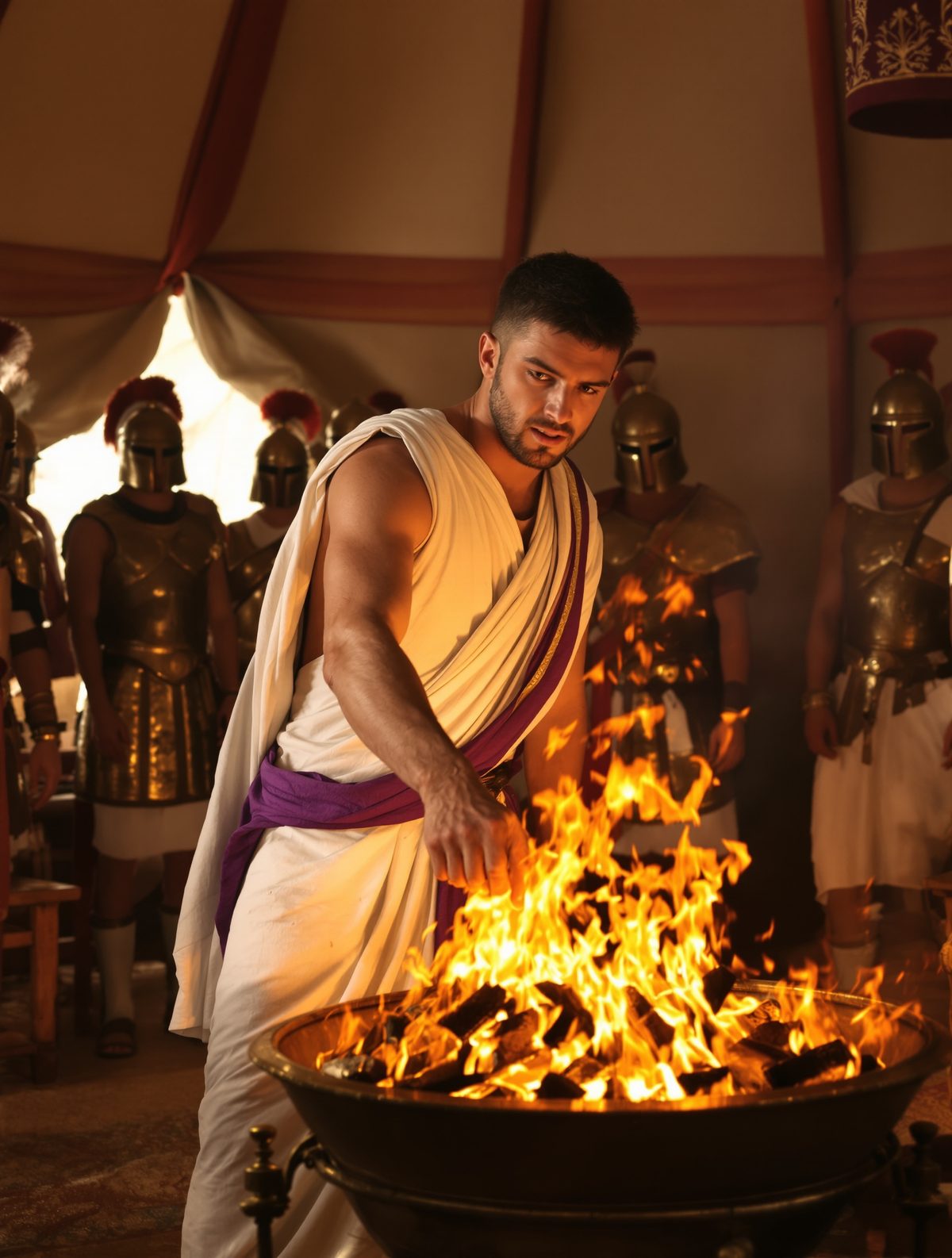
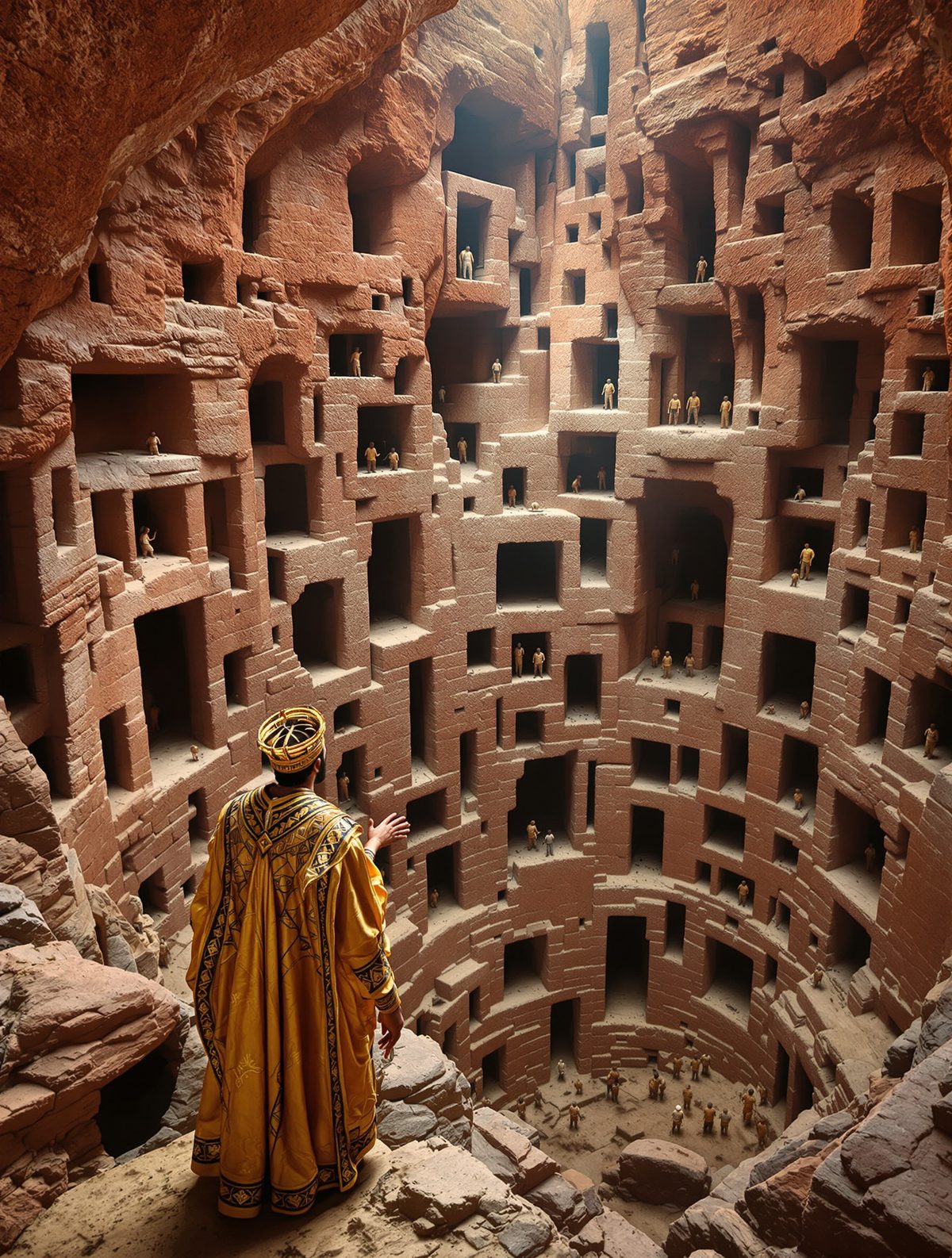
Picture this: It's 1250 BC, and while other Egyptian princes are lounging in silk-draped chambers, sipping wine and planning their next hunting expedition, one royal heir is crawling through a pitch-black tomb on his hands and knees. Dust coats his ceremonial robes. Sweat drips from his brow as he squints at hieroglyphs carved when his ancestors were still nomads in the desert. This isn't some treasure hunt—it's a meticulous restoration project. And the man leading it? Prince Khaemwaset, son of the mighty Ramesses II, the world's first archaeologist.
In an age when rulers built monuments to themselves and let the past crumble into sand, one prince made the radical choice to become a guardian of history. His story challenges everything we think we know about ancient Egypt's obsession with the future afterlife—because Khaemwaset was utterly captivated by the past.
The Prince Who Had Everything (But Wanted Something Else)
Born around 1281 BC, Khaemwaset entered the world with a golden spoon firmly planted in his mouth. His father, Ramesses II, would become one of history's most powerful pharaohs, ruling Egypt for an unprecedented 66 years. The prince had access to unlimited wealth, commanded armies, and held the prestigious position of High Priest of Ptah in Memphis—essentially making him the CEO of one of Egypt's most important religious centers.
But something about crumbling antiquity called to him. While his brothers Amun-her-khepeshef and Ramesses prepared for military campaigns and court politics, Khaemwaset found himself drawn to the ancient pyramids of Saqqara and Giza. These monuments, already over 1,000 years old in his time, were falling apart. Imagine if today's archaeologists discovered that a medieval prince had spent his fortune restoring Roman ruins—that's essentially what Khaemwaset did.
The prince didn't just admire these ancient wonders from afar. He organized Egypt's first systematic archaeological expeditions, complete with teams of skilled craftsmen, scribes, and engineers. His mission? To restore the monuments to their original glory and ensure their creators wouldn't be forgotten.
A Detective in Royal Robes
Khaemwaset's approach to archaeology would make modern scholars proud. He didn't just slap his name on ancient monuments (though Egyptian royalty certainly had a habit of doing that). Instead, he conducted what we'd recognize today as proper historical research.
At the pyramid complex of Unas at Saqqara, Khaemwaset's teams carefully cleared away centuries of accumulated sand and debris. When they uncovered damaged reliefs and inscriptions, the prince insisted on faithful restoration. His craftsmen didn't impose contemporary artistic styles—they studied the original work and replicated the Old Kingdom techniques from 1,200 years earlier.
But here's where it gets really fascinating: Khaemwaset was perhaps history's first epigrapher. He had his scribes create detailed records of the inscriptions they found, noting which pharaoh had built what and when. On the southern face of the Great Pyramid at Giza, archaeologists have found one of his restoration inscriptions that reads: "It is the High Priest of Ptah, Khaemwaset, who has perpetuated the name of the King of Upper and Lower Egypt, Khufu."
Think about the implications: in 1250 BC, this prince was doing what we consider cutting-edge historical preservation. He was creating archives, training restoration specialists, and developing systematic approaches to archaeological conservation—all while most of the world was still figuring out how to work iron.
The Pyramid Whisperer
Khaemwaset's most ambitious project was the restoration of the Step Pyramid of Djoser at Saqqara. Built around 2670 BC by the legendary architect Imhotep, this pyramid was the world's first monumental stone building. By Khaemwaset's time, it was a crumbling ruin that most people probably assumed was just another hill in the desert.
The prince saw something different. His teams spent years carefully excavating the pyramid complex, uncovering chambers that hadn't seen daylight for centuries. They found and restored the intricate underground galleries, the ceremonial courtyards, and the delicate limestone reliefs that decorated the complex.
But Khaemwaset went beyond mere restoration—he was conducting historical detective work. He correctly identified Djoser as the pyramid's builder and Imhotep as its architect, information that had been lost to popular memory. His inscriptions at the site represent some of our earliest historical records about these ancient figures.
The prince's work at Saqqara was so thorough that when modern archaeologists began excavating there in the 19th century, they found his restoration inscriptions still clearly visible. In many cases, Khaemwaset's notes provided crucial information about monuments that had been damaged or destroyed in the intervening 3,000 years.
More Than Just Pretty Buildings
What drove a prince who could have conquered nations to spend decades crawling through dusty tombs? Khaemwaset's own inscriptions give us clues. He wrote about wanting to preserve the names and deeds of the ancient kings "so that they might live again." This wasn't just about buildings—it was about memory itself.
In ancient Egypt, being forgotten was considered a fate worse than death. The concept of damnatio memoriae—being erased from history—was the ultimate punishment. By restoring ancient monuments and recording the names of their builders, Khaemwaset was literally bringing the dead back to life in Egyptian religious terms.
The prince also seemed genuinely curious about how ancient Egyptians had achieved their architectural marvels. His restoration work often involved reverse-engineering construction techniques that had been lost over the centuries. At the pyramid of Unas, his teams figured out how to recreate the specific type of mortar used in the original construction.
This wasn't just academic curiosity—Khaemwaset was preserving technological knowledge that would otherwise have vanished. Some techniques his teams rediscovered wouldn't be seen again until modern times.
The Royal Archaeologist's Legacy
Khaemwaset died around 1225 BC, predeceasing his father Ramesses II (who lived to the remarkable age of 90). The prince was buried in the Valley of the Kings, though his tomb has never been definitively identified—a ironic fate for someone who spent his life ensuring others wouldn't be forgotten.
But his impact on Egyptian culture was profound. The monuments he restored continued to attract pilgrims and tourists for centuries. Greek and Roman visitors to Egypt often learned about ancient pharaohs through Khaemwaset's carefully preserved inscriptions.
Perhaps most remarkably, the prince's restoration work was so skillful that it fooled scholars for millennia. Many 19th-century archaeologists initially thought some of the monuments Khaemwaset had restored were from his own time period, not realizing they were looking at 3,000-year-old restoration work.
Why The World's First Archaeologist Still Matters
In our age of viral content and 24-hour news cycles, Khaemwaset's story offers a profound reminder about the value of looking backward. Here was someone who literally had the power to reshape the world, yet he chose to spend his life preserving the achievements of people who had been dead for over a millennium.
His approach to archaeology—careful documentation, faithful restoration, respect for original intent—established principles that modern conservators still follow. But more than that, Khaemwaset understood something we're still grappling with today: that preserving the past isn't just about buildings or artifacts. It's about maintaining the continuity of human knowledge and ensuring that the innovations and insights of previous generations aren't lost forever.
In a world where entire libraries of human knowledge can disappear with a server crash, perhaps we need more people willing to crawl through the dusty corners of history, making sure the stories that shaped us don't crumble into sand.