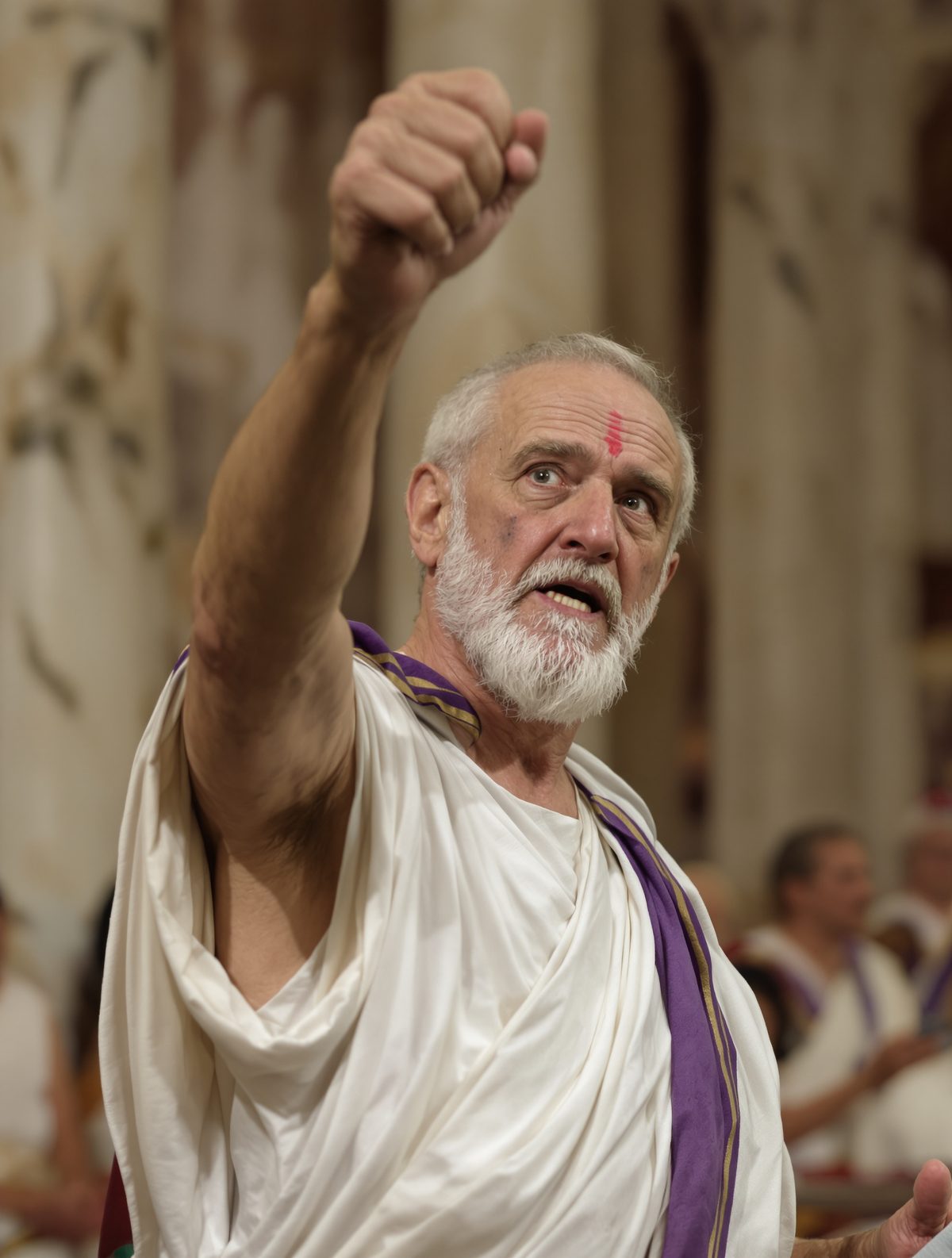
The salt spray of the Aegean Sea misted across the weathered face of Hippias as he stood at the prow of a Persian warship, watching the familiar coastline of Attica emerge from the dawn haze. It was September 490 BC, and after twenty years of bitter exile, the former tyrant of Athens was finally coming home. Behind him stretched a formidable armada—600 ships carrying 25,000 Persian warriors, the most feared fighting force in the ancient world. But it wasn't the sight of his approaching homeland that made Hippias smile. It was the dream.
The night before, as the Persian fleet anchored off the coast of Euboea, Hippias had experienced what he believed to be a divine vision. In his dream, he had lain with his own mother—a disturbing image that would horrify most men, but one that filled the aging tyrant with euphoric certainty. His seers had been unanimous in their interpretation: the dream meant he would return to the motherland, reclaim his throne, and die peacefully in Athens as its rightful ruler. Victory was assured. What Hippias couldn't have known was that dreams, like history itself, often reveal their true meaning only when it's too late to change course.
The Making of a Tyrant's Revenge
To understand the tragedy about to unfold on the beaches of Marathon, we must first journey back to 514 BC, when Hippias ruled Athens with an iron fist. The son of Pisistratus, he had inherited not just power but a particular brand of tyranny that had grown increasingly paranoid and brutal. His reign might have continued indefinitely, but for a love affair gone wrong and a plot that changed the course of Western civilization.
When his younger brother Hipparchus was assassinated by the lovers Harmodius and Aristogeiton—not for political freedom as later Athenian propaganda would claim, but over a personal slight involving unrequited desire—Hippias's rule became a reign of terror. He executed suspected conspirators, imposed crushing taxes, and turned Athens into a police state. By 510 BC, the Athenians had endured enough. With Spartan help, they drove him into exile, and something unprecedented was born: democracy.
For twenty years, Hippias nursed his grievances in the Persian court of Darius I, feeding the Great King tales of Athenian wealth and weakness. When the Athenians had the audacity to support the Ionian Greek cities in their rebellion against Persian rule, burning the provincial capital of Sardis in 498 BC, Hippias saw his chance. He whispered in Darius's ear about retribution and reward, about the riches that awaited the man who could bring the troublesome Greeks to heel. The stage was set for an invasion that would either crush the world's first democracy in its cradle or forge it into something unbreakable.
The Prophet of His Own Doom
As the Persian fleet approached the Attic coast, Hippias was more than just a guide—he was the expedition's spiritual compass. At nearly seventy years old, with his white beard and weathered hands, he cut an imposing figure among the Persian nobles. General Artaphernes relied on his knowledge of Athenian defenses, while Admiral Datis valued his insights into Greek psychology. But it was his role as interpreter of omens that would prove most fateful.
The dream had come to him with startling clarity. In the world of ancient Greece, where the boundary between sleeping and waking visions was thin as papyrus, such dreams carried the weight of divine revelation. Hippias had consulted not just Persian magi but also Greek seers who traveled with the fleet, and their interpretation was unanimous and encouraging: the earth mother was calling him home to reclaim his rightful place.
What none of them considered was the possibility that the dream might be a cruel joke of the gods—or that homecoming could mean something far different from triumph. The Greeks had a word for this kind of divine mischief: ate, the blindness that strikes mortals just before their fall. Hippias, drunk on the certainty of prophecy, was walking straight into its trap.
Marathon: The Beach Where Dreams Die
The Persians chose Marathon Bay for their landing with calculated precision. This crescent of sand and stone, twenty-six miles northeast of Athens, offered everything an invading army could want: a protected harbor, fresh water, and most crucially, terrain suitable for the Persian cavalry that had trampled every enemy from India to Egypt. Hippias himself had suggested the spot, remembering how his father Pisistratus had landed here fifty-six years earlier during his own successful return from exile. History, Hippias believed, would repeat itself.
As the first Persian ships ground against the sand in the pre-dawn darkness of September 12, 490 BC, Hippias was among the first to leap into the surf. This was his moment—the instant when twenty years of exile, humiliation, and burning rage would finally be vindicated. The old tyrant splashed through the shallows with an energy that belied his age, his feet finally touching Athenian soil after two decades of dreaming about this moment.
But the gods, it seems, have a sense of irony. As Hippias strode up the beach, gesturing grandly and calling out instructions to the Persian officers, he was seized by a violent coughing fit—the kind that rattled his aging frame and reminded him of his mortality. In the midst of this spasm, he felt something small and hard dislodged from his mouth. A tooth, yellowed with age and loosened by time, had finally given way.
The Omen in the Sand
In any other circumstances, losing a tooth might be merely an embarrassing sign of advancing age. But for a man who lived by omens and died by prophecies, it was a thunderbolt of realization. Hippias dropped to his knees in the coarse sand, frantically searching for the wayward tooth as Persian soldiers streamed past him onto the beach. His fingers clawed through sand and pebbles, growing more desperate with each passing moment.
And then it hit him—not the tooth, but the true meaning of his prophetic dream. The seers had been right about returning to the motherland and dying in Athens, but catastrophically wrong about everything else. He wouldn't reclaim his throne; he would merely claim a patch of Athenian earth as his grave. The dream hadn't promised triumph—it had announced his doom with the cruel precision that only the gods could manage.
According to the historian Herodotus, who recorded this tale, Hippias realized in that moment of frantic searching that he would never possess any more of his ancestral land than the tiny portion his lost tooth had claimed. The prophecy was fulfilling itself with grim literalism: he would indeed be united with the motherland, but as a corpse, not a king.
As if summoned by this moment of revelation, an Athenian scout's spear found its mark. Hippias, still on his knees in the sand, searching for his tooth among the infinite grains of Marathon beach, was struck down not in glorious battle but in a posture of absurd vulnerability. The great tyrant who had dreamed of reconquering Athens died scrabbling in the dirt for a piece of himself that the land had already swallowed.
When Victory Becomes Defeat
The death of Hippias sent shockwaves through both armies. For the Persians, losing their guide and the expedition's symbolic figurehead before the battle had even begun was an omen of the darkest kind. The man who was supposed to open the gates of Athens had instead opened his own grave. Persian morale, already shaken by reports of the fearsome Athenian hoplites marching toward them, plummeted further.
For the Athenians, news of the tyrant's death was like a gift from Athena herself. When the runner brought word to the approaching army of 11,000 Athenians and their 1,000 Plataean allies, the soldiers raised their spears and cheered. The man who had haunted their democracy's birth was gone, struck down not by their swords but by the very land he had sought to reclaim.
What followed was one of history's most improbable victories. On that narrow plain between the mountains and the sea, the citizen-soldiers of Athens charged across a mile of open ground and shattered the Persian center, driving the invaders back to their ships in chaotic retreat. The victory at Marathon became the foundational myth of Western democracy—proof that free men fighting for their homes could defeat the mightiest empire on earth.
The Tooth That Changed History
The story of Hippias and his fatal tooth might seem like a footnote to the greater drama of Marathon, but it reveals something profound about the nature of power, prophecy, and the dangerous seduction of dreams. Here was a man so convinced of his destiny that he couldn't see the trap closing around him until the moment before it snapped shut.
In our own age of confident predictions and inevitable victories, the tale of Hippias offers a sobering reminder: the future has a way of fulfilling our expectations in ways we never anticipated. Dreams of triumph can become nightmares of defeat with a single cough, a single moment of vulnerability, a single misread sign from gods who may be laughing at our certainty.
Perhaps most remarkably, Hippias's death helped save the very thing he sought to destroy. Without democracy's victory at Marathon, there might have been no Golden Age of Athens, no Parthenon, no Socrates or Plato, no theatrical tragedies exploring the very kind of fatal blindness that claimed the old tyrant on the beach. In dying as he searched for his lost tooth, Hippias inadvertently helped ensure that his true legacy would not be tyranny restored, but freedom preserved—buried not in Athenian sand, but in the foundations of Western civilization itself.