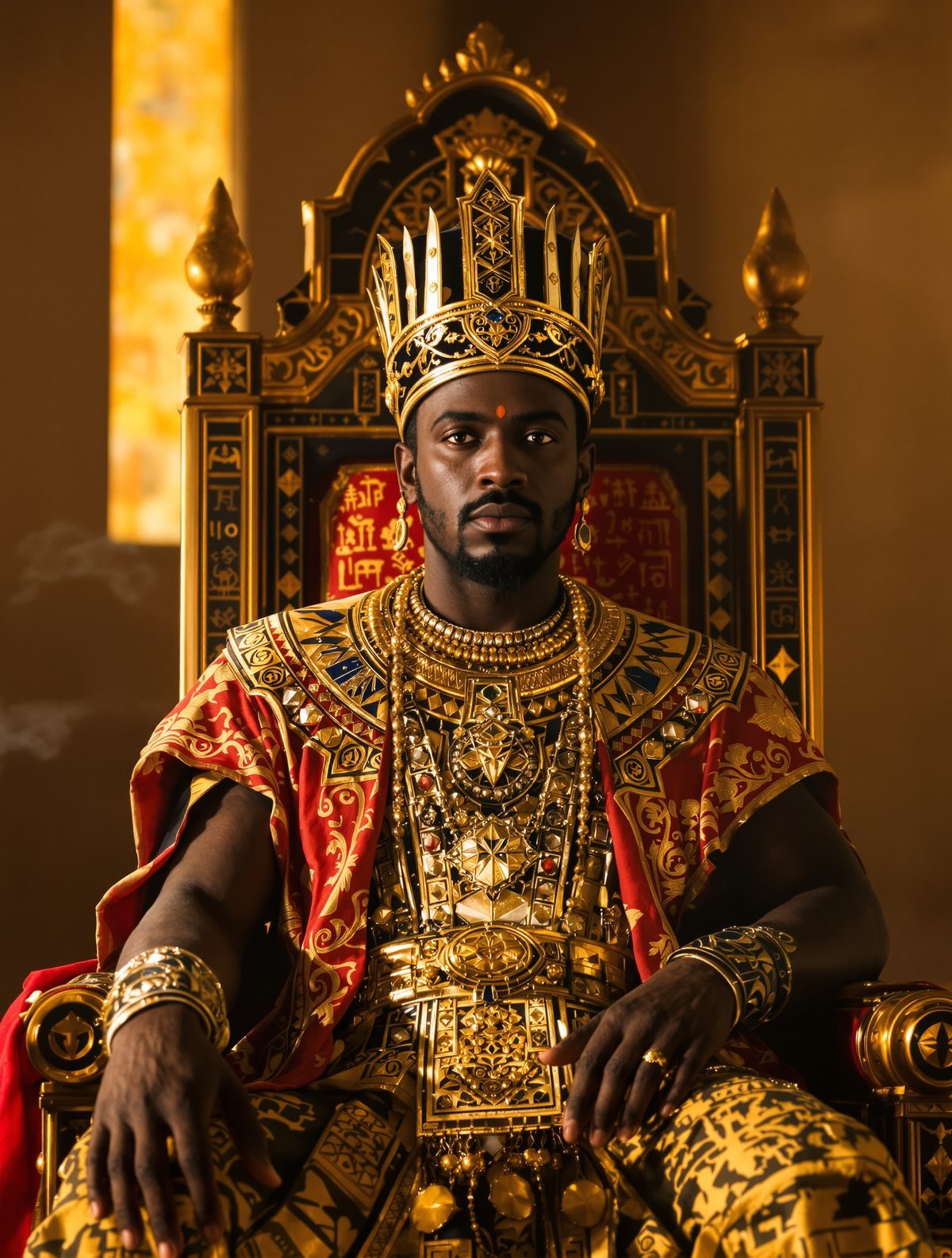
Picture this: A teenage Viking prince stands on the deck of a weathered longship, watching the golden domes of Constantinople rise from the horizon like something from a fever dream. The year is 1034, and fifteen-year-old Harald Sigurdsson has nothing to his name but the clothes on his back and a burning desire for revenge. Behind him lies Norway, where his half-brother the king lies dead and his cause is lost. Ahead lies the greatest city in the world—and a destiny that would make him one of history's most legendary warriors.
This is the story of Harald Hardrada—a name that literally means "hard ruler"—who would spend fifteen years transforming himself from penniless exile into the commander of the Byzantine Emperor's most feared fighting force, before returning home with enough gold to buy a kingdom.
The Prince Who Lost Everything
Harald's journey began with catastrophe at the Battle of Stiklestad in 1030, where his half-brother King Olaf II fell fighting to reclaim his Norwegian throne. The teenage Harald, fighting alongside Olaf despite being seriously wounded, watched their dreams of ruling Norway die in the blood-soaked mud of that battlefield. What followed was a harrowing escape through the forests of Scandinavia that reads like something from an epic saga—because that's exactly what it became.
For three years, Harald and his small band of loyal followers lived as outlaws, launching guerrilla attacks against the Danish-backed rulers who had seized Norway. But by 1033, even this desperate resistance had crumbled. Facing certain death if he remained, Harald made a decision that would change his life forever: he would seek his fortune in the legendary city of Constantinople, where the Byzantine Emperor was said to pay Vikings in gold to fight his wars.
The journey itself was an odyssey worthy of Homer. Harald's small fleet sailed down the rivers of Russia, navigating the treacherous Dnieper Rapids where many Viking ships had been dashed to pieces on the rocks. They portaged around waterfalls, fought off bandits, and finally emerged into the Black Sea after months of travel. When the walls of Constantinople finally came into view, Harald was looking at the largest, richest, most sophisticated city in the world—home to nearly half a million people when London was barely a large town.
Welcome to the City of Gold
Constantinople in 1034 was a marvel that defied description. The Hagia Sophia's massive dome dominated a skyline bristling with palaces, churches, and towers. The Great Palace complex alone covered 100,000 square meters and housed thousands of courtiers, servants, and guards. Ships from across the known world crowded the Golden Horn harbor, their holds bursting with silk from China, spices from India, and amber from the Baltic.
For a Viking warrior accustomed to the wooden halls and muddy streets of medieval Scandinavia, Constantinople must have seemed like stepping into another world entirely. The streets were paved. Aqueducts brought fresh water from mountains miles away. The Hippodrome could hold 100,000 spectators for chariot races. And everywhere, there was gold—gilding the domes, decorating the churches, filling the treasuries of merchants who traded with the edges of the known world.
But Harald hadn't come as a tourist. He had come to join the Varangian Guard—the Emperor's personal bodyguard unit composed entirely of Northern European warriors, mainly Vikings. The Byzantines had discovered something remarkable: while their own soldiers might be tempted by bribes or political intrigue, these foreign warriors had an almost fanatical loyalty to whoever paid them. They called them "Varangians," from the Old Norse word for "sworn companions."
The Emperor's Viking Army
The Varangian Guard was unlike anything else in the medieval world. Founded in 988 by Emperor Basil II, it had grown into an elite unit of roughly 6,000 warriors who served as both the emperor's personal bodyguard and his most reliable shock troops. These weren't just any Vikings—they were the cream of Northern European warriors, each one tested in battle and bound by sacred oaths.
What made Harald stand out, even among these legendary fighters, was his combination of royal blood, tactical genius, and sheer ruthless ambition. Byzantine sources describe him as unusually tall even by Viking standards, with piercing eyes and an intellect that impressed even the sophisticated courtiers of Constantinople. Unlike many of his fellow Varangians who were content to fight, feast, and collect their pay, Harald studied—learning Greek, absorbing Byzantine military tactics, and building relationships with powerful figures in the imperial court.
His rise through the ranks was meteoric. Within just a few years, this teenage exile had become one of the Guard's senior commanders. Emperor Michael IV, who ruled from 1034 to 1041, quickly recognized Harald's exceptional abilities and began entrusting him with increasingly important missions. But it was under the next emperor, Constantine IX, that Harald would truly make his mark on history.
Conquering Sicily and Making Enemies
Between 1038 and 1043, Harald led Varangian forces in the Byzantine reconquest of Sicily, fighting against Arab emirates that had controlled the island for over two centuries. This campaign showcased Harald's tactical brilliance and gave him his first taste of independent command. The stories that emerged from these battles entered Viking legend: Harald capturing entire cities through cunning stratagems, his warriors smashing through enemy shield walls with their massive two-handed axes, and treasure beyond imagining flowing into the Varangian war chests.
But Harald's success came with a price. His growing wealth and influence made him enemies among the Byzantine nobility, who viewed this foreign warrior with suspicion and jealousy. When Constantine IX became emperor in 1042, the political winds in Constantinople began to shift against the Varangians. Harald found himself accused of embezzling campaign funds—charges that were almost certainly politically motivated but dangerous nonetheless.
The breaking point came in 1043. Harald, now approaching thirty and incredibly wealthy from his years of campaigning, realized that his time in Byzantine service was coming to an end. Whether he jumped or was pushed remains unclear, but the result was the same: Harald began planning his return to Norway. There was just one problem—Emperor Constantine had no intention of letting his most successful general simply walk away with a fortune in Byzantine gold.
The Great Escape
What happened next reads like a Hollywood thriller. Harald secretly began moving his accumulated wealth out of Constantinople, likely using networks of Viking merchants who regularly traveled between the Byzantine Empire and Scandinavia. When Constantine finally moved to arrest him in 1043, Harald was ready.
The details of his escape are murky, filtered through centuries of saga tradition, but the broad outline is clear: Harald and several hundred loyal Varangians fought their way out of Constantinople in a running battle that lasted several days. Some sources claim he kidnapped a Byzantine noble woman (possibly the emperor's niece) as leverage. Others suggest he had inside help from sympathetic court officials. What's certain is that he made it to the Bosphorus with a small fleet and enough gold to fund his ambitions.
But even then, his troubles weren't over. Constantine had ordered the famous chain that protected Constantinople's harbor to be raised, blocking Harald's escape to the Black Sea. According to Viking saga tradition, Harald ordered his ships loaded with stones at the stern, then had his men run to the bow as they approached the chain. The ships tilted forward, sliding over the obstruction, then leveled out as the men ran back. Whether or not this particular story is true, Harald did escape—and he brought with him the wealth of fifteen years of Byzantine campaigns.
The Return of the King
When Harald Hardrada sailed into Norwegian waters in 1045, he was no longer the desperate teenage exile who had fled fifteen years earlier. He was now one of the richest men in Scandinavia, commanding a private army of battle-hardened veterans and carrying enough gold to finance a war. His timing was perfect—Norway was weakening under King Magnus, and the country's nobles were ready for change.
Rather than immediately pressing his claim through force, Harald demonstrated the political sophistication he'd learned in Constantinople. He negotiated a power-sharing agreement with Magnus, becoming co-king of Norway in 1046. When Magnus died unexpectedly later that year, Harald became sole ruler of the kingdom he'd been forced to flee as a teenager.
His reign would last twenty years, during which he earned his nickname "Hardrada"—the hard ruler—through his iron-fisted governance and constant warfare. But Harald never forgot the lessons he'd learned in the greatest city in the world. He introduced Byzantine military tactics to Norwegian armies, used his understanding of international diplomacy to build alliances across Europe, and transformed Norway into a major medieval power.
The story would end, of course, with his death at the Battle of Stamford Bridge in 1066, fighting King Harold Godwinson of England in what many historians consider the last great Viking raid. But that dramatic finale shouldn't overshadow the extraordinary journey that made it possible—fifteen years in which a penniless refugee transformed himself into one of medieval Europe's most formidable rulers.
Harald Hardrada's story reminds us that the medieval world was far more connected and cosmopolitan than we often imagine. A Norwegian prince could find opportunity in Constantinople, learn from Byzantine civilization, and return home to apply those lessons on a different continent entirely. In our own globalized age, when careers span continents and cultures regularly intersect, perhaps there's something oddly familiar about this thousand-year-old tale of a young man who traveled to the ends of the earth to reinvent himself—and came home to change history.