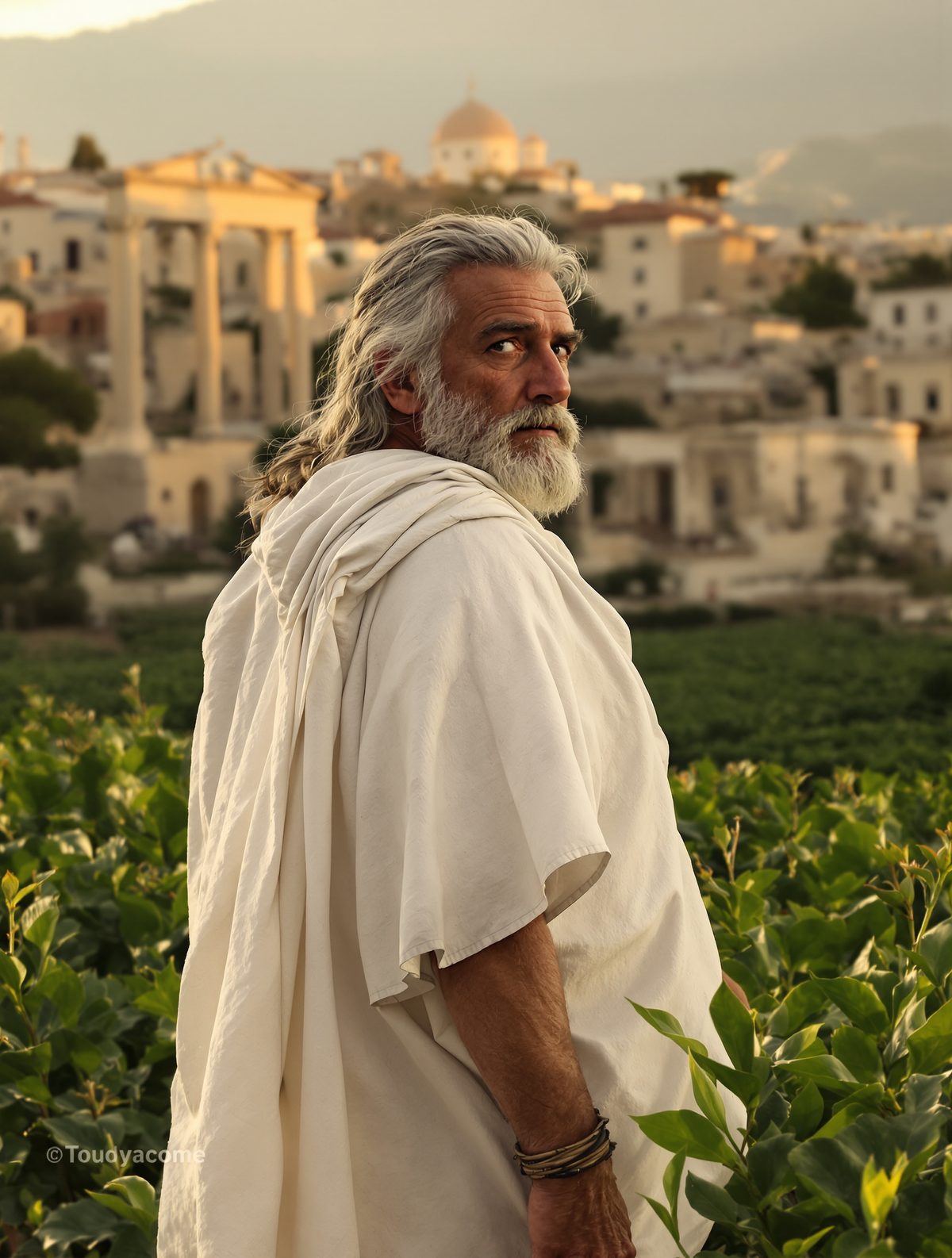
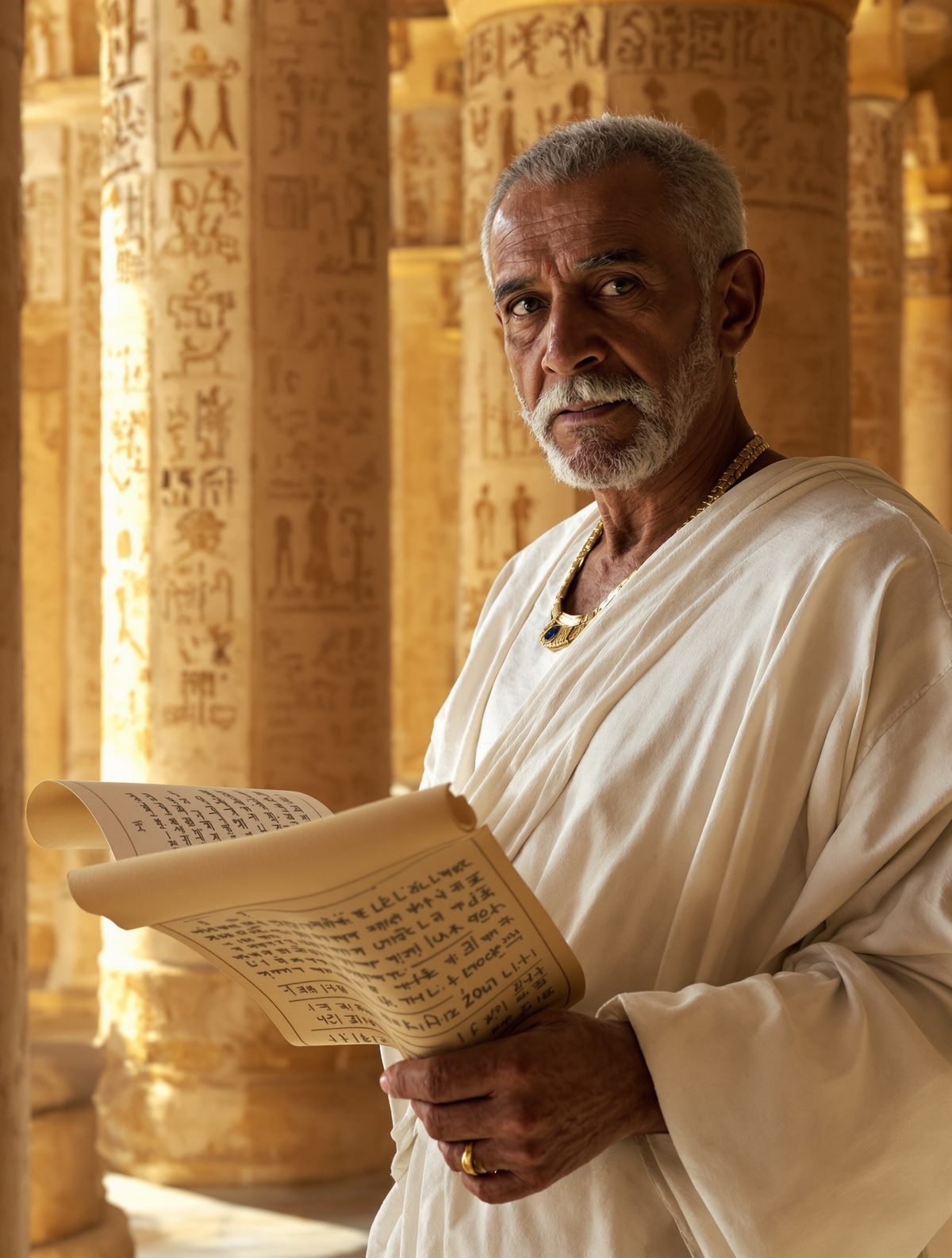
The autumn wind carried the stench of death across the valley of Changping as General Bai Qi stood atop a ridge, surveying what would become known as the greatest military victory in Chinese history. Below him, 400,000 enemy soldiers lay buried in mass graves—not fallen in glorious battle, but methodically executed and entombed alive on his orders. Yet as witnesses would later report with bewilderment, tears streamed down the face of China's most feared and successful general. The man who had never known defeat in thirty years of warfare had finally achieved something that broke him: a victory so complete, so absolute, that it shattered his own soul.
This is the story of how the ancient world's most unstoppable military mind destroyed himself with his own brilliance—and changed the course of Chinese history forever.
The Rise of an Unstoppable Force
Born during the chaotic Warring States period around 300 BC, Bai Qi emerged from the western state of Qin—a realm that would eventually unify all of China under the first emperor. But in 260 BC, that unification was still decades away, and China remained a blood-soaked chessboard where seven major kingdoms fought for ultimate supremacy.
Bai Qi was the perfect product of this brutal age. By the time he faced his destiny at Changping, he had already earned a reputation that made enemy soldiers desert at the mere mention of his name. His military record read like something from legend: sixty-seven major battles, sixty-seven victories. Zero defeats. Conservative estimates suggest he had personally overseen the deaths of over one million enemy combatants—roughly one percent of China's entire population at the time.
What made Bai Qi different from other generals wasn't just his tactical genius, but his willingness to embrace psychological warfare on an unprecedented scale. He understood that sometimes the most efficient way to end a war was to make the cost of resistance so terrifying that enemies would surrender rather than fight. It was a philosophy that would reach its horrifying apex at Changping.
The Perfect Trap
The Battle of Changping began in 262 BC as a seemingly routine territorial dispute between Qin and Zhao, two of the most powerful remaining kingdoms. What started as a border skirmish escalated into the largest military confrontation of the ancient world, with each side eventually deploying armies exceeding 450,000 men—larger than many entire populations of the time.
For two grueling years, the armies faced off in a strategic stalemate. The Zhao forces, led initially by the competent General Lian Po, employed defensive tactics that frustrated Qin's attempts to achieve a quick victory. But Bai Qi was patient. He had spent decades perfecting the art of the long game, and he knew that time was on his side.
In a masterstroke of psychological manipulation, Bai Qi orchestrated one of history's most effective disinformation campaigns. Qin agents spread rumors throughout Zhao territory that Bai Qi's greatest fear was facing General Lian Po in battle. The whispers suggested that Qin would be terrified if Zhao replaced Lian Po with the younger, more aggressive General Zhao Kuo.
The deception worked perfectly. King Xiaocheng of Zhao, eager for a decisive victory, replaced his cautious but competent general with Zhao Kuo—a man whose military experience came primarily from reading books about warfare rather than actual combat. Ancient Chinese historians would later describe Zhao Kuo as someone who could "discuss military strategy as if he commanded the heavens and earth, but could not adapt to real battlefield conditions."
The Master's Final Gambit
With his inexperienced opponent now in place, Bai Qi implemented a strategy of breathtaking complexity and ruthlessness. He divided his forces into multiple contingents, using a portion to feign retreat while secretly positioning his main army to encircle the pursuing Zhao forces. When Zhao Kuo took the bait and advanced, believing he was chasing a defeated enemy, Bai Qi's trap snapped shut with mechanical precision.
The encirclement was so complete that contemporary accounts describe it as if the earth itself had swallowed the Zhao army. Cut off from supply lines and reinforcements, over 400,000 Zhao soldiers found themselves trapped in an increasingly shrinking pocket of territory. For forty-six days, they endured starvation, disease, and mounting despair as their situation grew more hopeless.
General Zhao Kuo died attempting a final, desperate breakout—some accounts suggest he was killed by one of Bai Qi's arrows personally. With their commander dead and their situation utterly hopeless, the surviving Zhao forces surrendered, expecting to be taken as prisoners of war according to the customs of the time.
They could not have been more wrong.
The Point of No Return
What happened next would haunt Bai Qi for the remainder of his life and earn him the nickname "The Human Butcher" for eternity. Faced with 400,000 prisoners—more mouths than his army could possibly feed—Bai Qi made a calculation that was both strategically logical and morally catastrophic.
He ordered every single prisoner executed.
But even more shocking than the scale of the killing was the method. Rather than quick battlefield executions, Bai Qi commanded his soldiers to bury the Zhao prisoners alive in massive pits. The practical reason was grimly efficient: it required fewer Qin soldiers to guard the process and conserved weapons for future battles. The psychological impact was the real goal—word of such treatment would spread terror throughout enemy territories for generations.
Ancient records suggest the mass execution took place over several days in September 260 BC. Archaeological evidence from the Changping area has uncovered bone pits that corroborate the historical accounts, revealing layers upon layers of human remains that paint a picture of systematic, industrial-scale killing.
But here's the detail that history almost forgot: Bai Qi spared exactly 240 of the youngest soldiers, deliberately allowing them to return to Zhao to tell the tale of what they had witnessed. It was psychological warfare perfected—living testimony to ensure that the terror of Changping would spread throughout the enemy kingdom.
The Warrior Who Broke Himself
In the immediate aftermath, the Battle of Changping appeared to be the ultimate vindication of Bai Qi's brutal philosophy. The state of Zhao never recovered from the loss of its entire military-age male population. Other kingdoms began surrendering territories rather than face the possibility of similar treatment. Qin's path to unifying China had been cleared by an ocean of blood.
Yet something fundamental had changed in Bai Qi himself. Multiple historical sources describe his behavior in the days following the massacre as increasingly erratic and melancholic. The man who had once approached warfare with cold, calculating precision now seemed haunted by what he had accomplished.
The most telling account comes from his aide-de-camp, who recorded seeing Bai Qi walking alone among the burial sites, weeping openly as he surveyed his handiwork. When asked about his distress, Bai Qi allegedly replied: "I have achieved the perfect victory. I have destroyed my enemies so completely that even their ghosts cannot return to haunt the battlefield. But I wonder—who will mourn for the warrior who creates only graveyards?"
His military effectiveness began to decline almost immediately. In subsequent campaigns, he showed uncharacteristic hesitation and made tactical errors that would have been unthinkable in his earlier career. King Zhaoxiang of Qin, perhaps recognizing that his greatest weapon had somehow become damaged, eventually forced Bai Qi into retirement.
The Price of Perfect Victory
Bai Qi's story ended in 257 BC when the King of Qin, suspicious of his retired general's loyalty and fearful of his reputation, ordered him to commit suicide. Bai Qi complied, but his final words reportedly acknowledged a bitter irony: "I have indeed committed a crime deserving death. At Changping, I buried alive 400,000 surrendered soldiers. This is sufficient to warrant my death."
The tale of Bai Qi forces us to confront uncomfortable questions about the nature of victory itself. In our modern world, where conflicts are often measured by efficiency and decisive outcomes, his story serves as a haunting reminder that some victories come at a cost that extends far beyond the battlefield. The general who never lost a battle ultimately lost something far more valuable—his own humanity.
Perhaps the most profound lesson of Changping isn't about military strategy or ancient Chinese politics, but about the psychological limits of human beings when pushed to extremes of violence. Even the most hardened warrior, it turns out, possesses a breaking point—and sometimes our greatest triumphs become our most devastating defeats. In achieving the perfect victory, Bai Qi had destroyed not just his enemies, but the part of himself that could take joy in winning.