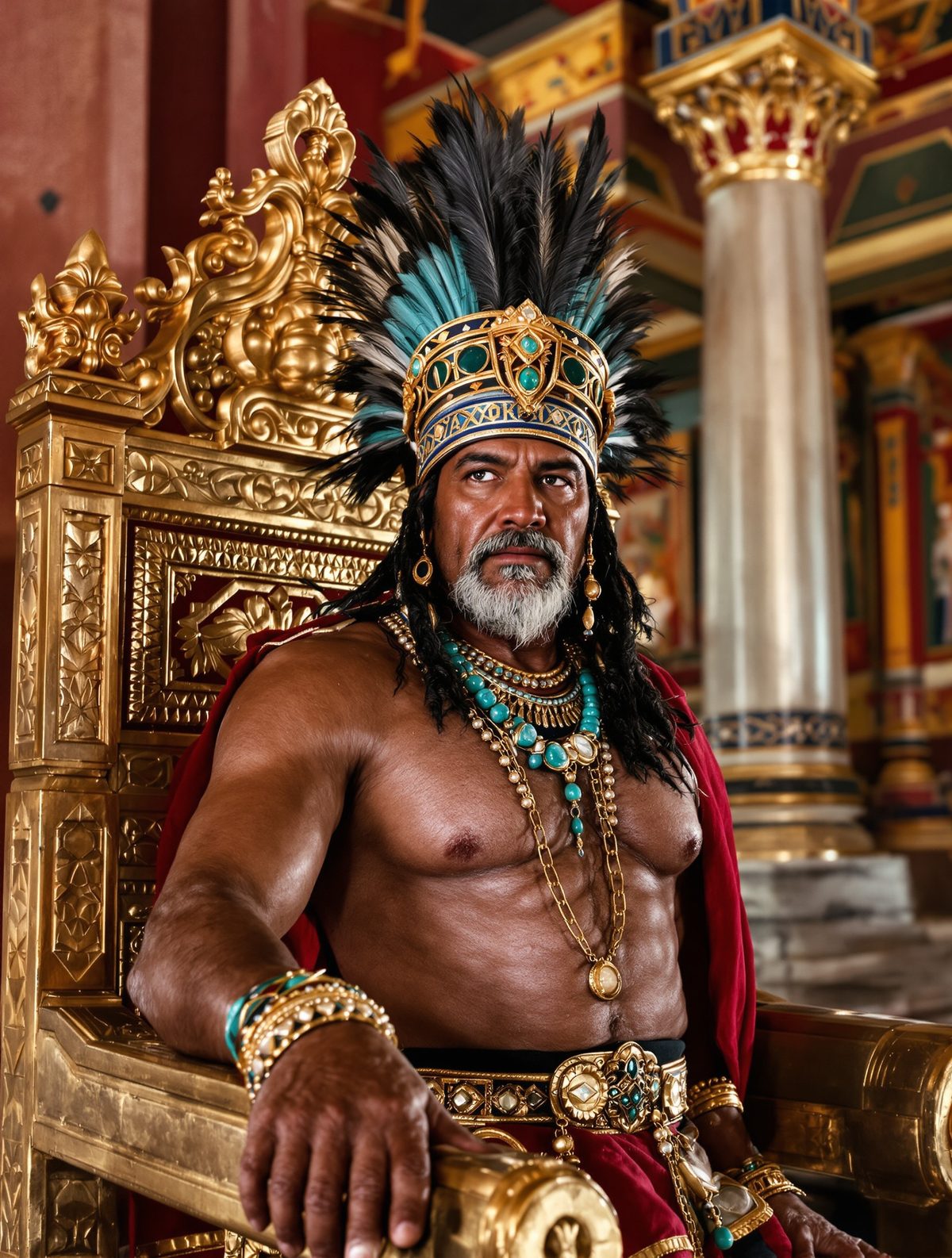
The roar of 250,000 spectators thundered through the Circus Maximus as dust clouds swirled around twelve chariots hurtling toward the spina at breakneck speed. In the heart of the pack, a weathered Portuguese driver named Gaius Appuleius Diocles gripped his reins with calloused hands that had guided horses through nearly 5,000 races. What the crowd didn't know was that they were witnessing the final performance of a man who had quietly accumulated more wealth than most Roman senators—a fortune so staggering it would make him the highest-paid athlete in human history.
When Diocles stepped down from his chariot for the last time in 146 AD, he had earned 35,863,120 sestertii in prize money alone. To put that astronomical figure in perspective: it was enough to feed the entire Roman army for two months, or provide a year's grain supply for the city of Rome. Adjusted for modern economics, historians estimate his earnings at roughly $15 billion in today's money—making this ancient charioteer wealthier than LeBron James, Cristiano Ronaldo, and Tiger Woods combined.
The Making of a Legend
Diocles didn't start his career destined for greatness. Born in the Roman province of Lusitania—modern-day Portugal—around 104 AD, he likely came from humble origins. Most charioteers were slaves, freedmen, or members of the lower classes seeking fortune and glory in Rome's most dangerous sport. What set Diocles apart wasn't noble birth or political connections, but an almost supernatural ability to navigate the chaos of chariot racing.
He began his professional career at age 18, initially racing for the White faction before switching to the Green team after six years. But it was his final move to the prestigious Red faction that would define his legacy. The color-coded teams weren't just sporting organizations—they were massive commercial enterprises with fanatical followings that made modern soccer hooligans look tame. Riots between Blue and Green supporters had literally brought down emperors.
Racing for the Reds, Diocles found his stride in ways that defied belief. Over his 24-year career, he competed in 4,257 races, winning an astounding 1,462 times. His victory rate of 34% was unprecedented in a sport where most drivers were lucky to survive their first season, let alone dominate for over two decades.
Death at Every Turn
To understand Diocles' achievement, you must grasp the sheer terror of Roman chariot racing. Picture NASCAR, but with no safety equipment, no medical teams, and crowds actively hoping to see spectacular crashes. The Circus Maximus stretched nearly 2,000 feet long and 400 feet wide, with a narrow stone barrier called the spina running down the center. Drivers had to complete seven laps around this track while maneuvering four-horse teams at speeds exceeding 40 miles per hour.
The most dangerous moments came at the turns, particularly the meta prima—the first turning post. Here, twelve chariots would converge simultaneously, with drivers jockeying for position while trying to avoid the stone barrier by mere inches. Crashes were so common they had their own term: naufragia, literally meaning "shipwrecks." When chariots collided, drivers faced being trampled by dozens of horses, crushed under overturned vehicles, or dragged to death if they couldn't cut themselves free from the reins wrapped around their waists.
Archaeological evidence suggests the average charioteer's career lasted less than three years. Most died in their early twenties. The fact that Diocles raced for 24 years and lived to retire at 42 bordered on the miraculous.
The Science of Speed and Strategy
What made Diocles virtually unbeatable wasn't just survival—it was his revolutionary approach to racing strategy. While most drivers focused on raw speed, Diocles mastered the art of tactical racing. His specialty became the dramatic come-from-behind victory, staying out of early trouble before making his move in the final laps.
Of his 1,462 victories, a remarkable 815 came from behind—either from second place (502 wins) or third place (313 wins). Only 347 of his wins came from leading wire-to-wire, suggesting a calculated patience that was alien to the sport. Roman racing fans became obsessed with these nail-biting finishes, and betting odds reflected Diocles' reputation as the master of the late charge.
His horses became celebrities in their own right. Pompeianus, Lucidus, Galata, and Silvanus were household names across the empire, with their images appearing on mosaics, pottery, and even jewelry. These weren't just animals—they were finely-tuned racing machines worth fortunes themselves, bred specifically for the split-second reactions needed to survive the Circus Maximus.
Money Beyond Measure
The prize money in Roman chariot racing operated on a scale that defies modern comprehension. While a typical Roman legionnaire earned about 1,200 sestertii per year, a single major race could offer prizes of 50,000 sestertii or more. The biggest races—held during imperial celebrations or religious festivals—might award 100,000 sestertii to the winner.
But Diocles' wealth came from more than just prize money. Successful charioteers earned appearance fees, endorsement deals from wealthy patrons, and cuts of betting revenues. They received expensive gifts from emperors and aristocrats seeking to curry favor with popular drivers. Some historians suggest Diocles' total wealth, including these additional income streams, may have reached 60 million sestertii—approaching $25 billion in modern terms.
To put this in perspective, Pliny the Younger, one of Rome's wealthiest men, had a fortune of about 20 million sestertii. Diocles had nearly twice the wealth of one of the empire's richest senators, despite coming from provincial obscurity and participating in what the upper classes considered a vulgar spectacle.
The Champion's Final Bow
When Diocles announced his retirement, it sent shockwaves through the Roman sporting world. He was still winning races and could have continued earning massive purses, but perhaps he understood something his contemporaries missed: knowing when to quit while ahead.
His farewell statistics read like something from a video game: 4,257 starts, 1,462 wins, 1,438 second-place finishes, and 1,351 third-place showings. He had finished in the money in an almost impossible 95% of his races. Beyond the numbers lay something even more remarkable—he had fundamentally changed how chariot racing was conceived, proving that strategy and patience could triumph over reckless aggression.
The crowds that day in 146 AD were witnessing the end of an era. No charioteer would ever again dominate the sport so completely or accumulate such vast wealth from athletic competition alone.
Legacy of the Ultimate Competitor
Gaius Appuleius Diocles forces us to reconsider our assumptions about both ancient Rome and modern celebrity. Here was a man who achieved unprecedented wealth and fame through pure athletic skill, in an age supposedly dominated by birthright and political connections. His story reveals a Roman Empire more meritocratic and entertainment-obsessed than many realize—a society where talent could elevate a provincial nobody to heights of wealth that wouldn't be matched by athletes for nearly 2,000 years.
Perhaps most remarkably, Diocles achieved all this while competing in history's most dangerous sport, where death lurked around every corner and careers typically ended in tragedy rather than triumph. In an era when we debate whether modern athletes are overpaid, it's worth remembering that the template for the superstar athlete—wealthy beyond measure, beloved by masses, transcending their sport to become cultural icons—was carved in the dust of the Circus Maximus by a Portuguese charioteer whose nerves of steel and tactical brilliance made him the richest athlete who ever lived.