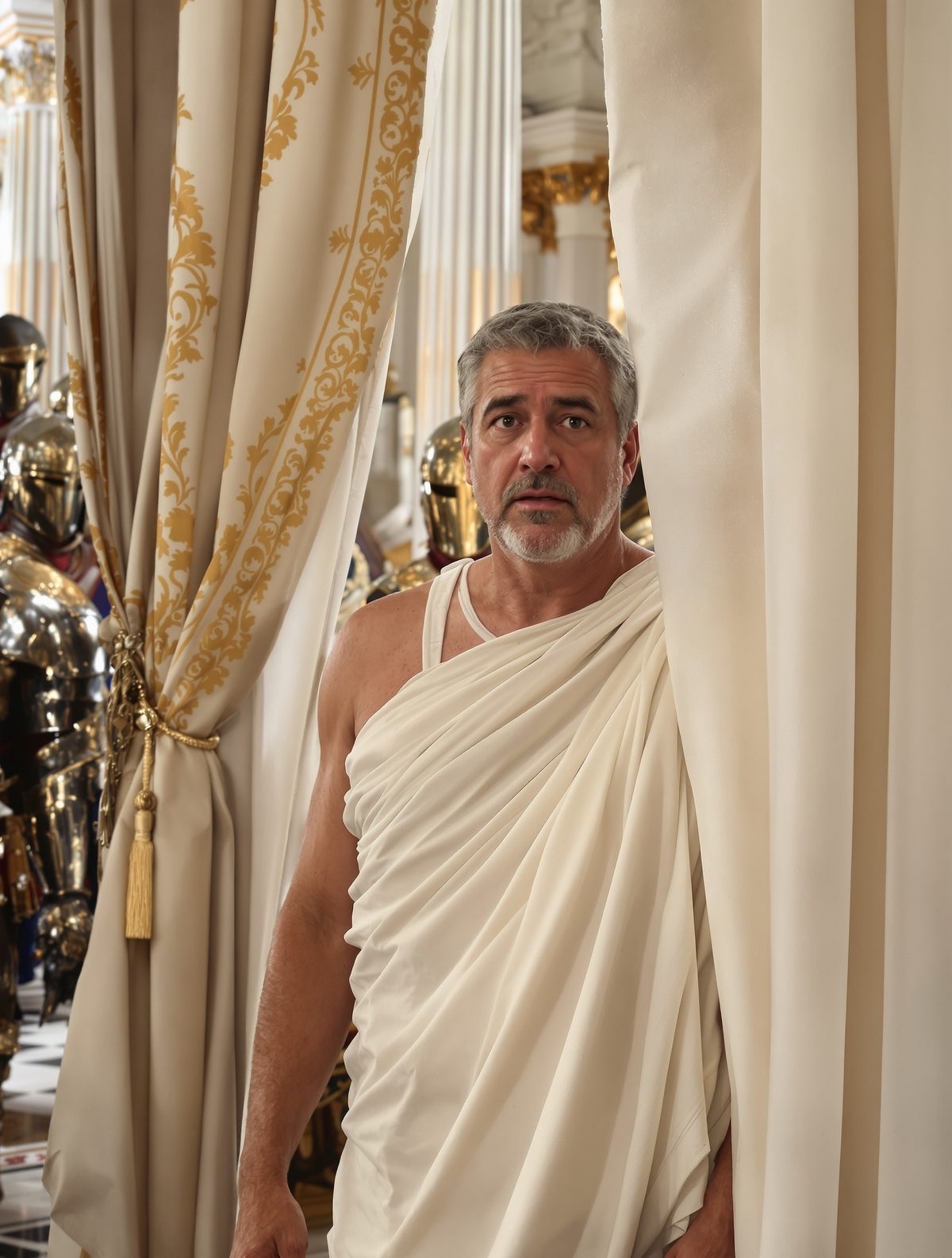
Picture this: It's a sweltering summer day in 40 AD, and the most powerful men in the Roman Empire are seated in the marble halls of the Senate, their togas pristine, their faces grave with the weight of governing a domain that stretches from Britain to the Sahara. Then Emperor Caligula strides in, his eyes gleaming with an unsettling mixture of amusement and madness, and casually announces that Rome's next consul—the highest political office in the empire—will be his horse.
Not a metaphor. Not a joke. His actual horse.
The silence that followed must have been deafening. Here was an emperor who had already pushed the boundaries of Roman decency to their breaking point, but this? This was something else entirely. As the senators sat frozen in disbelief, Caligula's beloved stallion Incitatus was likely munching on oats from his ivory manger, blissfully unaware that he was about to become the most powerful animal in human history.
The Boy Who Would Be God
To understand how Rome reached this surreal moment, we need to rewind to Caligula's rise to power. Born Gaius Julius Caesar Augustus Germanicus in 12 AD, he earned the nickname "Caligula" (meaning "little boot") as a child when he charmed Roman legions by wearing miniature military sandals. The soldiers adored him, but perhaps they should have looked more closely into those precocious eyes.
When Caligula ascended to the throne in 37 AD at just 24 years old, Romans initially rejoiced. His predecessor, the paranoid Emperor Tiberius, had ruled with an iron fist from his isolated villa on Capri. Caligula seemed like a breath of fresh air—young, charismatic, and generous with public funds. He freed political prisoners, restored popular elections, and threw lavish gladiatorial games that had the masses cheering in the Colosseum.
But something went terribly wrong. Whether it was a severe illness that affected his mind (as some historians suggest), the intoxicating effects of absolute power, or simply the manifestation of deep-seated psychological issues, Caligula began exhibiting behavior that would make even the most jaded Roman blush. By 39 AD, he was declaring himself a living god, forcing senators to worship him, and making decisions that seemed designed to humiliate the very institution of Roman governance.
A Horse Fit for an Emperor
Enter Incitatus, whose name appropriately meant "swift" or "spurred on." This wasn't just any horse—Incitatus was Caligula's prized racehorse, a magnificent stallion who dominated the chariot races that Romans followed with the same fervor modern fans reserve for the Super Bowl. But Caligula's affection for his horse went far beyond typical owner pride.
The emperor constructed a palace within a palace for Incitatus. The horse's stable was built from the finest Carrara marble, the same pristine white stone used for Rome's most sacred temples. His manger was carved from ivory, imported at enormous expense from the far reaches of Africa. Purple blankets—dyed with the costly murex shells that made the color worth more than gold—adorned the horse's back. Roman citizens could be executed for wearing purple; Caligula's horse slept in it.
But the luxury didn't stop there. Incitatus had his own retinue of servants, assigned to groom his coat to a lustrous shine, braid his mane with golden ribbons, and ensure his every equine need was met. The horse drank from goblets of precious metal and dined on the finest oats mixed with gold flakes. Ancient sources suggest Caligula even built Incitatus his own house, complete with furniture and servants who were instructed to maintain absolute silence so as not to disturb the horse's rest.
The Consulship That Shook an Empire
The consulship of Rome was no ceremonial position. Consuls were the executive leaders of the empire, commanding armies, presiding over the Senate, and wielding power that could reshape the known world. For nearly 500 years, this office had been held by Rome's most distinguished citizens—men who had proven themselves in battle, demonstrated political acumen, and earned the respect of their peers through years of service.
Caligula's announcement that Incitatus would assume this sacred role wasn't delivered with a wink or a nudge. Historical accounts suggest the emperor was deadly serious, describing in detail how his horse would take the oath of office and receive the traditional ivory chair and ceremonial fasces (the bundle of rods that symbolized Roman authority). Some sources indicate that Caligula had already begun the formal process of nomination, drawing up the paperwork and setting a date for the ceremony.
The senators' horror wasn't just about the absurdity of the situation—it was about what it represented. By elevating a horse to Rome's highest office, Caligula was essentially declaring that the Senate, the noble families, and the entire Roman political system were no better than animals. It was the ultimate insult wrapped in the pretense of an honor.
What made this even more chilling was Caligula's track record. When he said outrageous things, he typically followed through. He had already forced senators to run beside his chariot for miles, made them fight as gladiators for his amusement, and appointed his sisters to divine status. A horse consul was beginning to seem not just possible, but inevitable.
The Method Behind the Madness
Modern historians debate whether Caligula's horse consul gambit was pure insanity or calculated political theater. Some argue that the emperor's seemingly mad acts were actually sophisticated power plays designed to demonstrate the absolute nature of his authority. By threatening to appoint Incitatus as consul, Caligula was sending a clear message: I can do whatever I want, and you are powerless to stop me.
This interpretation gains credence when we consider Caligula's other political "jokes." He once made his soldiers collect seashells on a beach, declaring them "spoils of war against Neptune." He built a temporary bridge across the Bay of Naples just to ride his horse across it while wearing Alexander the Great's breastplate. Each act seemed designed to mock traditional Roman values while asserting his divine right to reshape reality itself.
The horse consulship also served a practical purpose: it kept the Senate off-balance and prevented any organized opposition to his rule. Senators who spent their time worrying about whether they'd have to bow to a horse had less energy to plot against the emperor. Fear, confusion, and humiliation were Caligula's tools of governance, and Incitatus was perhaps his masterpiece of psychological warfare.
But there's another possibility that's even more unsettling: Caligula may have genuinely believed that his horse was more qualified than Rome's senators to hold high office. Given his contempt for the political class and his apparent disconnection from reality, it's possible he saw Incitatus—beautiful, swift, and uncorrupted by human ambition—as the ideal leader for a decadent empire.
Death of a Dream (and an Emperor)
History's most unusual political appointment never came to pass. On January 24, 41 AD, Caligula's reign of madness came to an abrupt end when members of the Praetorian Guard assassinated him in the underground tunnels beneath his palace. The conspiracy involved senators, military officers, and even some of his own freedmen—Romans who had finally decided that enough was enough.
Incitatus, meanwhile, disappeared from historical records after his master's death. The new Emperor Claudius, Caligula's uncle, quickly dismantled most of his predecessor's more outrageous policies and likely returned the famous horse to a more conventional stable. One can only imagine the magnificent stallion's confusion as his marble palace was stripped away and his golden oats were replaced with common feed.
The story of the horse consul might have ended there, relegated to a footnote in Rome's vast history, except for one crucial fact: people couldn't stop talking about it. Ancient historians like Suetonius and Cassius Dio recorded the tale for posterity, ensuring that Caligula's equine appointee would gallop through the centuries as one of history's most memorable examples of power run amok.
Echoes Through Eternity
Why does the story of Incitatus continue to fascinate us nearly two thousand years later? Perhaps because it perfectly captures the absurdist potential of absolute power. In our modern world of political theater and controversial appointments, Caligula's horse serves as the ultimate benchmark for governmental dysfunction. When citizens complain that unqualified individuals are being appointed to important positions, the specter of Consul Incitatus reminds us that things could always be worse.
The tale also speaks to our eternal struggle with leaders who seem disconnected from reality. Every generation produces rulers who make decisions that leave their subjects wondering whether they're witnessing madness or genius. Caligula's horse consul gambit represents the moment when that question becomes irrelevant—when power becomes so divorced from responsibility that the distinction between wisdom and insanity disappears entirely.
In the end, Incitatus may have been the most honest politician in Roman history. Unlike human senators who could lie, scheme, and betray, the horse could only be what he was: a beautiful animal with no agenda beyond his next meal. Perhaps that's why Caligula preferred him to the alternative. In a world full of ambitious humans competing for scraps of power, sometimes the most trustworthy leader is the one who doesn't even understand what leadership means.