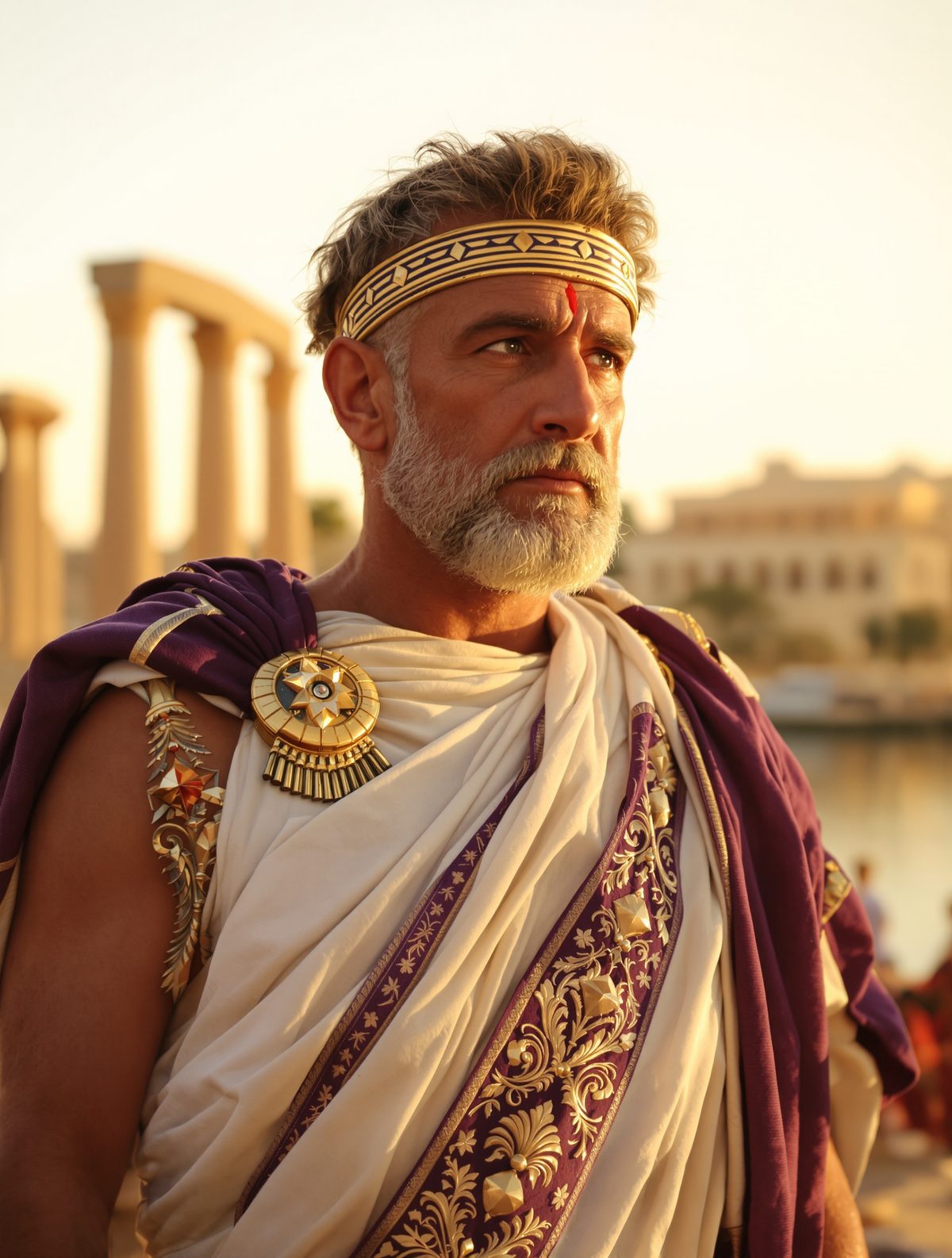
The year was 522 BC, and something was very wrong in the Persian Empire. A prince had emerged from months of mysterious seclusion to claim the throne of the world's mightiest empire—and the people loved him. Prince Bardiya had abolished taxes, freed slaves, and promised peace after his brother's brutal wars of conquest. The masses celebrated in the streets. But seven Persian nobles couldn't shake a chilling suspicion: the man sitting on the throne wasn't Prince Bardiya at all. The real prince, they believed, was already dead—and had been for months.
What followed was one of history's most audacious cases of royal identity theft, a conspiracy so brazen it would reshape the ancient world and put one of history's greatest kings on the throne through nothing more than a well-timed assassination.
The Brothers Who Hated Each Other
To understand this extraordinary deception, we must first meet the dysfunctional royal family at its center. Cambyses II had inherited the Persian throne from his legendary father, Cyrus the Great, in 530 BC. But Cambyses was no Cyrus. Where his father had been a brilliant conqueror and wise ruler, Cambyses was paranoid, cruel, and increasingly unhinged.
The relationship between Cambyses and his younger brother Bardiya was toxic from the start. Ancient sources describe Bardiya as everything Cambyses was not—popular with the people, generous, and charismatic. Perhaps most dangerously for Bardiya, he was also a legitimate heir to the throne. In a royal family where succession disputes could tear empires apart, being the "spare" heir was often a death sentence.
According to the historian Herodotus, Cambyses became convinced that his brother was plotting against him. The final straw came when Bardiya proved to be the only man in the Persian court who could draw a massive Ethiopian bow—a feat that highlighted his strength and made him seem even more kingly. That night, consumed by jealousy and paranoia, Cambyses made a decision that would haunt the empire: he secretly ordered Bardiya's murder.
The assassination was carried out in complete secrecy. No public announcement was made. No funeral was held. To the outside world, Prince Bardiya had simply... disappeared from court life. The official story was that he had retired to his estates in the remote eastern provinces. Few questioned it—royal brothers stepping back from politics to avoid execution was hardly unusual in the Persian Empire.
The Magus Who Stole a Kingdom
Enter Gaumata, a Median magus (priest) who would orchestrate one of history's most successful impersonations. Ancient sources tell us frustratingly little about this mysterious figure, but what we do know is remarkable. Gaumata apparently bore a striking physical resemblance to the dead prince—close enough that he could fool an entire empire.
But resemblance alone wasn't enough. Gaumata had to have had intimate knowledge of palace life, royal protocols, and Bardiya's personal relationships. Some historians suggest he may have served in the royal household, giving him access to the kind of detailed information that would make his deception believable. Others theorize that he had accomplices among the palace staff who fed him crucial intelligence.
The timing of Gaumata's move was absolutely perfect. In 522 BC, Cambyses was thousands of miles away in Egypt, having conquered the land of the pharaohs but becoming increasingly erratic in his behavior. Stories filtered back to Persia of the king desecrating Egyptian temples, murdering sacred bulls, and flying into murderous rages. The Persian people were growing tired of their absent, unstable ruler.
It was then that "Bardiya" emerged from his supposed seclusion. The prince appeared at the royal palace in Susa, announced his claim to the throne, and began issuing proclamations that would make him the most popular ruler in Persian history. He declared a three-year tax holiday for all provinces. He freed slaves. He recalled Persian forces from distant campaigns. After years of Cambyses's brutal rule, the people didn't just accept this generous prince—they adored him.
The Perfect Crime Unravels
For months, Gaumata's deception worked flawlessly. Provincial governors acknowledged his authority. The army followed his orders. The common people praised their benevolent king. But there was one problem the fake Bardiya couldn't solve: he was missing his ears.
According to Herodotus, Gaumata had once been punished by Cyrus the Great for some offense, and his ears had been cut off—a common form of Persian judicial punishment. The impostor had been clever enough to cover this disfigurement with a headdress, but the disguise created its own suspicions. Why did the prince never remove his headwear? Why did he avoid close contact with courtiers who had known him before his "seclusion"?
These questions began to trouble a group of seven Persian nobles, led by a young aristocrat named Darius. These men had known the real Bardiya personally, and something felt wrong about the king's behavior. The decisive moment came when one of the conspirators managed to discover the truth about the missing ears—though ancient sources differ on exactly how this revelation occurred.
The seven nobles faced an impossible situation. They were convinced that an impostor sat on the Persian throne, but they had no proof that would convince the army or the people. The fake Bardiya was simply too popular. His tax cuts and reforms had made him beloved throughout the empire. Who would believe that their generous king was actually a fraud?
The Assassination That Changed History
On September 29, 522 BC, the seven conspirators made their move. They stormed into the royal palace at Susa, fought their way past the guards, and cornered the impostor king. What happened next was swift and brutal. According to the Behistun Inscription—a massive relief carved into a cliff face by Darius himself—the confrontation was brief:
"There was a fortress called Sikayauvati, in Media. There the conspirators assembled. Then said Darius: 'We will go and smite Gaumata the Magian.' Then we prayed to Ahuramazda; Ahuramazda brought us help. We smote that Gaumata the Magian and those who were his foremost followers."
The impostor was dead, but the conspirators now faced an even greater challenge: convincing the empire that they had just saved it from a fraud. The people had loved "Bardiya" and his generous policies. Many refused to believe the nobles' claims about an impostor. Revolts broke out across the empire as various provinces rejected the conspirators' authority.
This is where Darius proved his genius. Rather than simply claiming the throne by force, he launched one of history's first great propaganda campaigns. He commissioned the massive Behistun Inscription, which told his version of events in three languages across 1,200 lines of text. He systematically crushed the revolts while simultaneously justifying his rule through appeals to divine authority and Persian law.
Legacy of the Great Deception
The Gaumata affair transformed the Persian Empire in ways that echoed through history. Darius, who had been a relatively minor noble before the conspiracy, became Darius the Great—one of antiquity's most successful rulers. He would expand the empire to its greatest extent, build the magnificent city of Persepolis, and create administrative systems that influenced governance for centuries.
But questions about the "false Bardiya" have never fully disappeared. Some modern historians wonder if Darius's account was itself propaganda—if perhaps the real Bardiya had actually survived and reclaimed his throne, only to be murdered by ambitious nobles who then created the impostor story to justify their coup. We may never know the complete truth.
What we do know is that this ancient case of identity theft reveals timeless truths about power, legitimacy, and the stories we tell ourselves about our leaders. Gaumata succeeded not because he was the rightful king, but because he gave the people what they wanted: relief from taxes, freedom from war, and hope for a better future. Meanwhile, the "legitimate" rulers—first Cambyses, then Darius—maintained their power through violence and propaganda.
In our own age of questioned elections, disputed authority, and competing narratives about political legitimacy, the story of the Persian prince who was already dead reminds us that the line between rightful rule and successful deception has always been thinner than we might like to believe. Sometimes the most important question isn't whether a leader is who they claim to be—but whether they're giving the people what they need.