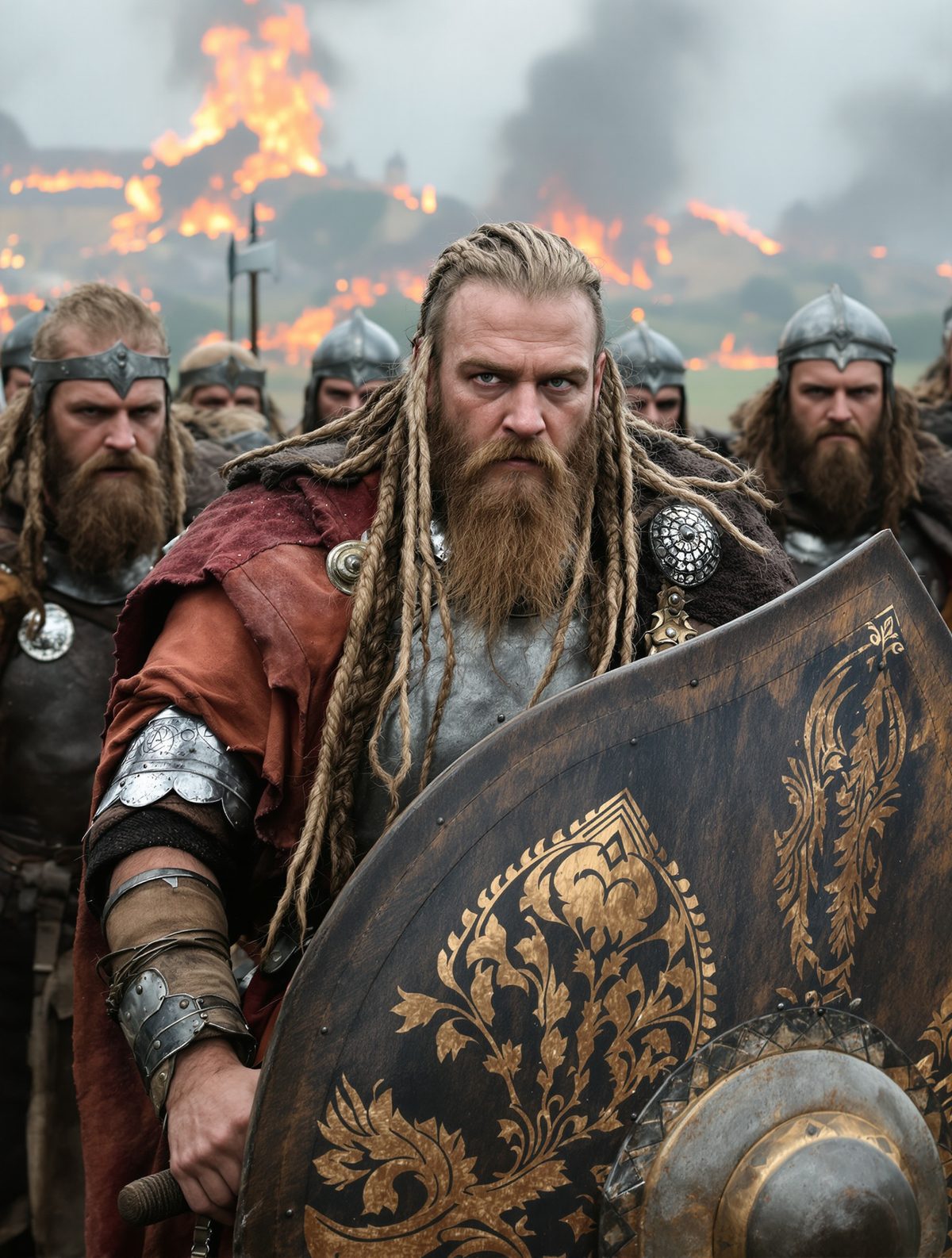
The stylus trembled in the scribe's hand as King Antiochus IV Epiphanes paced behind him, dictating what would become his final letter. It was 164 BC, and the self-proclaimed "God Manifest" had just promised to restore the Jewish temple in Jerusalem—the very same temple he had desecrated with pagan altars and forbidden rituals. The irony was lost on him as he raged against the God of Israel, declaring his intention to make Jerusalem a graveyard for its people.
Then, mid-sentence, something extraordinary happened. The king who had banned an entire religion, murdered thousands, and declared himself divine suddenly collapsed, screaming in agony. What followed was so horrific that even his enemies would later describe it as divine retribution—worms began consuming him from the inside out, while he was still alive.
The Mad King Who Played God
Antiochus IV wasn't always a monster. Born into the Seleucid dynasty around 215 BC, he inherited one of the fragmenting pieces of Alexander the Great's empire. The Seleucid realm stretched from modern-day Turkey to Afghanistan, but by the time Antiochus took power in 175 BC, it was hemorrhaging territory and desperately needed unifying force.
His solution was as brilliant as it was brutal: enforced Hellenization. Every conquered people would adopt Greek culture, language, and most importantly, Greek gods. For most subjects, this wasn't catastrophic—they simply added Zeus and Apollo to their existing pantheon. But for one small nation, this decree would spark a religious war that would echo through millennia.
The Jews were different. Their religion explicitly forbade worshipping other gods, making images of the divine, or participating in Greek athletic competitions (which were performed nude and considered sacrilegious). When Antiochus demanded compliance, he hit an immovable object with an unstoppable force.
What happened next revealed the true depth of Antiochus's megalomania. Rather than compromise, he declared war on Judaism itself.
The Abomination That Made Desolate
On December 6, 167 BC, Antiochus committed what Jews would call "the abomination of desolation." His soldiers marched into the holiest site in Judaism—the Temple in Jerusalem—and erected an altar to Zeus Olympios directly over the Jewish altar of sacrifice. Ten days later, they sacrificed a pig on this altar, an act so profoundly offensive that it was designed to spiritually destroy the Jewish people.
But Antiochus wasn't finished. He banned circumcision, Sabbath observance, and possession of Jewish scriptures—all punishable by death. Mothers who circumcised their sons were crucified with their babies hanging from their necks. Families caught observing the Sabbath were burned alive in caves. Scrolls of Jewish law were torn apart and burned in the streets.
Perhaps most telling of his psychological state, Antiochus began calling himself "Theos Epiphanes"—God Manifest. His coins bore his image with the inscription "King Antiochus, God Manifest, Bearer of Victory." He wasn't just demanding religious compliance; he was demanding worship of himself.
The Jews had two choices: abandon their faith entirely or die. Many chose death. But others chose a third option that Antiochus hadn't anticipated—rebellion.
When the Hammer Fell
In the small town of Modein, an elderly priest named Mattathias did something that changed history. When Seleucid officials arrived demanding he sacrifice to Greek gods, the old man instead killed the official and sparked what we now call the Maccabean Revolt.
His son Judah, nicknamed "Maccabeus" (the Hammer), proved to be a military genius. Using guerrilla tactics, local knowledge, and desperate courage, this small band of Jewish fighters began inflicting impossible defeats on Seleucid armies. In 166 BC, Judah's forces defeated a massive Seleucid army at Beth Horon, killing over 3,000 professional soldiers.
The psychological impact was devastating. Antiochus, the self-proclaimed god, was being humiliated by a ragtag band of religious zealots. His "divine" authority was crumbling with each defeat. Ancient sources describe him becoming increasingly erratic, paranoid, and violent.
By 164 BC, the rebellion had recaptured Jerusalem and begun purifying the Temple. The eight-day celebration that followed became the festival of Hanukkah. Meanwhile, Antiochus was planning a massive campaign to crush the rebellion once and for all.
He would never get the chance.
The Wrath of the God He Mocked
The end came suddenly and horribly. According to multiple ancient sources, including the detailed account in 2 Maccabees, Antiochus was dictating a letter of reconciliation while secretly planning genocide. He promised to restore Jewish customs and rebuild their Temple—lies designed to stop the rebellion while he gathered a larger army.
But as he dictated, something went catastrophically wrong. The Jewish historian Josephus, drawing on contemporary accounts, describes Antiochus being struck down mid-sentence with excruciating internal pain. What followed was so graphic that even ancient historians struggled to describe it.
Worms began emerging from his body while he was still alive. The stench became so overwhelming that his own soldiers couldn't approach him. His flesh rotted away piece by piece as he remained conscious, screaming that he could feel every bit of his decomposition.
Perhaps most remarkably, ancient sources claim that in his final agony, Antiochus acknowledged the God he had spent years mocking. According to 2 Maccabees, he cried out: "It is right to be subject to God, and that a mortal should not think thoughts equal to God."
The man who had declared himself "God Manifest" died admitting he was merely human.
The Death That Echoed Through History
The timing of Antiochus's death was so dramatically perfect that even secular historians have marveled at it. He died just as the Jews were rededicating their Temple, transforming what should have been his moment of triumph into the foundation of a festival still celebrated 2,000 years later.
But the impact went far beyond Judaism. The Maccabean victory became the first successful religious freedom movement in recorded history. It established the precedent that people would die—and kill—for the right to worship according to their conscience.
The method of Antiochus's death also became a template for describing divine judgment. When the Jewish-Roman historian Josephus described the deaths of other persecutors—like King Herod—he used remarkably similar language about worms and internal decay. The image became shorthand for what happens to those who claim divine power.
The Tyrant's Eternal Legacy
Today, Antiochus IV might seem like an ancient curiosity—a mad king whose delusions of divinity led to a grotesque death. But his story resonates because it captures something timeless about power, pride, and the human tendency to declare ourselves gods of our own little kingdoms.
Every December, millions of Jewish families light Hanukkah candles, unknowingly celebrating the defeat of a man who died mid-sentence, cursing the God he had tried to destroy. The festival of lights exists because a self-proclaimed deity discovered, in his final moments, that declaring yourself divine and actually being divine are very different things.
Perhaps that's why this story was preserved so carefully by ancient historians. It serves as a permanent reminder that earthly power, no matter how absolute it seems, is ultimately temporary. And sometimes, very dramatically temporary.
The worms that consumed Antiochus IV have long since turned to dust. But the light kindled by those he tried to destroy still burns, 2,000 years later, in windows around the world.