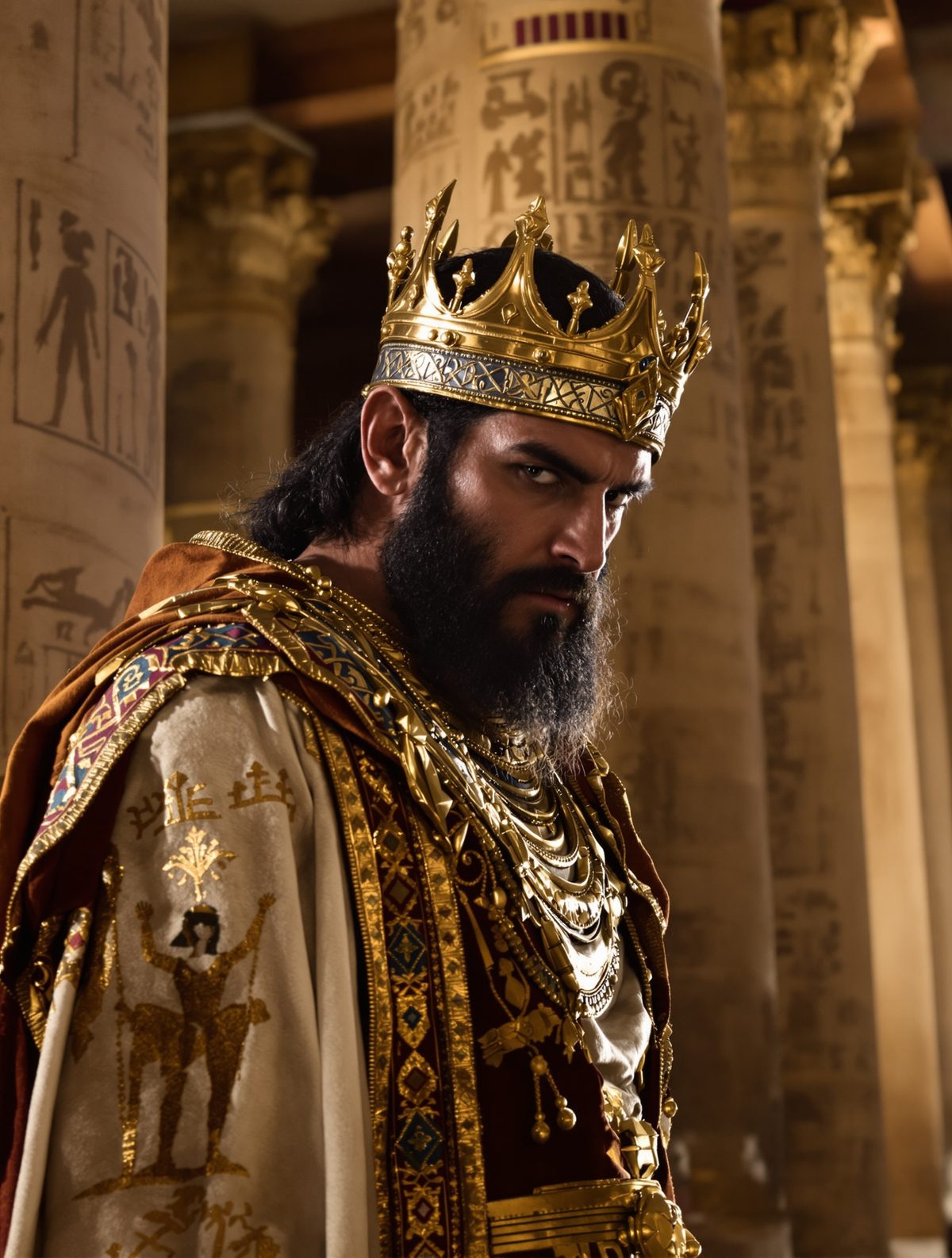
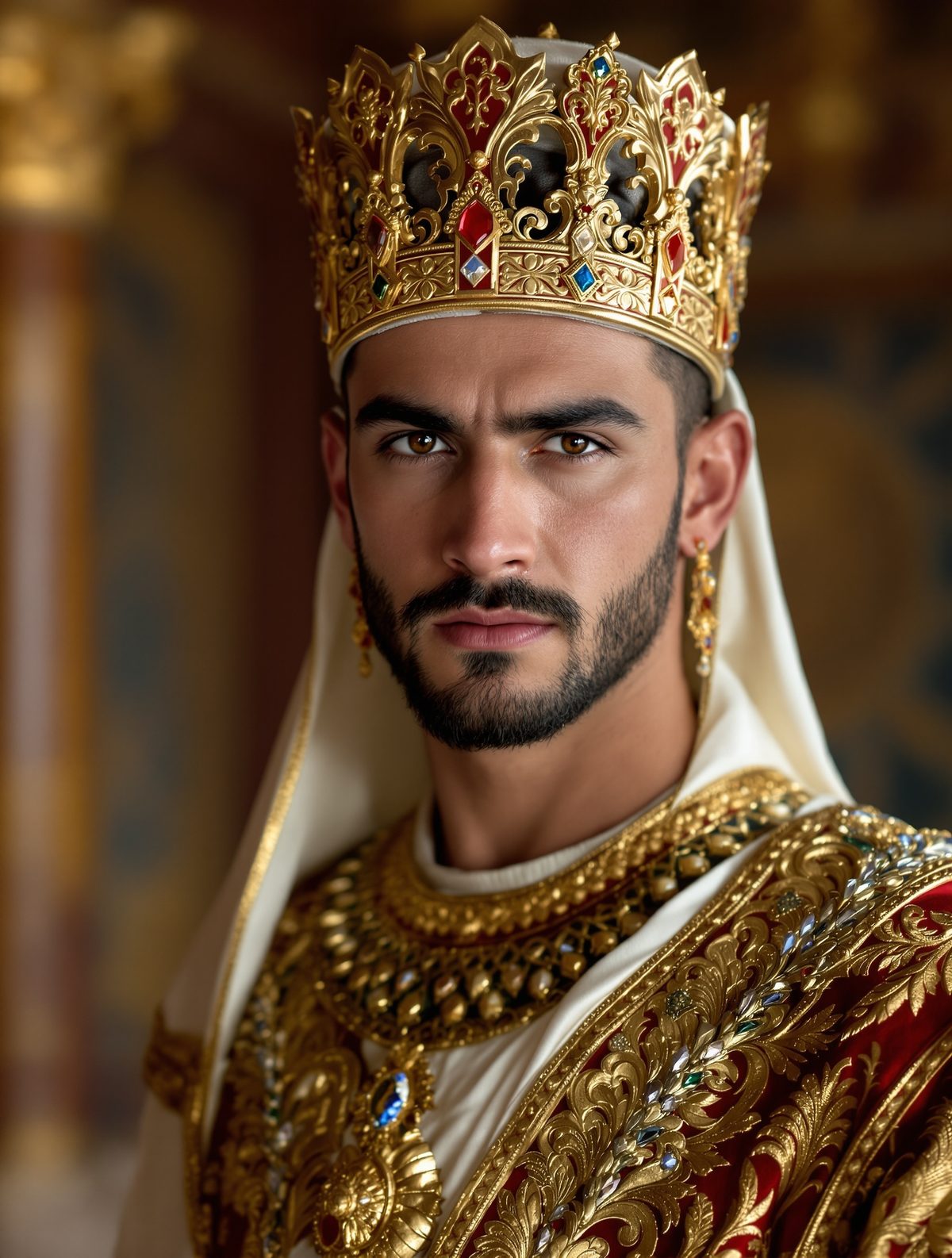
In the suffocating heat of an Egyptian palace chamber in 1323 BC, a young queen pressed a reed stylus to papyrus with trembling hands. Each hieroglyph she carved was an act of treason punishable by death. Yet Queen Ankhesenamun had no choice—her husband, the boy pharaoh Tutankhamun, lay dead in the next room, and the man who likely killed him was already making plans for their wedding.
Her message would travel 600 miles north to the court of Egypt's most feared enemy, the Hittite Empire. In it, she would beg their king to send her a son to marry, uttering words that no Egyptian royal had ever dared speak: "I will never marry a servant." It was a desperate gamble that would cost two lives and change the course of history.
The Golden Couple's Doomed Kingdom
To understand Ankhesenamun's desperation, we must first grasp the chaos that engulfed Egypt in the 14th century BC. She wasn't just any queen—she was the daughter of the heretic pharaoh Akhenaten and the legendary beauty Nefertiti. Born as Ankhesenpaaten, she had witnessed her father's radical religious revolution that nearly tore Egypt apart, abandoning the traditional gods for worship of a single deity, the Aten.
When the boy who would become Tutankhamun ascended the throne around 1332 BC, he was merely eight or nine years old. Ankhesenamun, roughly the same age and likely his half-sister (royal incest was common to keep bloodlines pure), became his queen. Together, they worked to restore Egypt's traditional religious order, moving the capital back to Memphis and Thebes, and changing their names to honor the god Amun rather than the Aten.
But here's what they don't teach you in school: Tutankhamun and Ankhesenamun weren't just political pawns—they appear to have genuinely loved each other. Tomb paintings show them in intimate moments, with Ankhesenamun offering her husband flowers or adjusting his collar. In one touching scene, she's depicted hunting birds alongside Tut in the marshes, something typically reserved for male activities. Their mummy held two small coffins containing the remains of stillborn daughters, suggesting they desperately tried to produce an heir.
Yet for all their efforts to restore stability, powerful forces lurked in the shadows of their court, waiting for the right moment to strike.
The Vizier with Blood on His Hands
When Tutankhamun died suddenly in 1323 BC at approximately 18 years old, the circumstances were immediately suspicious. Modern forensic analysis of his mummy reveals a blow to the head and a missing rib cage—injuries consistent with a chariot accident, though some experts argue they could indicate murder. What we know for certain is that one man stood to gain everything from the young pharaoh's death: Ay, the elderly vizier who had served as the power behind the throne.
Ay was no ordinary court official. He had been instrumental in the religious counter-revolution, helping guide the young royal couple away from Akhenaten's radical policies. Some scholars believe he may have been Nefertiti's father, making him possibly Ankhesenamun's grandfather. But family ties meant little when the throne of Egypt hung in the balance.
In ancient Egypt, legitimacy often came through marriage to a royal woman. Without a male heir, whoever married Ankhesenamun could claim the right to rule. The 19-year-old queen found herself trapped: marry her husband's likely killer, or face execution for refusing. The royal succession laws gave her no escape route—except one that would require betraying everything she had been taught about Egyptian supremacy.
Archaeological evidence from Tutankhamun's tomb provides a chilling glimpse into the rushed nature of his burial. His mummy was so hastily prepared that the embalming resins hadn't dried, literally cooking his remains. Someone wanted him in the ground quickly, before questions could be asked.
A Letter That Shook Two Empires
What happened next was unprecedented in the annals of ancient diplomacy. Ankhesenamun secretly dispatched a messenger to Suppiluliuma I, king of the Hittites—Egypt's greatest rival for control of the ancient Near East. The two empires had been locked in a bitter struggle for decades, fighting over territory in modern-day Syria and Lebanon.
Her letter, recorded in Hittite archives discovered at their capital Hattusa (in modern Turkey), was extraordinary in its desperation and audacity: "My husband has died and I have no son. They say about you that you have many sons. You might give me one of your sons to become my husband. I would not wish to take one of my subjects as a husband... I am afraid."
Think about the courage—or desperation—this required. Ankhesenamun was essentially offering to hand over the throne of Egypt, the ancient world's greatest superpower, to a foreign prince. She was proposing to make Egypt a Hittite vassal state rather than submit to Ay's rule.
Suppiluliuma was initially incredulous. This had to be a trap. He sent an ambassador, Hattusa-ziti, back to Egypt with a response: "You have deceived me! If you really have no son, then you would be taking my son for the purpose of slavery!" The Hittite king demanded proof that Tutankhamun was truly dead and that Egypt's desperation was genuine.
Ankhesenamun's second letter was even more desperate: "Why did you say 'they deceive me'? Had I a son, would I have written about my own and my country's shame to a foreign land? You did not believe me and have said this to me! He who was my husband has died. A son I have not! Never shall I take a servant of mine and make him my husband! I have written to no other country, only to you have I written!"
The Prince Who Never Lived to Rule
Convinced at last by the authenticity of her pleas, Suppiluliuma made a decision that would haunt both empires. He selected Prince Zannanza, one of his younger sons, to travel to Egypt and claim both Ankhesenamun's hand and the throne of the pharaohs. It was a political masterstroke that would place a Hittite on Egypt's throne without a single battle.
But as Zannanza's caravan wound its way south through the mountain passes between Anatolia and Egypt, Ay's spies were watching. The aging vizier had not waited idly while his prize slipped away. He had his own network of informants, and word of the Hittite prince's mission reached Memphis before Zannanza did.
What happened next remains one of history's most chilling political assassinations. Prince Zannanza was murdered en route to Egypt, most likely by Egyptian agents operating in the border regions. The young man who might have become pharaoh never even glimpsed the Nile.
Back in the palace, Ankhesenamun's fate was sealed. With her foreign rescue plan discovered and thwarted, she had no choice but to submit to Ay's demands. Archaeological evidence suggests the wedding took place quickly—a ring bearing both their names has been discovered, though whether she wore it willingly is another matter entirely.
But Ankhesenamun's story doesn't end with a reluctant wedding. She disappears from the historical record immediately after marrying Ay, never to be mentioned again. No tomb, no further inscriptions, no trace of what happened to the young woman who had been queen of Egypt. The most likely explanation? Ay eliminated her as soon as the marriage ceremony legitimized his claim to the throne.
The War That Followed
The murder of Prince Zannanza triggered exactly what you'd expect: a devastating war between the two superpowers. Suppiluliuma was furious at his son's assassination, launching immediate military campaigns against Egyptian territories in Syria. The conflict would rage for years, weakening both empires and contributing to the eventual collapse of the Late Bronze Age.
Ay ruled for only four years before dying himself, possibly murdered by his own successor, Horemheb, a military general who completed the systematic erasure of the Amarna period from Egyptian records. The names of Akhenaten, Tutankhamun, and Ankhesenamun were chiseled from monuments and omitted from official king lists. It was as if they had never existed.
This deliberate destruction of records explains why we knew so little about this period until archaeologists began uncovering the truth in the 20th century. Howard Carter's discovery of Tutankhamun's intact tomb in 1922 was just the beginning—the real revelations came from the Hittite archives found decades later, which preserved Ankhesenamun's desperate letters for posterity.
A Queen's Legacy Written in Stone and Sand
Ankhesenamun's story resonates across millennia because it captures something universally human: the lengths people will go to preserve their freedom and dignity. Here was a teenager who chose potential treason over certain oppression, who was willing to transform the ancient world's political landscape rather than submit to her husband's murderer.
Her desperate gambit failed, but it reveals the agency that royal women could exercise even within the constraints of ancient patriarchal systems. She wasn't a passive victim—she was a political actor who nearly succeeded in one of history's most audacious diplomatic coups.
Today, as we grapple with questions of power, consent, and resistance, Ankhesenamun's story reminds us that the choice between security and freedom is as old as civilization itself. Sometimes the greatest acts of courage come not from those who succeed, but from those who refuse to accept that some fates are inevitable. In the end, this forgotten queen's greatest victory may be that we're still telling her story more than 3,300 years later—a form of immortality that even the pharaohs would envy.