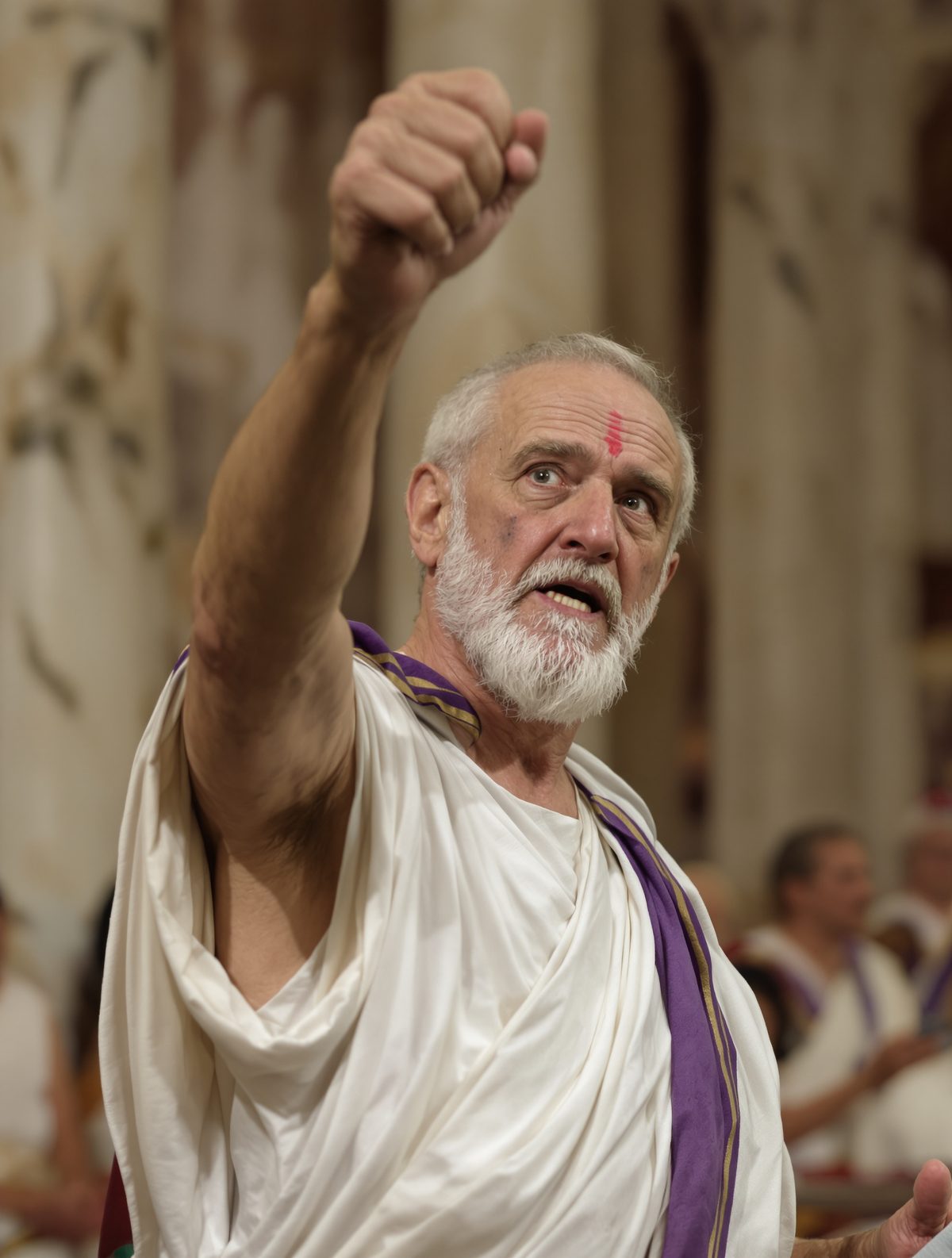
Picture this: You're standing in the Athenian agora in 415 BC, watching the most beautiful man in Greece address a crowd of battle-hardened citizens. Golden-haired Alcibiades, barely thirty years old, is convincing these hardened democrats to launch the largest military expedition in their history—a doomed invasion of Sicily that will cost thousands of lives and drain the treasury. Within months, this same man will be branded a traitor, flee to Sparta, and convince Athens' greatest enemies that he's been working for them all along. And somehow, they'll believe him.
Meet Alcibiades of Athens: the ancient world's most successful serial betrayer, a man so charismatic he could sell loyalty to his enemies while stabbing his friends in the back. Over the course of the devastating Peloponnesian War, he would switch sides not once, not twice, but three times—each betrayal more audacious than the last. His story reads like a political thriller, except the consequences were measured in ships burned, cities sacked, and empires toppled.
The Golden Boy Who Had Everything
Alcibiades wasn't just born into privilege—he was practically bred for greatness. Born around 450 BC into one of Athens' most prestigious families, he lost his father in battle when he was just a child. His guardian? None other than Pericles, the golden-tongued statesman who had transformed Athens into the jewel of the Mediterranean. But it was another guardian who truly shaped young Alcibiades: the philosopher Socrates, who became both mentor and, according to Plato's dialogues, the object of the young man's romantic obsession.
By all accounts, Alcibiades was blessed by the gods themselves. Ancient sources describe him as devastatingly handsome, with golden hair that caught the light like spun bronze and a physique that made sculptors weep with envy. He possessed what we might today call "main character energy" on a scale that bordered on the supernatural. When he walked through Athens, crowds followed. When he spoke in the assembly, even his political enemies found themselves nodding along.
But beauty and charm were just the beginning. Alcibiades proved himself a brilliant military tactician and an orator who could make black seem white with the power of his words alone. He lived like a god among mortals—racing his seven chariots at Olympia (and taking first, second, and third place), throwing parties that lasted for days, and scandalizing proper Athenians with his exotic pets and outrageous behavior.
The Sicilian Gambit: Ambition Meets Disaster
In 415 BC, with Athens locked in a brutal war against Sparta that had already raged for fifteen years, Alcibiades saw his chance for glory. The island of Sicily, with its wealthy Greek colonies, represented a glittering prize that could tip the balance of power forever. Standing before the Athenian assembly, the young general painted a vision of conquest that would make Athens master of the western Mediterranean.
The assembly was split. Older, wiser heads like the general Nicias warned of overreach, pointing out that Athens was already fighting for its life against Sparta. But when Alcibiades spoke, his words carried the intoxicating promise of infinite wealth and glory. He convinced the Athenians to commit over 100 ships, 5,000 infantry, and a fortune in silver to what would become known as the Sicilian Expedition—the largest military force Athens had ever assembled.
Then, just days before the fleet was set to sail, Athens woke up to find something shocking: sacred statues throughout the city had been vandalized in the night. The herms—stone pillars topped with the head of the god Hermes that stood guard at doorways and crossroads—had been systematically mutilated. In a deeply religious society, this wasn't just vandalism; it was an act of cosmic treason.
Whispers immediately turned to Alcibiades. Who else had the audacity, the connections, and the sheer reckless arrogance to pull off such a stunt? His political enemies, led by a man named Androcles, began circling like sharks. But the fleet was ready, the soldiers eager, and Sicily waiting. Rather than face trial immediately, Alcibiades convinced the assembly to let him sail first and answer charges upon his return. It was a decision that would change the course of history.
Betrayal Number One: From Hero to Exile
The expedition had barely reached Sicily when a ship arrived with devastating news: Alcibiades was to return immediately to face charges of sacrilege. The evidence had mounted in his absence, and his enemies had convinced the assembly that Athens' golden boy was actually a traitor who had desecrated the gods as part of a plot to overthrow democracy itself.
Alcibiades took one look at the ship that had come to arrest him and made a calculation that revealed everything about his character. Rather than return to face what would likely be a death sentence, he slipped away in the night. But he didn't flee to some distant land to live in obscure exile. Instead, he sailed straight to Sparta—Athens' most bitter enemy.
What happened next defies belief. This golden-haired aristocrat who embodied everything Spartans despised about Athenian decadence somehow convinced the austere warriors of Lacedaemon that he had always been their secret ally. Standing before the Spartan assembly in 414 BC, Alcibiades delivered what might be the greatest con job in political history.
He revealed Athens' strategic weaknesses, exposed the true scope of Athenian ambitions, and provided detailed intelligence about the Sicilian expedition—intelligence that would help Sparta turn Athens' greatest gamble into its most catastrophic defeat. To prove his loyalty, he advised the Spartans to fortify a position called Decelea, just fourteen miles from Athens, creating a permanent dagger pointed at the heart of Athenian territory.
Spartan Warrior, Persian Puppet
For a few years, Alcibiades played the part of a Spartan patriot with the same flair he had once brought to Athenian democracy. He cut his famous golden hair, took cold baths, ate the notoriously terrible Spartan black broth, and threw himself into the warrior lifestyle with characteristic intensity. When Sparta sent him as an advisor to their forces in the eastern Aegean, he proved devastatingly effective, helping to foment rebellion among Athens' subject cities.
But Alcibiades couldn't resist being Alcibiades. While stationed in Asia Minor, he seduced the wife of King Agis II—and made no secret of his belief that any child she bore might be his own. When the queen gave birth to a son, Agis publicly doubted the boy's parentage. In Sparta, adultery with a king's wife wasn't just scandalous—it was a death sentence waiting to happen.
Once again facing assassination, Alcibiades executed another breathtaking pivot. In 412 BC, he approached Tissaphernes, the Persian satrap (governor) who controlled much of western Asia Minor. With the same silver tongue that had once convinced Athens to invade Sicily and Sparta to trust a traitor, he now persuaded the Persian noble that he could serve Persian interests better than anyone else.
The strategy he proposed was Machiavellian in its brilliance: rather than allow either Athens or Sparta to achieve decisive victory, Persia should play them against each other, weakening both Greek powers while Persia rebuilt its strength. He convinced Tissaphernes to provide just enough support to keep the war going indefinitely, bleeding both sides white while Persia positioned itself as the ultimate arbiter of Greek affairs.
The Impossible Return: Traitor as Savior
By 411 BC, Athens was desperate. The Sicilian disaster had cost them their fleet, their treasury, and their empire was unraveling as subject cities rebelled. It was at this moment of maximum weakness that Alcibiades played his most audacious card yet: he sent word to the Athenian fleet stationed at Samos that he could deliver Persian support—if only Athens would recall him from exile.
The proposal was insane. This was the man who had fled to avoid trial for treason, who had given Sparta the intelligence to destroy Athens' greatest expedition, who had personally advised the fortification of Decelea. Yet somehow, through intermediaries and careful messaging, Alcibiades convinced key Athenian commanders that he had been playing a deeper game all along—that his defections had actually been elaborate deceptions designed to infiltrate enemy ranks and serve Athenian interests.
The Athenian fleet at Samos, desperate for any advantage, chose to believe him. In a remarkable series of naval victories between 411 and 408 BC, Alcibiades proved that his military genius was no fraud. At Abydos, Cyzicus, and Byzantium, he outmaneuvered Spartan forces with tactical brilliance that reminded everyone why Athens had once ruled the seas.
His return to Athens in 407 BC was pure theater. Timing his arrival for a religious festival, he personally escorted a sacred procession to Eleusis—the same route that had been too dangerous to travel by land since the Spartans had fortified Decelea on his advice. The symbolism was perfect: the man who had brought the war to Athens' doorstep was now its protector.
The Final Act: Even Genius Has Limits
But Alcibiades had finally overplayed his hand. When his lieutenant suffered a defeat at Notium in 406 BC, the Athenians—perhaps remembering whom they were dealing with—immediately turned on their returned hero. Rather than face the fickle democracy's wrath, Alcibiades withdrew to a private fortress in the Thracian Chersonese, watching from afar as Athens stumbled toward final defeat.
His end came in 404 BC, in a manner fitting for such a dramatic life. Hiding in Phrygia under Persian protection, he was assassinated—possibly on orders from Sparta, possibly from Athens, possibly from Persia itself. According to legend, he died as he had lived: dramatically, fighting his way out of a building set ablaze by his enemies, sword in hand and never surrendering.
The story of Alcibiades reveals something uncomfortable about human nature and political loyalty. In our age of fluid allegiances and shifting narratives, his career seems almost modern. He understood that in times of crisis, people want to believe in salvation so desperately that they'll trust even those who have betrayed them before. His greatest insight wasn't military or political—it was psychological. He grasped that charisma, properly wielded, could rewrite history itself, transforming treason into strategy and betrayal into patriotism.
Perhaps that's why Alcibiades remains fascinating after 2,400 years. In a world where loyalty is increasingly seen as naive and adaptability as wisdom, he represents the logical extreme: the man who was loyal only to himself, yet somehow convinced others he was loyal to them. His story warns us that the most dangerous enemies aren't those who oppose us openly, but those who can make us believe they're on our side while they're burning everything we hold dear.